Farming kills roughly 20 people a year in Ireland. In a workforce of around 170,000, that is a fatality rate that would shut down any urban industry overnight.
The Health and Safety Authority runs targeted inspection campaigns every spring because that is when the risk spikes. Longer days, more workers on the land, machinery coming out of winter storage with faults nobody noticed in October. The HSA is not visiting to hand out leaflets. Inspectors have the power to issue improvement notices, prohibition notices, and referrals for prosecution. If you are a farm owner, you are the employer under the Safety, Health and Welfare at Work Act 2005, regardless of whether the people working beside you are family members or paid staff.
What the Campaign Actually Targets
The HSA publishes its campaign focus areas, and the 2024 and 2025 programmes have consistently hammered the same categories. Tractors and machinery. Slurry storage. Working at height. Children on farms. Each one of these has a body count attached to it, which is precisely why they keep appearing on the list.
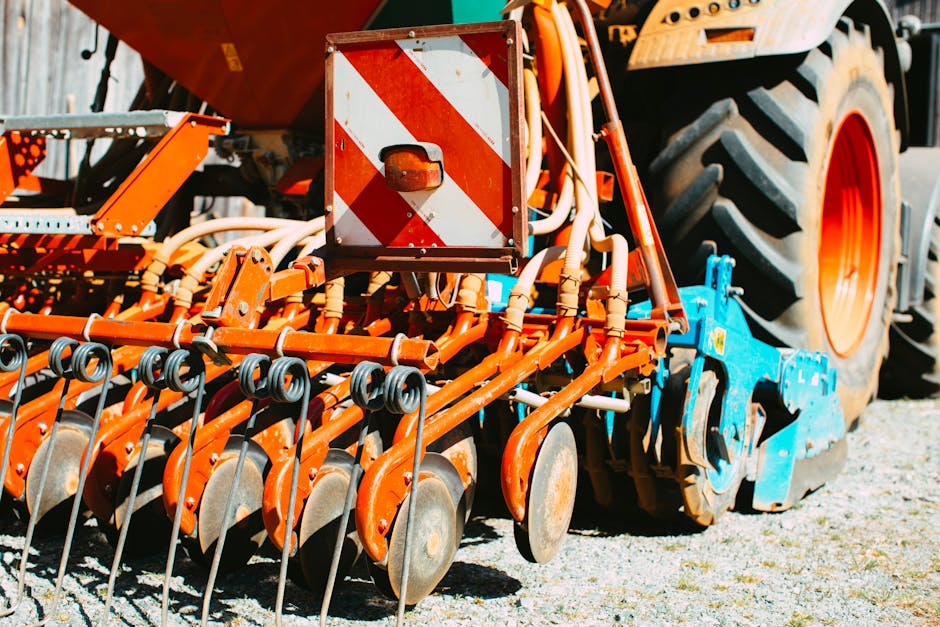
Tractors cause a disproportionate share of deaths, mostly through overturning. An older tractor without a functioning rollover protection structure is a known killer. Inspectors check whether the ROPS is fitted, whether it is structurally sound, and whether a seatbelt is present and usable. A missing or damaged ROPS on a tractor used for work is an immediate prohibition. The tractor stops. The work stops.
Power take-off shafts are the other consistent target. An unguarded PTO on a working machine is one of the fastest ways to lose a limb or a life on a farm. The guard costs under 200 euro. The prosecution costs considerably more.
Slurry Storage: The One That Still Shocks People
Slurry tanks claim lives every few years in Ireland and every death follows roughly the same sequence. Someone enters or leans over a tank, hydrogen sulphide knocks them unconscious within seconds, a second person goes in to help, and then there are two fatalities instead of one.
Inspectors check for covers on tanks, fencing around open stores, and signage. They also check whether anyone on the farm has been told, in writing, what the procedure is when slurry is being agitated. Agitation releases the gas in quantity. The rule is simple: everyone stays away from the tank and out of adjacent buildings while agitation is happening. Animals included, because their deaths have preceded human ones.
Working at Height and Grain Stores
Roofing on farm buildings, grain store inspections, maintenance on silage clamps. None of this looks like working at height in the construction sense, but the falls are just as fatal. A farm worker falling through a fragile roof panel on a grain store does not survive it any more reliably than a roofer on a housing estate.
The HSA looks for edge protection on elevated work areas, the condition of access ladders, and whether fragile roof surfaces are identified before anyone walks on them. There is no agricultural exemption from the Work at Height regulations. The Safety, Health and Welfare at Work (General Application) Regulations apply.
Children on Farms: A Specific and Documented Risk
The HSA is blunt about this. Children under seven must not be in the vicinity of any work being done with tractors or machinery. Children under 16 cannot operate tractors or self-propelled machinery. These are not guidelines. They are legal requirements under the Safety, Health and Welfare at Work (Children and Young Persons) Regulations 2023.
An inspector who arrives at a farm during spring work and sees a child in the yard while a tractor is operating is not going to look the other way because it is a family farm. The family farm is exactly where most child fatalities happen.
What an Inspection Actually Looks Like
An HSA inspector can arrive announced or unannounced. They will walk the yard, check machinery in use or recently used, look at slurry storage, ask about the safety statement, and potentially interview workers including family members.
The safety statement is mandatory for every farm. Not most farms. Every farm. It has to be specific to the hazards on that holding, reviewed regularly, and accessible to anyone who works there. A generic document printed off the internet and never looked at again does not meet the standard, and an experienced inspector will know that inside two minutes.
If the inspector finds a serious and immediate risk, they issue a prohibition notice on the spot. Work stops. If the issue is a compliance failure without immediate danger, an improvement notice gives a deadline to fix it. Failure to comply with an improvement notice is a criminal offence, with fines up to 3,000 euro per offence at District Court level and significantly higher on indictment.
Prosecutions for the worst failures run to criminal negligence territory, particularly where a fatality or serious injury is involved and the farm owner had previous warnings or clear knowledge of the risk.
The Part Nobody Wants to Say Out Loud
Most farm fatalities in Ireland are not freak accidents. They are the predictable result of known risks that were not managed. The tractor had no ROPS for years. The PTO guard was removed to clear a blockage and never replaced. The child had been in the yard during work every day that summer.
The HSA's spring campaign exists because voluntary compliance has not worked well enough. That is the honest version. Inspectors coming to your farm is not an attack on your way of life. It is the state responding to a death rate that should embarrass the sector.
Fix the obvious things before they arrive. If the inspection finds nothing, you have lost nothing except an hour of your morning.