A tractor rolls on a hillside at 7am. The nearest ambulance is 40 minutes away. The only other person on the farm is a 14-year-old. That is the actual emergency scenario Irish farm families face, and no standard first aid course prepares you for it.
Farm first aid is not a subset of workplace first aid with a few extra notes about animals. It is a fundamentally different discipline. The injuries are different, the environment is different, and the window for intervention is different. What works in an office or a building site does not translate cleanly to a field in January with no phone signal and a man trapped under a PTO shaft.
Why Farm Injuries Break the Standard Rules
Urban and workplace first aid training is built around one core assumption: help is close. You apply pressure, keep the person calm, call 999, and wait 8 minutes. On a farm in rural Roscommon or west Kerry, that assumption falls apart immediately. Response times of 30 to 60 minutes are normal. In some areas, the ambulance station is genuinely far away, terrain causes delays, and the access road to the field may not fit an ambulance at all.
This matters because the injuries common on farms are time-critical in ways that burn out that golden window fast. Crush injuries cause internal bleeding that accelerates rapidly. Entanglement in a PTO shaft causes traumatic amputation with arterial bleeding. A tractor rollover can cause spinal injuries, crush injuries, and head trauma simultaneously. Each of these can kill within 20 minutes without intervention. Waiting for the ambulance is not a plan.
The second problem is the environment. The casualty may be partially under machinery weighing several tonnes. Moving them risks spinal injury. Not moving them may mean they bleed out or cannot breathe. This is not a situation covered by a two-day first aid responder course designed for office buildings.
Entrapment: The Most Dangerous Scenario
Machinery entrapment is the hardest scenario and the one least covered in standard training. Crush injuries and amputations create a specific problem called traumatic rhabdomyolysis. When limbs are crushed for an extended period and then released, the sudden flood of muscle breakdown products into the bloodstream can cause cardiac arrest and kidney failure. This means releasing someone from entrapment is not automatically the right first move.
If someone is trapped under a tractor or in machinery, the priorities in order are: call 999 immediately and keep the line open, keep the casualty conscious and talking, control any visible bleeding you can reach, and do not attempt to move heavy machinery without understanding what is pinning the person. If lifting the machinery is possible safely and the person can be freed without causing further injury, do it. If not, wait for emergency services and keep the casualty warm and conscious.
Severe bleeding from a trapped limb can often be controlled with a tourniquet. Every farm first aid kit should contain at least one commercial tourniquet, and every person on the farm should know how to apply it. A belt is a poor substitute. A proper CAT or SOFTT-W tourniquet applied correctly above the wound buys time.
PTO Injuries: Treat the Bleeding First
Power take-off injuries are catastrophically fast. Clothing catches, the shaft rotates at 540 rpm, and a person can lose a limb or be fatally injured in under two seconds. Survivors frequently present with partial or complete traumatic amputation of fingers, hands, or arms.
The first aid priority here is haemorrhage control. Arterial bleeding from a traumatic amputation will kill in minutes. Pack the wound with whatever clean material is available, apply a tourniquet if the amputation is on a limb, and apply continuous firm pressure. Do not remove the packing to check the wound. Do not elevate the limb above the heart if it is unstable. Keep the severed part if it can be found, wrap it in a clean damp cloth, place it in a sealed bag, and keep it cool but not frozen.
Call 999, give your precise location including townland, and tell them the nature of the injury clearly. Say "traumatic amputation, arterial bleeding" not "there's been an accident."
Tractor Rollover: Spinal Precautions in a Field
Rollover is the leading cause of tractor fatalities in Ireland. A rollover protection structure helps, but injuries still occur, including spinal fractures, head trauma, and internal bleeding. The detail on tractor rollover rescue is its own article, but the core principle is this: treat every rollover as a potential spinal injury until proven otherwise.
Do not drag the casualty. Do not lift them by the arms or legs. If they are conscious and can move, encourage them to stay still. If they are unconscious and breathing, the airway takes priority over spinal precautions because a dead patient with a perfect spine is still dead. Use log-roll technique if you must move them, supporting the head in line with the body throughout.
If they are not breathing, begin CPR. The risk of spinal movement during CPR is real and acceptable. The risk of not doing CPR is not.
The Communication Problem Nobody Plans For
Rural farms frequently have poor mobile signal. This is not news, but most farms have no plan for it. The plan needs to exist before the emergency.
Know which parts of your farm have signal. Know which network has better coverage locally, because it varies significantly. A landline in the farmhouse is worth keeping for this reason alone. A radio is worth considering for large landholdings. Some farms now use satellite communicators for the same reason.
When you do get through to 999, give your Eircode. Give the townland name. Tell them which gate or road entrance to use. Tell them if the field requires a particular vehicle or if a standard ambulance cannot access it. The more specific you are, the faster help arrives.
What Your First Aid Kit Is Missing
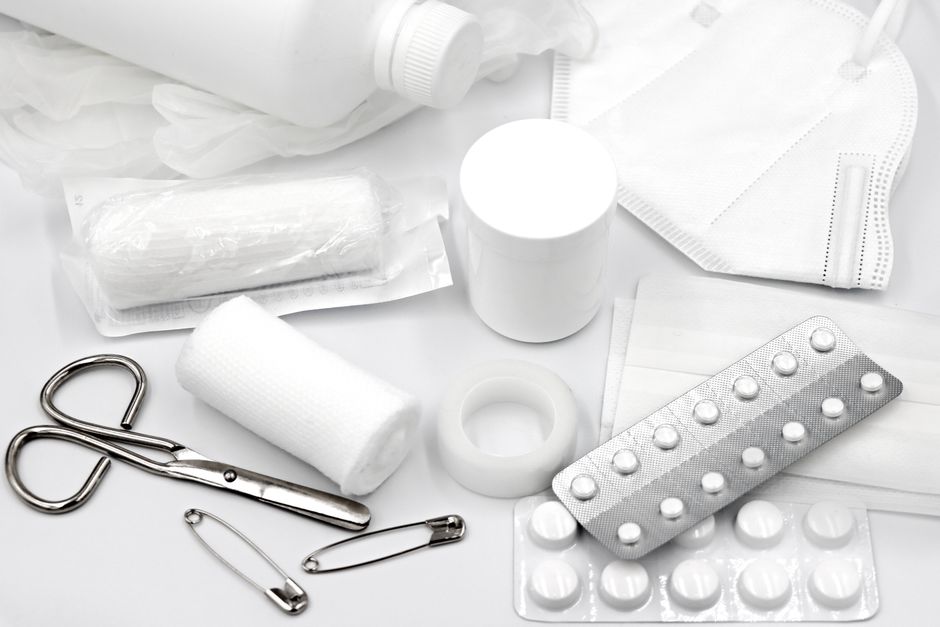
A standard workplace first aid kit is not adequate for a farm. Your farm's first aid kit should contain at minimum: two or more tourniquets, haemostatic dressings, trauma bandages, a foil blanket, gloves in multiple sizes, a basic airway adjunct, and a pocket mask for CPR. All of it should be accessible within two minutes from wherever work is happening. A kit in the farmhouse bathroom does nothing when the incident is in the far paddock.
Consider a grab bag or belt pouch that goes with the person to the field. It does not need to be expensive. It needs to be there.
Train the Whole Farm, Not Just One Person
Standard first aid courses teach individuals. Farm emergencies often involve family members, seasonal workers, or children who are the only witness. The training needs to reach everyone who spends time on the farm.
Basic skills that anyone on a farm should know: how to call 999 and give an accurate location, how to apply direct pressure to a wound, how to apply a tourniquet, how to place an unconscious breathing person in the recovery position, and how to begin CPR. None of these require a full first aid course. A two-hour session with a trainer who understands agricultural environments covers the essentials.
Farm-specific first aid training exists in Ireland through several providers. The Irish Farm Centre and various agricultural colleges offer courses that address machinery injuries, rural response times, and practical scenarios. Take one every three years.
The gap between a bad farm accident and a fatal one is often not the severity of the injury. It is the 20 minutes before any help arrives, and whether the person standing in the field knew what to do with those 20 minutes.