Open the first-aid kit in your workplace right now. If you haven't done that in six months, there is a reasonable chance what you find inside is already illegal.
This is not a scare tactic. The Health and Safety Authority has been increasingly specific in recent prosecutions about the state of first-aid provisions at the time of an incident. Expired supplies, missing items, inadequate kits for the work being done. These details show up in court. They cost money. And they cost employers something harder to recover from than a fine: the argument that they did everything reasonable to protect their people.
What the Law Actually Says
The Safety, Health and Welfare at Work (General Application) Regulations 2007 require employers to provide appropriate first-aid equipment, facilities, and trained personnel based on the nature of the work, the number of employees, and the hazards present. The HSA does not publish a single mandatory list of kit contents because the requirements vary by workplace. A solicitors office and a meat processing plant have different obligations. What does not vary is the obligation to assess, provide, and maintain.
Maintain is doing a lot of work in that sentence. Maintenance means checking contents against an inventory, replacing expired items, restocking after use, and reviewing the kit when the risk profile of the workplace changes. Most businesses do none of this on any regular schedule.
The General Application Regulations also require that a sufficient number of trained first-aiders are available at all times during working hours. Not designated in a document. Actually available. That means shift patterns, remote workers, and annual leave patterns all affect compliance.
The Prosecution Pattern
Recent HSA prosecutions have moved beyond the incident itself. Inspectors are examining the systems around the incident: what training existed, whether it was current, what equipment was available, and whether it was fit for purpose.
A prosecution does not require a death. The HSA has brought successful cases following injuries where the response was inadequate. An expired wound dressing is not going to result in a fine on its own. But when a worker suffers a serious laceration, the ambulance takes 25 minutes to arrive, and your first aid kit is found to be useless at the moment it matters most, that inadequacy becomes part of the evidential picture. Prosecutors and civil litigants both notice.
Civil claims compound the problem. A worker who suffers a worse outcome because treatment was delayed or improperly applied has grounds for additional damages. The kit that was never restocked after the last incident becomes Exhibit A.
What Expiry Dates on First-Aid Supplies Actually Mean
Sterile dressings have a sterility expiry date. After that date, they are no longer guaranteed sterile. Using an expired sterile dressing on an open wound is not the same as doing nothing, but it is not what the regulations require either.
Adhesive plasters dry out and lose adhesion. Nitrile gloves degrade and can split during use. Foil blankets degrade if the packaging is compromised. Eye wash solutions have a chemical expiry. Resuscitation face shields can crack with age and temperature changes.
None of this is obscure pharmacology. It is printed on the packaging. The problem is that nobody is checking the packaging.
A typical scenario: a kit was purchased and stocked four years ago. It was opened once after a minor cut. Nothing was replaced. The kit now contains a mix of partly used and fully expired supplies, with no inventory record and no idea what is missing.
The Contents Question
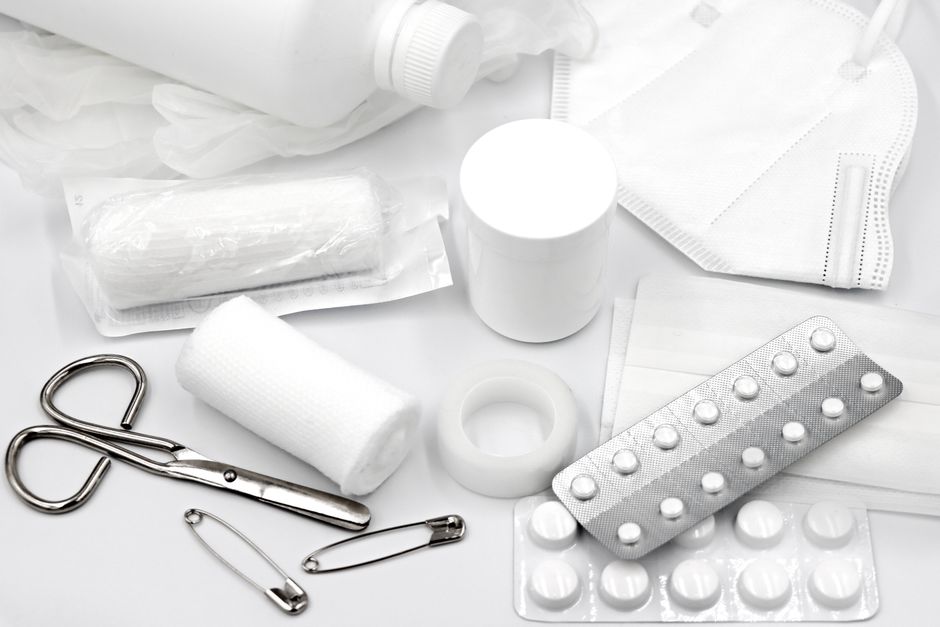
The HSA guidance points employers toward the Code of Practice for Occupational First Aid, which provides recommended contents for standard kits. For a low-risk workplace with fewer than 25 employees, a basic kit should include:
- 20 individually wrapped sterile adhesive dressings (assorted sizes)
- 2 sterile eye pads
- 4 individually wrapped triangular bandages (preferably sterile)
- 6 safety pins
- 6 medium sterile wound dressings
- 2 large sterile wound dressings
- 1 pair of disposable gloves
Higher-risk workplaces, or those with larger numbers of employees, need more. Workplaces near water need specific equipment. Sites where severe bleeding is a realistic risk need tourniquets and haemostatic dressings. The risk assessment drives the kit specification.
The point is not just to have the box. It is to have the right box, stocked correctly, for the actual hazards your workers face.
The Maintenance System Nobody Has
The reason kits go out of date is not malice. It is the absence of a system. Restocking after use requires someone to notice the use, know what was taken, know where to order replacements, and actually do it. In most workplaces, none of these steps are assigned to anyone specifically.
The fix is administrative, not expensive. Assign one person to be responsible. Set a quarterly calendar check. Create a written inventory. Photograph the full kit against the inventory list after each check. Keep the records for at least five years.
That record is your defence if the HSA comes calling. It is also how you demonstrate, in a civil claim, that you maintained your systems diligently. A photographic log of quarterly checks does not guarantee you win every argument. It does mean you have one.
The Training Problem Is Separate But Connected
An up-to-date kit is worthless without someone trained to use it. Occupational first-aid certificates in Ireland are valid for two years before refresher training is required. Many businesses renew the cert when reminded, but the reminder system is informal and the records are incomplete.
When an inspector asks to see training records for all designated first-aiders, and the certificates are three years old, and one of the designated first-aiders left the company eight months ago, the picture it creates is not good.
Check the certs. Check the headcount of trained people against your shift rosters. If the numbers do not work, fix them now rather than after an incident.
The Cost Comparison Nobody Does
Restocking a standard first-aid kit costs between €30 and €80 depending on what needs replacing. A quarterly check takes about 15 minutes. Annual replacement of a complete kit runs to roughly €120.
HSA fines for first-aid provision failures under the General Application Regulations can reach €3,000 per breach at District Court level. Civil claims where poor first-aid response contributed to a worse outcome routinely run into five figures. The reputational cost of a prosecution is harder to quantify but very easy to feel.
The maths are not complicated. The kit audit is the cheapest compliance task on your list. It is also, for a lot of businesses, the one nobody has done recently enough.
Go check the kit.