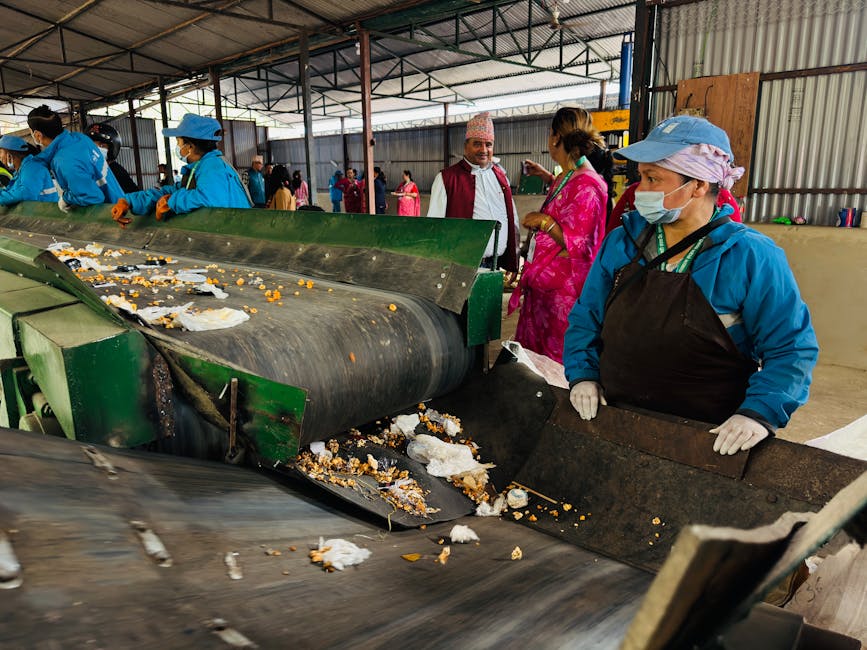
A worker died at a compost facility in Carbury, County Kildare. The company was prosecuted. The fine landed at €95,000. Everyone filed it under "incident closed" and moved on. That is the wrong response.
The fine matters. Court outcomes send signals to the sector. But a penalty is backwards-looking. It accounts for what went wrong. It does not, on its own, stop the next version of the same event happening twelve months later at a different site with a different worker and the same absent controls.
Waste and compost operations sit in a peculiar safety blind spot in Ireland. They are not construction, so they do not get the volume of attention that falls from height statistics tend to generate. They are not farming, so the seasonal safety campaigns pass them by. They are not food production, so the hygiene inspectors are not poking around. They process enormous amounts of material, run heavy machinery in tight spaces, and employ people in roles with high physical exposure and, frequently, inadequate training. The fatality rate across the waste sector in Ireland and across Europe consistently outpaces its share of the workforce. That is not bad luck. That is a structural problem.
What Actually Kills People in Compost and Waste Facilities
The hazards here are not exotic. They are the same hazards that kill people in other industries, concentrated into one site. Mobile plant operating near pedestrians. Unguarded machinery. Confined or semi-confined spaces where biogas accumulates. Compost windrows that can collapse. Leachate pits with no barriers and no rescue plans.
The Carbury case involved mobile plant. A worker and a moving vehicle shared space in a way that ended fatally. The investigation found failures at the system of work level, not just a momentary lapse by an operator. That distinction is critical and it is the one most companies miss when they do their post-incident review.
"The operator was distracted" is a finding. "Workers and vehicles shared an uncontrolled zone with no segregation, no signalling protocol, and no banksman requirement" is also a finding. The second one is the one worth writing down, because the second one is fixable before someone dies. Cargo loading fatalities follow the same pattern repeatedly, across sectors, where pedestrian and vehicle interface is managed by habit rather than design.
The Machinery Accountability Gap
When a machine injures someone, the immediate question is usually "what did the operator do?" The more useful question is "what did the system allow?"
In waste and compost facilities, machinery runs hard. Wheel loaders, screeners, shredders, turning machines. These are not light agricultural tools. They are industrial plant, and they need to be managed as such under the Safety, Health and Welfare at Work (General Application) Regulations. Pre-use checks, operator competence records, exclusion zones, equipment maintenance schedules. The paperwork exists. The implementation is often thinner than the folder it sits in.
The Carbury prosecution established that the failures were not clerical. They were operational. Controls that should have been physical and procedural were absent or unenforced. When machinery incidents become criminal negligence cases, it is rarely because the company did everything right and tragedy happened anyway. It is because a chain of foreseeable failures ran to its end.
Why Compost Facilities Carry Additional Risks Others Do Not
Decomposing organic material generates heat. It generates carbon dioxide and methane. A compost pile is, in a very real sense, a slow chemical reactor. Workers who enter enclosed processing areas, crawl inside shredder housings to clear blockages, or work in poorly ventilated buildings adjacent to active windrows are entering spaces with genuine atmospheric hazards.
Occupational asthma is documented in compost workers exposed to fungal spores, particularly Aspergillus fumigatus, which proliferates in warm, moist decomposing material. Facilities that manage vehicle segregation carefully can still be exposing workers to a slow-building respiratory hazard every shift. Health surveillance for compost workers is a legal requirement under the Biological Agents Regulations, and it is routinely skipped because nobody is watching closely enough.
The combination of physical trauma risk and biological exposure risk makes these sites demanding to manage. Most of them are not managed to that standard.
What a Competent Safety Management System Looks Like Here
Not complicated. Not expensive relative to the cost of getting it wrong.
Pedestrian and vehicle segregation that is physical first. Barriers, defined crossing points, no shared zones during active operations. Not a line painted on concrete that fades and gets ignored.
Machinery lockout/tagout procedures that are trained, tested, and enforced. Not laminated and forgotten on the wall.
Atmospheric monitoring for enclosed or semi-enclosed spaces. Cheap sensors exist. No excuse.
Biological hazard assessments that name the specific agents present, the exposure routes, and the health surveillance schedule. A generic COSHH assessment that mentions "dust" does not cover it.
Emergency rescue plans for confined spaces that are specific to the site, rehearsed, and resourced. A rescue plan that requires the fire service to arrive before anything useful can happen is not a rescue plan.
Operator competence records that are verified, not self-certified.
The Broader Pattern
The HSA prosecutes. The courts fine. The sector notes the case and, in most facilities, does nothing structural in response. The next fatality is described as unforeseeable despite fitting a pattern that has been documented for twenty years.
Waste management safety does not need new regulation. It needs the existing framework applied with the seriousness the hazard profile demands. The Safety, Health and Welfare at Work Act 2005 gives employers a clear duty. The instruments exist. The will to implement them, consistently, across a sector that operates on tight margins and under commercial pressure, is what is missing.
A €95,000 fine is roughly the cost of two months' plant hire on a mid-sized operation. It stings. It does not transform. Transformation comes from companies deciding, before a prosecution, that the system of work they are running is not adequate for the hazards they are managing. Some do. Most wait.
The worker at Carbury did not have time to wait.