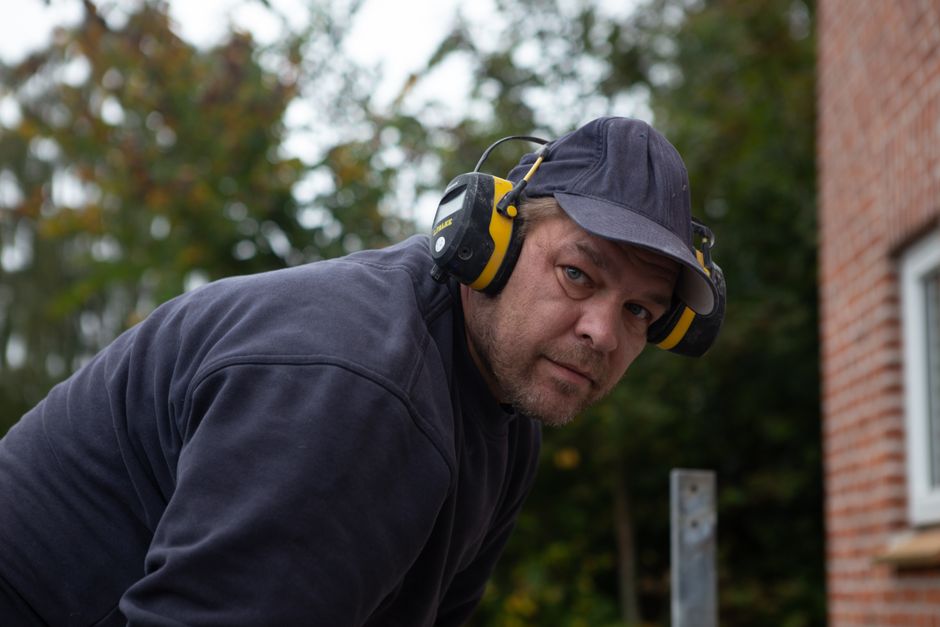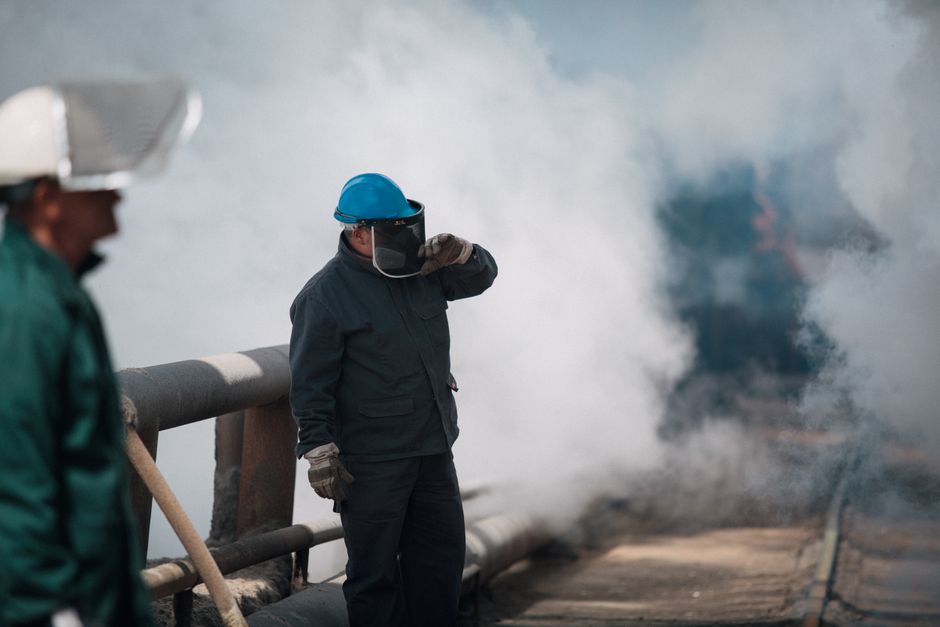
By the time a construction worker realises he can't follow a conversation in a noisy pub, the damage has been done for years. That's the cruelty of noise-induced hearing loss. It doesn't announce itself. It just quietly takes pieces of you, every single shift.
Irish construction sites regularly hit noise levels between 85 and 105 decibels. Angle grinders sit around 100 dB. Jackhammers push past 102 dB. At those levels, permanent cochlear damage begins within minutes of unprotected exposure. The hair cells inside your inner ear that convert sound into nerve signals do not regenerate. Once they're gone, they're gone. No surgery fixes it. No hearing aid restores what you had.
The average age at which construction workers in Ireland start reporting significant hearing loss is dropping. Men in their late thirties are turning up to audiologists with the hearing profile of someone two decades older. This is not bad luck. It's a predictable outcome of years of inadequate protection on sites where noise is treated as an inconvenience rather than a health hazard.
What the Law Actually Says
The Safety, Health and Welfare at Work (General Application) Regulations 2007 set clear noise exposure limits for Irish workers. The lower action value is 80 dB(A) as a daily average. At that point, employers must make hearing protection available and provide information. The upper action value is 85 dB(A). At that level, hearing protection is mandatory, not optional. The exposure limit value is 87 dB(A), and that accounts for the attenuation provided by hearing protection. Employers cannot legally allow workers to be exposed beyond that figure.
These thresholds are not suggestions. Breaching them is a prosecutable offence under the Safety, Health and Welfare at Work Act 2005.
Why the Rules Aren't Working
The regulations exist. Enforcement is the problem. On many Irish sites, noise and vibration hazards get less scrutiny than scaffolding or PPE for falls. A site can have full fall protection documentation and nothing meaningful done about a worker running a disc cutter for six hours in an unventilated basement.
Part of the issue is measurement. Most sites never conduct a proper noise assessment. Employers guess at exposure levels, hand out foam earplugs, and consider the job done. Foam earplugs, worn correctly, can provide adequate attenuation. Worn incorrectly, which is how the vast majority of workers wear them, they provide almost nothing. A 30 dB rated earplug rolled and inserted badly might give you 10 dB of real-world protection. On a 100 dB site, that still leaves you dangerously exposed.
The other problem is culture. Earplugs get pulled out when someone needs to communicate. Workers on piece rates don't stop to fit protection properly. Supervisors don't insist because they're not wearing theirs either. Everyone normalises the ringing in their ears at the end of the day, treating tinnitus as a badge of hard work rather than a warning sign of permanent damage.
The Conditions That Make It Worse
Not all noise exposure is equal. Several factors accelerate cochlear damage on construction sites.
Impulse noise from nail guns, percussive drills, and concrete breaking causes disproportionate harm relative to sustained noise at the same average decibel level. A single burst at 140 dB from an unsilenced nail gun at close range can cause immediate permanent damage.
Enclosed spaces amplify exposure dramatically. Working in a confined area like a basement, stairwell, or service duct can add 10 to 15 dB to measured noise levels compared to open-air work with the same equipment. This rarely gets factored into site risk assessments.
Combined exposures across a working day stack up fast. Eight hours split between lower-noise tasks and one hour operating a concrete saw without protection can still tip a worker past the daily limit. Noise dose is cumulative within each shift.
Vibration from hand-arm tools compounds the picture. Workers using high-vibration tools alongside high-noise environments face a dual assault on their peripheral nervous systems that makes early detection harder.
What a Real Noise Risk Assessment Looks Like
A genuine assessment is not a box-ticking exercise. It involves measuring actual exposure levels for each work activity using a sound level meter or noise dosimeter, mapping which workers are exposed and for how long, and identifying engineering controls before reaching for the PPE catalogue.
Engineering controls come first. That means acoustic enclosures around noisy plant, substituting lower-noise equipment where available, using water suppression on cutting operations, and rotating workers to limit individual exposure duration. These interventions reduce actual noise at source. Earplugs only reduce what reaches the ears, and only if worn correctly and consistently.
Where hearing protection is required, it must be appropriate to the noise level, fit-tested where possible, maintained in good condition, and actually worn. Workers need to be shown how to insert foam earplugs properly. That takes about 90 seconds to demonstrate and is rarely done.
Health Surveillance Is Not Optional
For workers regularly exposed above the upper action value of 85 dB(A), employers must provide audiometric testing. This means a baseline hearing test when noise work begins and periodic retesting to detect any shift in hearing threshold. The point is early detection. If a worker's hearing is deteriorating, you need to know before the loss becomes severe enough to affect daily life.
In practice, occupational health surveillance for noise exposure on Irish construction sites is patchy at best. Sites that would never skip a drug test routinely skip audiometry for workers who have spent years operating compressors and grinders. The HSA can and does require evidence of health surveillance during inspections. The absence of it is a compliance failure.
Tinnitus Is a Symptom, Not Just an Annoyance
Ringing in the ears after a loud shift is your auditory system telling you it took a hit. Temporary threshold shift, where your hearing dulls for hours after noise exposure, is an early warning. Repeated temporary shifts become permanent ones. Tinnitus that follows is often permanent too, a constant ringing or hissing that affects sleep, concentration, and mental health.
Construction workers report tinnitus at significantly higher rates than the general population. The link between chronic tinnitus and depression is well established. The noise exposure that causes it is entirely preventable. That's the part that should sit uncomfortably with every site manager who has let the earplug conversation slide.
The Practical Steps That Actually Make a Difference
Get a noise survey done by someone who knows what they're doing. Map exposure by task, not just by site average. Implement engineering controls where feasible. Issue hearing protection that is appropriate and correctly fitted. Enforce wearing it in mandatory zones. Provide audiometric testing for exposed workers and track results over time. Train supervisors to treat noise compliance the same way they treat working at height. Because the injury rate, measured over a career, is comparable.
Hearing loss does not kill. But it isolates people, ends careers early, and erodes quality of life in ways that are completely irreversible. A 38-year-old with the hearing of a 60-year-old has decades of consequences ahead of him for something that cost nothing to prevent beyond a little consistency and attention.
The regulations give employers the framework. The science gives them the reason. The only thing missing, on too many Irish sites, is the follow-through.