Quarry workers are breathing in a disease right now. No cough yet. No shortness of breath. Nothing that would make you put down your tea and ring the doctor. That is the problem.
The Health and Safety Authority has made quarrying and aggregate industries a priority inspection target, and the focus is not crushed fingers or reversing plant. It is lungs. Specifically, the irreversible destruction caused by respirable crystalline silica, better known as RCS. The HSA's campaign signals something that anyone running or working in a quarry operation needs to hear clearly: the industry has been underestimating this hazard, and inspectors are no longer prepared to let that continue.
What Makes Silica Different From Other Dust
Aggregate operations produce enormous quantities of dust. That much is obvious to anyone who has stood near a crusher or a conveyor. What is not obvious is that a significant portion of that dust is invisible to the naked eye. RCS particles measure less than 10 microns. They pass through the nose, the throat, and the upper airways without triggering any immediate warning signal. They settle deep in the lung tissue, and they stay there permanently.
The body's immune response to silica particles causes progressive scarring. That scarring is silicosis, and it cannot be reversed. Mild silicosis can take 10 to 30 years to produce symptoms. Accelerated silicosis, caused by heavier exposure, can disable a worker within five years. Silicosis in 2026 is still killing young workers from exposures that happened years ago, in workplaces that may no longer even exist in their original form.
Silica exposure also increases the risk of lung cancer, kidney disease, and autoimmune conditions. The dust does not just damage lungs. It takes years off a life.
Why Quarries Are High Risk
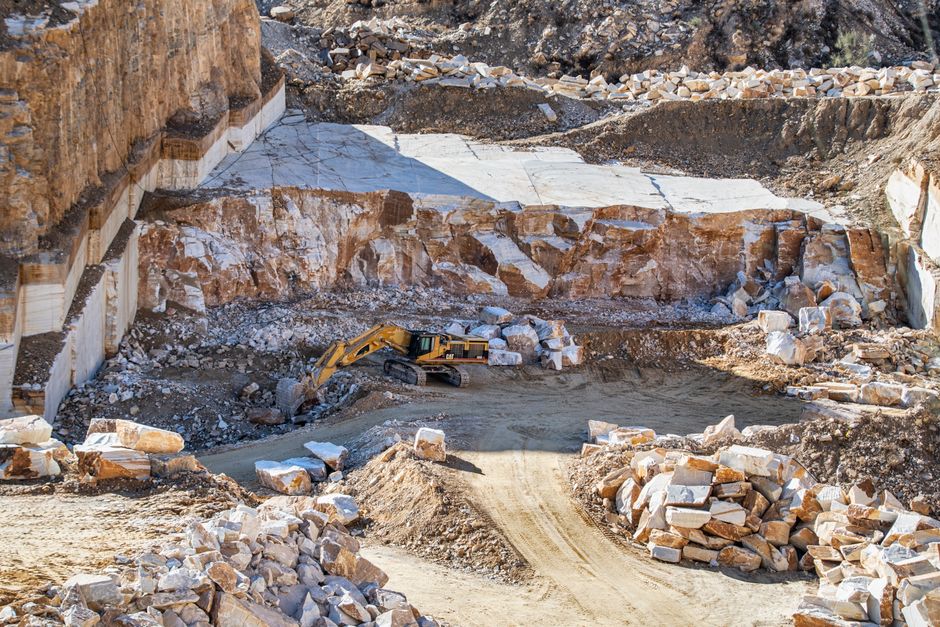
Granite, sandstone, limestone, slate. Common quarried materials all contain crystalline silica at varying concentrations. Granite can be 25 to 30 percent silica by content. Operations that crush, drill, blast, screen, or convey these materials generate RCS continuously.
The problem is not ignorance of the hazard. Most quarry operators know silica is present. The problem is underestimating exposure levels. Dust that dissipates quickly in open air can feel manageable. It does not look like a confined-space hazard. Workers do not drop on site. The damage accumulates silently across years, and by the time the first symptoms appear, the disease is already established and advancing.
The HSA's inspection focus targets exactly this complacency. Inspectors are checking for exposure monitoring, health surveillance records, engineering controls, and RPE programmes. They are not satisfied with a bag of disposable masks in the welfare unit.
What the HSA Is Actually Looking For
The Chemical Agents Code of Practice and the General Application Regulations set the framework. Silica has an occupational exposure limit of 0.1 milligrams per cubic metre as an eight-hour time-weighted average. That is a low threshold. Many quarry processes exceed it without adequate controls.
Inspectors arriving on site will look at several things in sequence.
Exposure assessment. Has the employer measured RCS levels at each work task where dust is generated? Not assumed. Measured. Air monitoring data needs to exist, be current, and reflect actual working conditions including peak activities like blasting and crushing runs.
Engineering controls. Water suppression on crushers and conveyors. Enclosed cabs with filtered air on mobile plant. Local exhaust ventilation where dust is generated in enclosed areas. These controls need to be in place and functioning, not switched off because they are inconvenient or the weather is dry.
Health surveillance. Workers exposed to RCS above defined action levels must have periodic lung function testing and chest examinations. This is not optional and it is not a box-ticking exercise. Records must be kept for 40 years because the latency of the disease demands it.
Respiratory protective equipment. RPE is the last line of defence, not the first. Where engineering controls cannot reduce exposure to below the limit, properly fitted FFP3 or P3 respirators are required. Fit testing must be documented. Workers need to know how to wear, store, and replace them.
Training. Workers must understand what RCS is, how it damages health, and why controls exist. A safety induction from three years ago covering manual handling does not cover this.
The Enforcement Reality
The HSA does not arrive in quarries looking to write improvement notices and move on. Prosecutions under the Safety, Health and Welfare at Work Act carry fines up to €3 million for companies and up to €3 million plus imprisonment for individuals. Quarrying companies that cannot demonstrate an adequate chemical agents risk assessment for silica, cannot produce health surveillance records, or have workers operating without appropriate RPE face real legal exposure.
Beyond prosecution, there is civil liability. A worker who develops silicosis in their fifties and can trace it to inadequate controls at a previous employer has a strong claim. The 40-year record-keeping requirement exists precisely because these cases take decades to emerge.
The Personal Part
Health campaigns tend to stay abstract until someone connects the risk to a specific person. The HSA's quarry inspection push works because silica disease is not a population-level statistic. It is the driller who worked a face without a water suppression system for a decade. It is the plant operator whose cab filtration system was broken for six months and nobody fixed it. It is the crusher operative who wore the wrong class of dust mask because the right ones were never ordered.
These are not failures of courage or care. They are failures of management systems that did not treat an invisible hazard with the same urgency as a visible one. A falling rock gets immediate attention. A cumulative lung burden does not, until it is too late to do anything about it.
What to Do Before Inspectors Arrive
Start with the exposure assessment. Commission air monitoring across your main dust-generating tasks if you do not have current data. Identify which workers are exposed above the action value of 0.05 mg/m³ and the limit value of 0.1 mg/m³. That determines everything else you are required to do.
Check engineering controls are operational and documented. Fix the water suppression. Maintain cab filtration. Do not rely on dry conditions or wind direction as control measures.
Audit your health surveillance programme. If workers have not had lung function tests within the required interval, arrange them now. Use an occupational physician or occupational health nurse with experience in respiratory disease, not a general GP doing a cursory check.
Review your RPE. Confirm fit tests are on record for every worker who needs a respirator. Replace any equipment that is expired, damaged, or the wrong specification for silica.
Run toolbox talks that explain the disease, not just the rules. Workers who understand that they are accumulating irreversible lung damage right now make better decisions than workers who have been handed a laminated poster.
The Uncomfortable Truth
Silica disease in quarrying is not an emerging hazard that industry has not had time to address. The risks have been documented for decades. The controls exist, they work, and they are not prohibitively expensive compared to the cost of a sick workforce and a prosecution. The occupational lung disease picture across Irish industry has consistently shown that respiratory hazards get less management attention than acute injury risks, despite the long-term burden being comparable or worse.
The HSA's inspection campaign is an opportunity to fix this before someone else's breathing test shows irreversible restriction.
By the time a worker feels the damage, the only option left is managing decline. The window for prevention is open now, while the lungs are still intact.