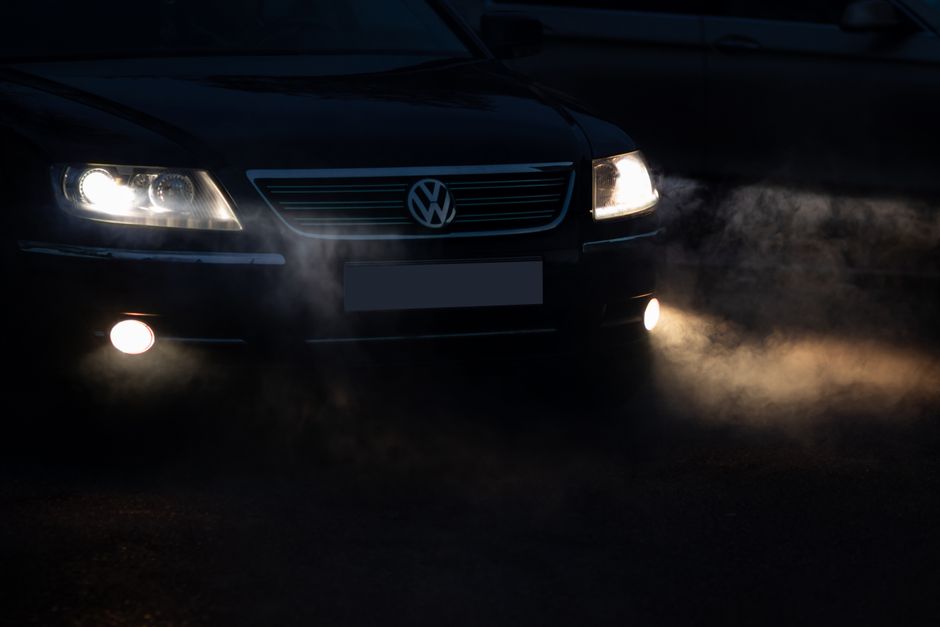
Met Éireann issues a yellow fog warning. Your drivers get in their vans and go anyway. Nobody has written down what visibility level triggers a stop, what route changes are acceptable, or who makes the call. That is not just a safety problem. It is a compliance failure waiting for a coroner.
The Gap Most Companies Never Close
The Safety, Health and Welfare at Work Act 2005 is clear. Employers have a duty to manage risks to employees, and that duty does not pause because the hazard comes from the sky rather than a machine. Under Section 8, employers must identify hazards, assess risks, and implement controls. Fog is a hazard. Driving in it is a task. If your company sends people to drive in zero-visibility conditions without a documented protocol, you have skipped two of those three steps.
Most companies have no fog protocol at all. They have a vague cultural norm that amounts to "use your judgment." That sounds reasonable until a driver is rear-ended on the M7, their vehicle is destroyed, they are off work for six months, and your solicitor is explaining to a court that your risk assessment never mentioned adverse weather conditions. At that point, "we trusted them to be sensible" is not a legal defence. It is an admission that you had no system.
The driving for work framework in Ireland treats work-related road risk as an occupational safety matter, not just a traffic matter. The HSA has consistently held that if someone is injured while driving for work, the employer's safety management system is in scope. Weather conditions are part of that system.
What Visibility Actually Does to Stopping Distance
Fog does not just limit sight. It distorts speed perception. Drivers in dense fog consistently underestimate how fast they are travelling because they lose peripheral reference points. A vehicle doing 80 km/h in fog with 50 metres of visibility has a stopping distance of roughly 53 metres in dry conditions, before you account for reaction time, wet roads, or any mechanical delay. At that point, physics has already made the decision. The driver is just along for the outcome.
The legal speed limit in fog is not suspended. Fog lights help, but they are not a substitute for appropriate speed and following distance. When visibility drops below 100 metres, driving at 100 km/h on a motorway is not permitted, full stop. If your driver is doing that in a company vehicle, that is your fleet on the road creating risk.
What a Fog Protocol Actually Looks Like
You do not need a 40-page policy document. You need three things written down, communicated to every driver, and confirmed in their training record.
A trigger threshold. When does the protocol activate? A Met Éireann yellow warning is a reasonable trigger. So is a local visibility reading below 100 metres. Pick a standard and use it consistently.
A decision process. Who decides whether a driver proceeds, delays, or stays put? It should not be the driver alone, under pressure from a customer or a manager who is not in the fog. There should be a named supervisor who makes or confirms that call. This protects the driver from implicit pressure to push on, and it creates a defensible decision trail for the company.
Acceptable controls. This is the operational layer. Reduce speed, increase following distance, use rear fog lights, avoid overtaking, check in at waypoints. For higher-risk routes or longer journeys, the control might be to delay departure until the warning lifts. For genuinely dangerous conditions, the correct control is not to travel at all.
That last option is where employers hesitate. The concern is commercial: deliveries delayed, clients annoyed, revenue lost. But compare that to the cost of a serious collision involving a company vehicle. Insurance excess, civil liability, HSA investigation, potential prosecution, reputational damage, and the human cost that sits outside any financial calculation entirely.
The Insurance Angle Nobody Reads Until It Is Too Late
Your fleet insurance policy almost certainly contains a duty of care clause. If you send a driver into conditions you knew were dangerous, and the weather warning was public, and you had no documented process for managing that risk, you have handed your insurer an argument. They will use it.
The concept here is negligence, and it applies in both directions. The injured third party's solicitor will argue your company was negligent in sending a driver out. Your insurer may argue you failed to meet the standard of care your policy requires. You end up paying costs from both directions.
The Practical Solution for Small Fleets
If you have one van and two drivers, you do not need a fleet manager or a transport safety officer. You need a written safe driving for work policy that includes weather conditions. It should be one page. It should name the person responsible for weather-related decisions. It should specify what Met Éireann warning level triggers a review. And it should be signed by every driver.
Pull that policy out the next time there is a fog warning. Make the call. Record it. If the call is "proceed with extra care," document the conditions and the controls agreed. If the call is "wait two hours," document that too. This is not bureaucracy. It is evidence that you managed the risk rather than ignored it.
The workers on lone driving assignments are particularly exposed here. No colleague to flag that the conditions are worsening, no one to notice they have gone quiet on check-in. A fog protocol for lone drivers needs to include a contact schedule and an escalation trigger if they miss it.
The Turn
Irish employers will spend significant energy on manual handling training, PPE audits, and fire evacuation drills. All of that is correct. But the same companies that document every trip hazard on their premises will send a driver into zero-visibility conditions without a single written word about how that decision should be made. The road is a workplace. The fog is a hazard. The employer's duty covers both.
If your company does not have a weather protocol for work driving, today is the day to write one. Because the next yellow warning is not far away, and neither is the liability.