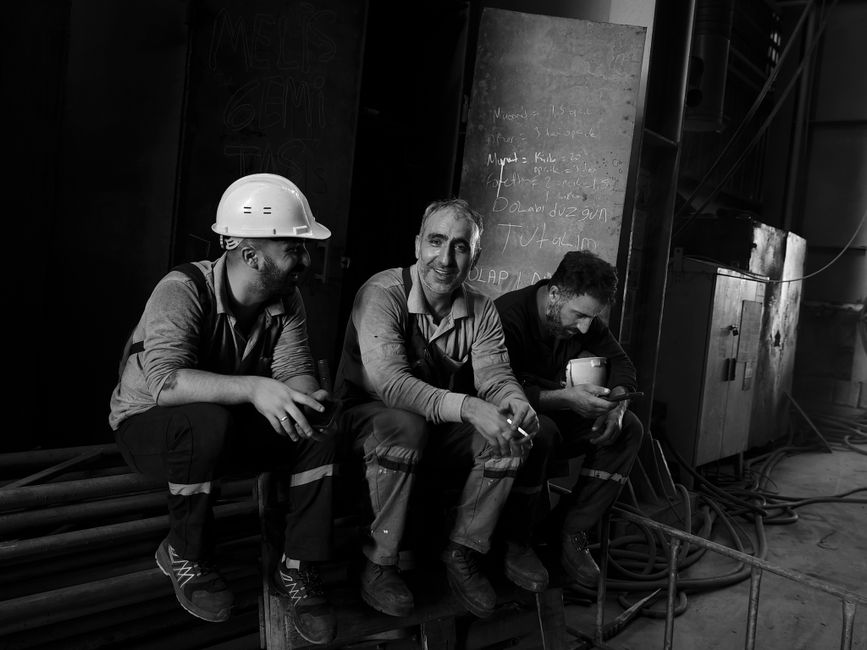
A worker sees something wrong. They say nothing. Three weeks later, someone gets hurt. The investigation calls it a near-miss. It was not. It was a prediction.
The silence before an incident is not neutral. It is active. When people on your team hesitate to raise a hazard, skip the near-miss form, or find reasons not to flag something to a supervisor, that hesitation is information. Most organisations treat it as nothing. The ones that keep showing up in HSA prosecution reports treat it as nothing consistently.
Workplace anxiety and low psychological safety are not soft issues parked in HR. They are operational risk factors with measurable consequences. The research on this is not ambiguous. Teams with low psychological safety report fewer hazards, produce more workarounds, and accumulate the kind of latent risk that makes incident investigators say "this was waiting to happen" after the fact.
What Psychological Safety Actually Means in a Safety Context
People throw the term around a lot. The core of it is simple: psychological safety is whether your team believes they can speak up without being punished, dismissed, or made to feel stupid.
Amy Edmondson at Harvard spent years studying this in high-risk settings, including hospitals. Her finding was counterintuitive. High-performing teams reported more errors and near-misses, not fewer. They were not more accident-prone. They were more honest. The lower-performing teams were suppressing information.
The same dynamic plays out on Irish sites, in food processing plants, in warehouses, in care settings. When someone calls out a hazard and gets told to stop catastrophising, they learn. They learn that speaking up costs more than staying quiet. That lesson spreads. Within months you have a team that has collectively decided that hazard reporting is someone else's problem.
The Near-Miss Numbers Lie
Your incident reporting data is not objective. It reflects what people felt safe reporting.
A low near-miss count is not evidence that your site is safe. It is often evidence that your team has stopped telling you things. The Health and Safety Authority has noted for years that underreporting is endemic across Irish workplaces. The question every safety manager should ask is not "how many near-misses did we log?" but "why did someone decide not to log the ones they saw?"
The answer almost always comes back to culture. Was the last person who reported a hazard thanked or interrogated? Did a previous near-miss report get used to discipline someone? Did a supervisor respond to a flag by rolling their eyes? Those moments create the template. People are watching how you respond to information, and they adjust what information they give you accordingly.
The mental health impact of workplace near-misses runs deeper than most organisations realise. Workers who experience a close call and say nothing carry that stress alone. That unprocessed experience does not disappear. It accumulates.
Anxiety as a Leading Indicator
Most safety systems are built around lagging indicators. Incident rates. Lost time. Compensation claims. You are measuring outcomes after damage is done.
Anxiety in your workforce is a leading indicator. It tells you something is wrong before the injury happens.
Specific signs worth paying attention to:
Workers double-checking things without being asked. Sometimes this is thoroughness. Sometimes it is anxiety about a piece of equipment or a process they do not trust but have not flagged.
Reluctance around certain tasks or areas. If two or three people consistently find reasons to avoid a particular machine or a specific part of the site, that pattern means something.
Increased sick leave around certain shift patterns or after certain supervisors. Presenteeism before an absence is a real phenomenon. People push through anxiety until they cannot.
Informal conversations about hazards that never make it to formal reporting. If workers are talking about something among themselves but not putting it on paper, you have a trust deficit, not a hazard deficit.
Why Supervisors Are Usually the Bottleneck
Most near-miss reporting failures trace back to the immediate supervisor, not the system. A worker might be willing to report. If they believe their supervisor will dismiss it, mock it, or use it against them, they will not bother.
This puts significant responsibility on first-line managers. They set the local culture. A safety manager with a well-designed reporting system and progressive policies can have their entire framework undermined by one supervisor who treats safety concerns as time-wasting.
Psychological safety in Irish workplaces does not come from a policy document. It comes from what supervisors do on Tuesday afternoon when someone flags something inconvenient.
Training helps. But supervisors also need to be held accountable for reporting culture on their teams. If a team consistently produces zero near-miss reports while adjacent teams with similar work produce twelve per quarter, that discrepancy is a management problem, not a statistical quirk.
What You Can Actually Do
Fix the response before you fix the form.
The physical near-miss report is not the problem. How the organisation responds to what lands on it is the problem. Make the feedback loop visible. When someone reports a hazard and something changes as a result, say so explicitly. Name the report. Thank the person. Show the team that reporting produces action, not awkwardness.
Separate reporting from blame.
Your investigation process needs to find causes, not culprits. Workers know the difference between a genuine root cause analysis and a performance management exercise wearing a safety hat. If your investigations consistently find "human error" without asking why the human was in a position to make that error, your team knows you are not serious.
Create anonymous channels, then make them unnecessary.
Anonymous reporting tools have a place. But the goal is a culture where anonymity is not needed. Use anonymous channels as a bridge, not a permanent solution. If everything meaningful only comes through anonymous reports, you have not solved the problem.
Check in on the people who witnessed incidents.
Near-misses and incidents affect more than the person directly involved. Witnesses carry stress too. Ask. Not in a tick-box way. Actually ask.
The Turn
The irony in all of this is that anxiety about safety is rational. It means people are paying attention. A team member who is anxious about a piece of equipment or a process is doing exactly what you need them to do. What breaks down is not their perception. It is the channel between their perception and your decision-making.
Build the channel. Protect the people who use it. The rest of your safety programme depends on it.