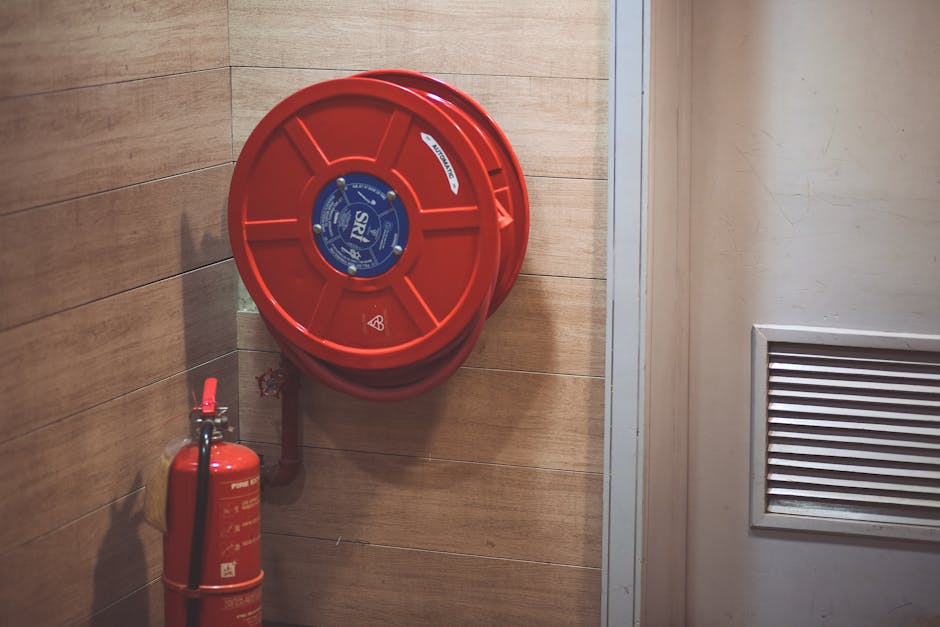
Most fires in Irish workplaces are preventable. Most fire deaths are too. The gap between prevention and tragedy is usually paperwork nobody filed, a drill nobody ran, and an extinguisher nobody checked.
The law on this is not complicated. The Fire Services Acts 1981 and 2003 place a duty on every person having control of premises to take reasonable measures for the safety of people in or about those premises in the event of an outbreak of fire. That includes you. It includes the unit in the industrial estate, the restaurant in the town centre, and the office block above the pharmacy.
What the legislation lacks in drama it makes up for in consequence. A fire safety prosecution in Ireland can result in unlimited fines. More to the point, the Dublin Fire Brigade and local authority fire officers can inspect without notice, and they do.
Fire Safety Certificates: When You Need One
A fire safety certificate is required before you build, extend, or materially alter a building used for any purpose other than a dwelling. It is also required for a material change of use, turning a warehouse into an office, for example.
The application goes to the relevant building control authority. You submit drawings showing escape routes, fire detection systems, emergency lighting, compartmentation, and fire suppression where relevant. The authority reviews against the Technical Guidance Document B. Approval means the design meets the standard. It does not mean the finished building will.
Completion of the work still requires a certificate of compliance from a competent person. That person certifies the building was constructed in line with the approved drawings. Nobody checks this as thoroughly as they should, which is why fire officers still find walls with holes punched through them that destroy the compartmentation the certificate assumed was there.
If you are taking on a premises that has been altered by a previous tenant, get the fire safety certificate history. If it does not exist, you have inherited a problem.
The Fire Register
The fire register is not optional and it is not a formality. It is the written record of everything you do to maintain fire safety in your premises. Courts and fire officers treat it as evidence.
What goes in the register:
- All fire safety equipment inspections, extinguishers, hoses, sprinklers, alarm panels, emergency lighting
- Test dates and results for the fire detection and alarm system
- Records of every fire drill, including date, time, number of staff, evacuation time, and any issues noted
- Training records for designated fire wardens
- Details of any false alarms, including the cause and what was done about it
- Any maintenance or remedial work carried out on fire safety equipment
The register needs to be current. An entry from three years ago means nothing if there is nothing from last month. Fire officers look at the dates first.
Evacuation Plans: Not Just a Map on the Wall
The evacuation plan is a document that explains, in detail, how your building will be cleared and how everyone will be accounted for in the event of a fire. A laminated floor plan with arrows pointing at fire exits is not an evacuation plan.
A proper plan covers:
- Who raises the alarm and how
- Who calls the fire brigade (the answer is not "everyone assumes someone else did it")
- Named fire wardens for each area and their specific responsibilities
- Assembly point location and who manages roll call
- Procedures for people who need assistance to evacuate
- What happens if the primary escape route is compromised
- How visiting contractors, delivery drivers, and members of the public are accounted for
The plan only works if people know it. Fire drills are not a box-ticking exercise. They are the only way to find out that the fire door on the second floor has been wedged open, that the assembly point is in the lorry delivery path, or that three staff have never been told where the exits are.
Run a drill at least once a year. Twice is better. Record it in the register.
Extinguisher Types: Using the Right One Matters
Grabbing the wrong extinguisher can make a fire worse. This is not hypothetical. A water extinguisher on an electrical fire or a chip-pan fire creates a serious secondary hazard.
The colour coding system in Ireland follows European standard EN 3. Know what you have and where it is:
Red (Water): Class A fires. Paper, wood, textiles. Not for electrical equipment, flammable liquids, or cooking oils.
Cream (Foam): Class A and B fires. Flammable liquids as well as solids. Not for electrical equipment unless specifically rated.
Black (CO2): Electrical equipment and Class B fires. Leaves no residue. Standard choice for server rooms and office environments.
Blue (Dry Powder): Class A, B, and C fires. Versatile but messy, and visibility drops fast when it discharges. Generally not recommended for enclosed spaces.
Yellow (Wet Chemical): Specifically designed for Class F fires involving cooking oils and fats. Required in any commercial kitchen.
Every fire extinguisher must be inspected annually by a competent person. The inspection record goes in the register. Extinguishers should also be checked monthly, a quick visual to confirm the pressure gauge is in the green, the pin is intact, and the unit is accessible.
Accessible is worth emphasising. A fire extinguisher behind a stack of boxes is not an extinguisher. It is a decoration.
Staff Training
Every employee needs to know the location of fire exits, the sound of the fire alarm, the assembly point, and that their job in a fire is to get out, not to collect belongings or investigate the smell. Fire wardens need more formal training covering evacuation procedures, fire suppression basics, and how to use the extinguisher types in their area.
Training is recorded. It is in the register. A new starter who has not been briefed on fire procedures before their first shift is a liability, and it is your liability.
The Fire Services Acts are not there to generate paperwork. They exist because people have burned to death in workplaces where somebody knew the escape route was blocked and did nothing about it. The register, the drills, the certificates, the right extinguisher on the right wall: none of it is complicated. All of it is required.
Get your register started today. If you already have one, open it and check when you last wrote anything in it.