Dust you cannot see is injuring people right now on Irish quarry sites. The HSA's new quarry inspection campaign is not a box-ticking exercise. It is a response to a pattern the authority has watched repeat itself for decades.
Why Quarries Are Different
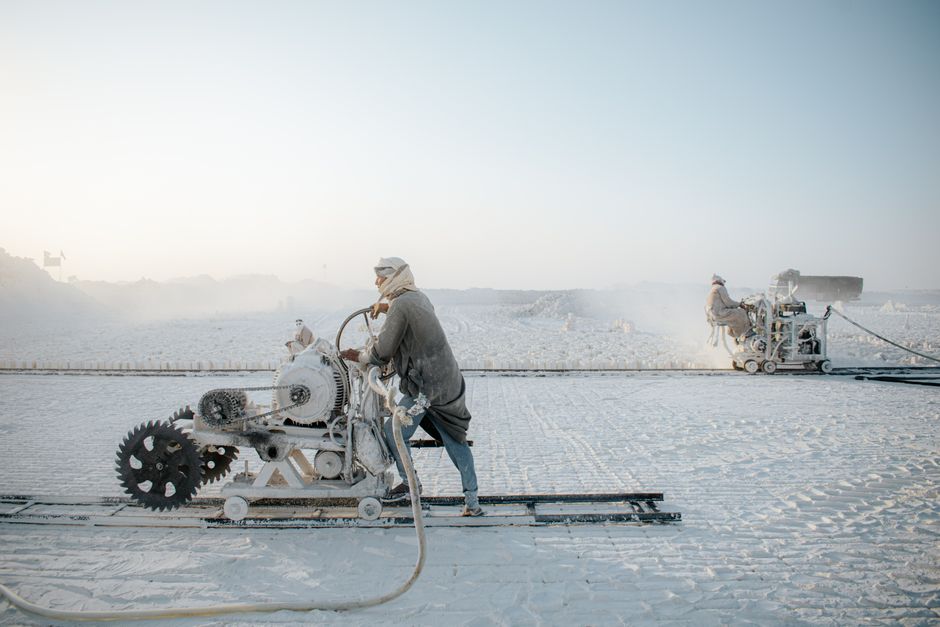
A quarry is not a construction site with bigger machines. It is a sustained, high-volume operation where the same workers breathe the same airborne material, day after day, year after year. Granite, basalt, limestone, sandstone. All of them generate fine respirable dust during drilling, blasting, crushing, and screening. Much of that dust contains crystalline silica, which does not dissolve in lung tissue. It stays. It scars. It causes silicosis, chronic obstructive pulmonary disease, and lung cancer.
The dose accumulates invisibly. There is no alarm. There is no sudden collapse at the end of the shift. There is just a slow reduction in lung capacity that most workers chalk up to getting older or being a bit unfit. That misattribution is where the real damage happens.
The Normalisation Problem
The HSA inspection campaign highlights something that site managers already know but rarely act on: workers normalise dust exposure. If the site has always looked dusty, the dust feels normal. If everyone on the gang coughs in the morning, morning coughing feels normal. If a colleague had to stop working at 58 with a bad chest, that gets filed away as bad luck rather than a foreseeable outcome of foreseeable exposure.
This is not a character flaw. It is how human beings process risk that is invisible, slow-acting, and shared by everyone around them. The problem is that by the time the breathlessness arrives and cannot be ignored, the damage is already irreversible. No treatment reverses silicosis. No inhaler gives back scarred tissue.
The HSA knows this. The inspection campaign targets the conditions that allow normalisation to flourish: absent or inadequate dust suppression, no health surveillance programme, RPE that is not fitted, not maintained, or not worn because the culture does not support it.
Recognising the Early Warning Signs
Early-stage occupational lung disease is easy to miss because it mimics common complaints. Here is what to watch for.
Breathlessness on exertion. Getting winded climbing a slope you managed easily two years ago. Workers write this off as weight gain or a lack of fitness. It is worth taking seriously, especially if you have years of dust exposure behind you.
A persistent morning cough. Not a cold, not hay fever. A cough that is always there, particularly first thing, and produces mucus. This is a classic marker of chronic bronchitis, which sits on the occupational lung disease spectrum.
Chest tightness during or after a dusty shift. This can indicate occupational asthma, which is reversible if caught early and exposure is stopped. Once it becomes chronic, occupational asthma is considerably harder to manage.
A gradual reduction in exercise tolerance over months. You stop walking fast. You take the stairs slower. You avoid activities you used to manage without thinking. The change is too gradual to attribute to any single moment, which is exactly why it goes unreported.
Recurrent chest infections. Lungs that are already inflamed and scarred are more susceptible to infection. If you are getting two or three chest infections a year when you used to get none, the baseline lung health question is worth raising with a doctor.
What Your Employer Is Required to Do
The Safety, Health and Welfare at Work (Quarries) Regulations 2008 are specific. Operators must carry out dust monitoring, implement engineering controls, provide suitable RPE, and run a health surveillance programme that includes pre-employment lung function tests and regular spirometry for exposed workers.
Health surveillance is not a perk. It is not optional. It exists precisely because the early warning signs above are subtle enough that individual workers will not reliably catch them on their own. A spirometry test done annually gives a baseline and tracks change. A 10 percent drop in FEV1 (the volume of air a person can exhale in one second) is a trigger for investigation, not a reason to tell someone to come back next year.
The HSA's inspection focus covers dust suppression at extraction and processing points, the condition and fit-testing records of RPE, and whether health surveillance records are being kept. Expect inspectors to ask for documentation. Expect them to ask workers directly whether they have been offered lung function tests.
The Controls That Actually Work
Wet suppression at the crusher and screen decks. Water sprays at drilling rigs. Enclosed cabs with filtered air systems on plant. Local exhaust ventilation in enclosed processing areas. These are the hierarchy of controls. RPE is the last line, not the first.
Silica dust is not just a construction concern, but quarries are among the highest-exposure environments in Irish industry, and the controls need to reflect that. A dusty face-piece that has never been fit-tested is not a control. It is a document on a file that will not protect anyone's lungs.
Managers who run health surveillance programmes consistently find early-stage changes that, had they been caught later, would have meant ill-health retirement and civil claims. The surveillance is not just the ethical choice. It is the commercially rational one.
The Turn
The HSA's quarry campaign will find non-compliance. It always does, because the industry has a long history of treating respiratory health as a long-term problem that can be dealt with later. Later has a habit of arriving as a 55-year-old who cannot walk to the end of his road without stopping. The inspection is not the threat. The dust is.
If you work on a quarry site and your employer has not offered you a lung function test in the last 12 months, ask for one now. If you manage a quarry and your dust suppression records are not in order, get them in order before an inspector asks to see them.
The injury is already happening. The question is whether it gets caught in time to matter.