Your workers are breathing in particles right now that will scar their lungs permanently, and nobody on site is treating it like the emergency it is.
Silica dust exposure doesn't announce itself. There's no smell, no immediate cough, no warning light. A worker can spend years cutting concrete blocks, grinding sandstone, or core-drilling reinforced slabs and feel absolutely fine. Then, somewhere between 10 and 30 years later, the diagnosis arrives. Silicosis. Possibly lung cancer. Certainly irreversible.
Awareness campaigns have their place, but they don't reduce airborne silica on a working site. What reduces it is a construction manager who knows exactly where the risk is, what controls are needed, and what an inspector will look for when they walk through the gate.
Where the Dust Actually Comes From
Respirable crystalline silica (RCS) is released when you cut, grind, drill, or crush materials containing it. On a typical Irish construction site, that means concrete, mortar, sandstone, slate, and fibre cement board. The particles that cause damage are so fine they float in the air and travel deep into the lungs. You cannot see them with the naked eye. The visible cloud of dust from a cut-off saw is the coarse fraction, largely harmless. The invisible fraction is the problem.
High-risk tasks include:
- Dry cutting with angle grinders or disc cutters
- Breaking up concrete with a breaker or jackhammer
- Sand or grit blasting
- Drilling into masonry or concrete without water suppression
- Sweeping up dust with a dry brush
Note the last one. Workers routinely brush up debris at the end of a shift without any respiratory protection, generating a fresh cloud of RCS in an enclosed space. It is one of the most common and most overlooked exposure events on any site.
What the Law Requires You to Do
Under the Safety, Health and Welfare at Work (Chemical Agents) Regulations 2001 and the 2020 amendments implementing the EU Chemical Agents Directive, RCS is classified as a hazardous substance. The occupational exposure limit for RCS in Ireland is 0.1 mg/m³ as an 8-hour time-weighted average. That number is not a target. It is the ceiling.
The legal framework requires you to:
- Assess the risk from hazardous substances before work begins
- Apply the hierarchy of control, starting with elimination or substitution
- Use engineering controls before relying on respiratory protective equipment (RPE)
- Monitor exposure where there is any doubt about whether the limit is being exceeded
- Provide health surveillance where a significant risk remains
If your current approach is "give them a dust mask and get on with it," you are not compliant. You are also not protected if a worker develops silicosis and a solicitor starts asking questions.
The Hierarchy in Practice
Elimination first. Can you use pre-cut materials supplied to size? On many jobs, yes. It costs slightly more up front and saves enormously later.
Substitution second. Can you use a lower-silica material? Fibre cement and certain engineered boards have lower RCS content than natural sandstone. Not always an option, but worth asking.
Engineering controls third. This is where most sites should be spending their energy.
Wet cutting suppresses dust at source. A water feed attached to a disc cutter reduces airborne RCS by over 90% compared to dry cutting. It costs almost nothing to set up. On-tool extraction, where a vacuum with an H-class filter is attached directly to the tool, is equally effective for grinding and drilling. Local exhaust ventilation (LEV) is required for fixed processes like masonry saws.
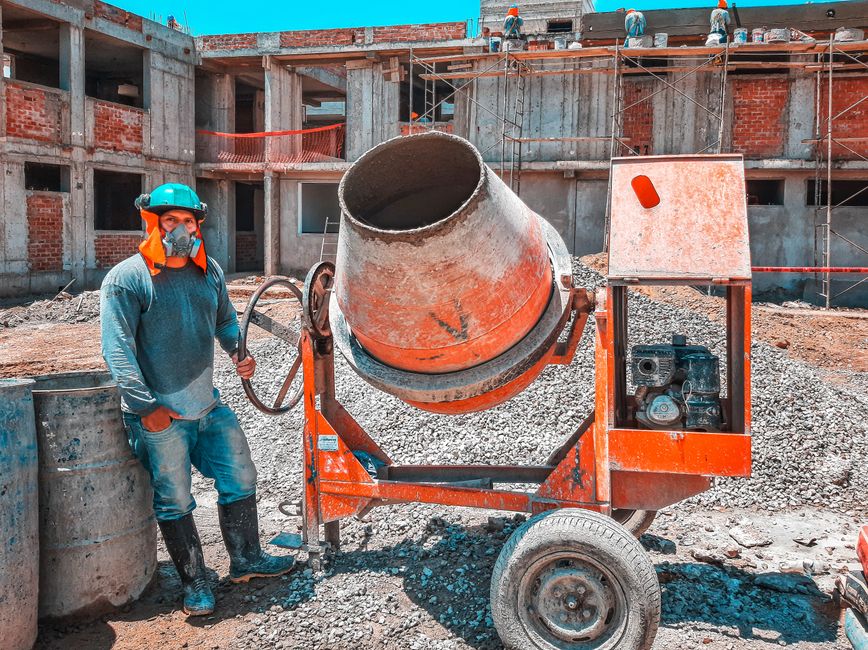
RPE is the last line of defence, not the first. The dust you cannot see requires a higher standard of protection than most sites provide. An FFP2 disposable is the minimum for occasional low-level exposure. High-exposure tasks require FFP3 or powered air-purifying respirators. Fit testing is not optional, and a beard seal leak will defeat the best respirator on the market.
What an HSA Inspector Will Actually Check
The Health and Safety Authority has been running targeted silica dust campaigns, and their inspectors know exactly what to look for. If they arrive on your site, here is what they will examine.
Your chemical agents risk assessment. If it does not specifically name silica-generating tasks, the tools used, the duration of exposure, and the controls applied, it will not satisfy them. Generic risk assessments for "dust" are not acceptable.
Evidence that wet cutting or on-tool extraction is in use. Not in the storeroom. Actually in use.
The class of RPE being worn and whether it is the right class for the task. A surgical mask on someone cutting sandstone is not a defence.
Health surveillance records. If workers have been regularly exposed above the action level, you need medical records showing ongoing lung function monitoring.
Training records. Workers must be told what silica is, which tasks generate it, what controls are in place, and how to use RPE correctly.
Setting Up Health Surveillance That Actually Works
Health surveillance for silica exposure means baseline lung function testing before or at the start of employment in a high-exposure role, followed by periodic spirometry, typically every three years, and annually for higher-risk workers. An occupational health physician or nurse must interpret the results. This is not something a GP does as a favour.
Silicosis in young workers is no longer a historical curiosity. Cases are appearing in workers in their 30s, largely driven by high-silica engineered stone. If your site handles any engineered stone products, the exposure potential is significantly higher than standard concrete work, and your surveillance frequency should reflect that.
Keep records for 40 years. That is not a typo. Lung disease from silica exposure can develop decades after the last exposure event, and you need to be able to demonstrate what controls were in place.
The Practical Checklist for This Week
Walk the site tomorrow with these questions:
- Which tasks this week involve cutting, grinding, or drilling silica-containing materials?
- Are water suppression or on-tool extraction systems available, maintained, and actually being used?
- Is the RPE being worn rated at minimum FFP2, fit-tested, and stored properly?
- Is dry sweeping happening anywhere? If so, stop it. Vacuum or wet methods only.
- Does the chemical agents risk assessment name silica specifically?
- When did the last health surveillance reviews take place?
None of this requires a consultant, a new budget line, or a working group. It requires a manager who takes a 20-minute walk and asks direct questions.
The HSA inspection is not the worst outcome here. The worst outcome is a worker filing a compensation claim in 2045 for a disease that your site caused in 2025, and the documentation showing you knew the risk and did the minimum.
Do the work now.