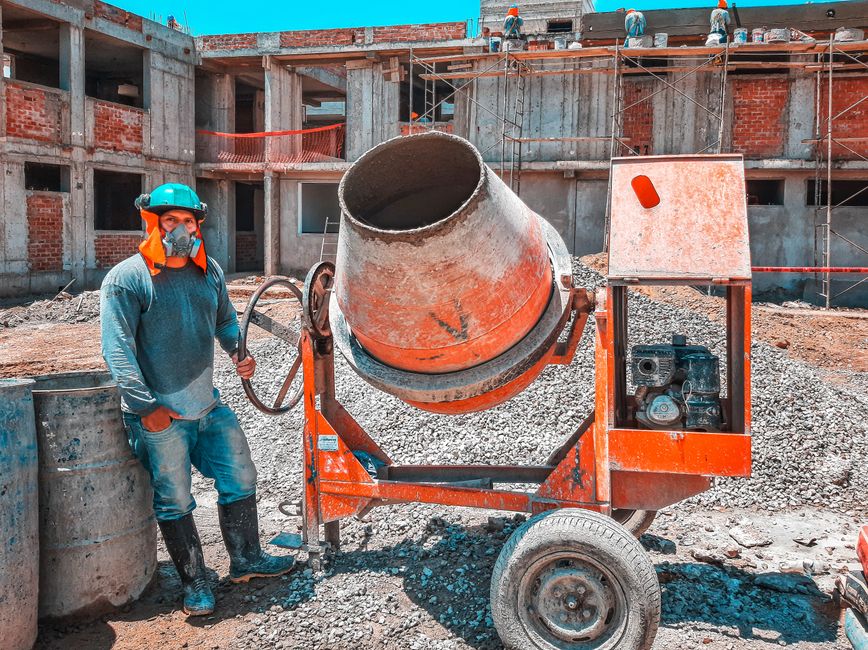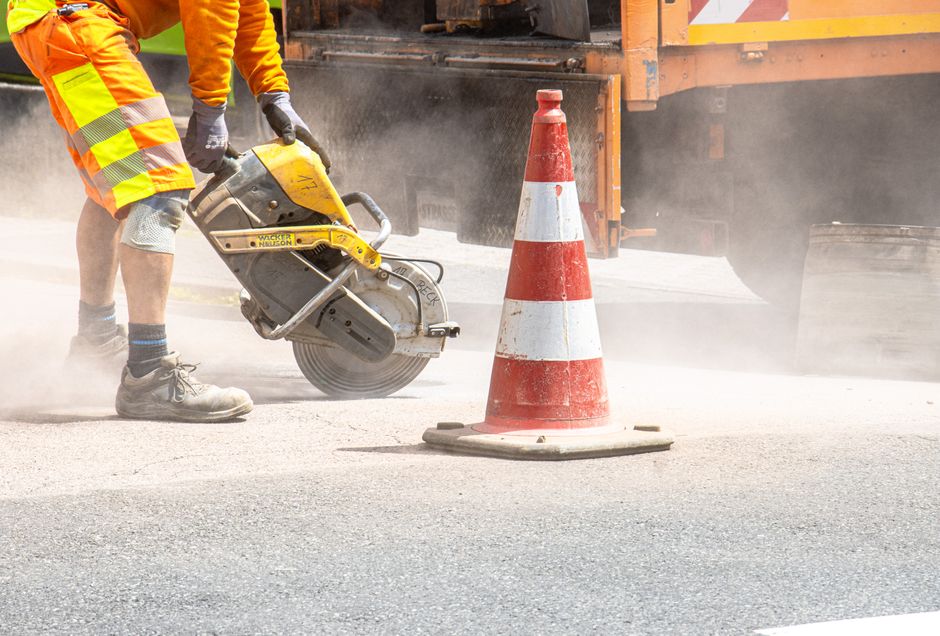
The mask is on. The worker feels safe. The silica is getting through anyway.
That gap between feeling protected and being protected is where silicosis develops. It takes years to show up, and by the time it does, the damage is permanent. The lungs do not repair themselves.
The Mask Problem Nobody Wants to Admit
Walk any active Irish construction site during cutting, grinding, or drilling work and you will see disposable dust masks. FFP1s pulled down under the chin. FFP2s worn loose. Masks with no fit check done, ever. Beards touching the seal. The mask is ticked on the PPE checklist, the supervisor has done their bit, and crystalline silica particles measuring 0.5 to 5 microns are passing straight through the gap between face and facepiece.
The Health and Safety Authority has been pointing this out for years. Enforcement actions consistently flag inadequate respiratory protection as a failing, not the absence of a mask, but the wrong mask used the wrong way. There is a meaningful difference between wearing PPE and using it correctly.
Silica dust becomes respirable at particle sizes you cannot see. The visible cloud from a disc cutter is mostly the coarser material. The dangerous fraction is invisible, stays airborne for hours, and settles deep in lung tissue. Your eyes tell you the dust has cleared. Your airways disagree.
Why Disposable Masks Often Are Not Enough
FFP1 masks filter 80% of airborne particles. On paper that sounds reasonable. In practice, cutting concrete or sandstone generates silica concentrations that can run 10 to 50 times the workplace exposure limit of 0.1 mg/m³. An 80% filter is not built for that environment.
FFP2 (94% filtration) is the minimum standard accepted for silica work in most European guidance. FFP3 (99%) or a half-face respirator with P3 filters is what the work often actually demands, especially in enclosed spaces, prolonged cutting operations, or when wet suppression is not being used alongside the PPE.
The mask rating printed on the packaging is a laboratory number. It assumes a perfect seal on a mannequin head in controlled conditions. Real faces have cheekbones, nose bridges, scars, stubble. Silicosis is now killing young workers who spent their twenties wearing masks that felt fine and leaked consistently.
What Actually Has to Happen Before the Mask Goes On
Face fit testing is not optional. Under the Safety, Health and Welfare at Work (General Application) Regulations, respiratory protective equipment must be suitable for the individual wearer. Suitable means tested. There are two accepted methods: qualitative fit testing (a hood, a bitter or sweet aerosol, and a pass or fail result) and quantitative fit testing (a machine that measures actual leakage around the seal). Qualitative is fine for disposable and half-face masks. You need the result recorded and repeated if the worker's face changes significantly, including weight loss, dental work, or scarring.
Clean shave is not negotiable. Any facial hair along the seal line breaks the face-to-facepiece contact. A day's stubble reduces mask protection by a factor that makes the rating on the box irrelevant. This is not a style preference issue. It is physics.
The fit check happens every single time. Put the mask on. Cup both hands over the facepiece. Exhale sharply. Feel for leakage at the edges. Inhale sharply. The mask should collapse slightly inward. This takes eight seconds and it is the most basic quality control step in respiratory protection. It is skipped constantly.
Storage matters more than people think. A disposable mask crushed at the bottom of a tool bag, bent along the nose wire, or left in the sun in a car loses its structural integrity. The seal is compromised before it goes on. FFP masks are single-use for a reason.
Hierarchy First, Mask Second
The mask is at the bottom of the control hierarchy. It is the last line of defence, not the plan. The HSA's approach to silica aligns with the general principles of prevention: eliminate, substitute, engineer, then protect.
On site that means:
Wet cutting. Water suppression during disc cutting reduces airborne silica by up to 90%. The attachment exists. It works. It gets skipped because it takes an extra two minutes to set up.
On-tool extraction. Vacuum systems fitted directly to grinders, drills, and disc cutters capture dust at the source. Local exhaust ventilation for fixed operations does the same. These are not theoretical options. They are specified in the HSA's silica code of practice and they are available from most tool hire companies.
Task planning. Scheduling high-dust work when other trades are not in the area. Keeping people out of the dust zone. Breaking jobs into shorter intervals. None of this requires new equipment.
When these controls are in place, the demand on the mask drops significantly. When they are absent, the mask is carrying the full weight of a job it was never designed to do alone.
What the Employer Is Actually Required to Do
The Control of Substances Hazardous to Health framework (applied in Irish law through the Chemical Agents Regulations) requires a written risk assessment for silica-generating work, control measures implemented in hierarchy order, health surveillance for exposed workers, and records kept.
Health surveillance for silica means lung function testing, not a general occupational health questionnaire. Spirometry. Baseline on engagement, repeated at intervals based on exposure level. The point is to catch restriction early, before the worker is symptomatic, because by the time symptoms appear, significant irreversible damage has already been done.
Toolbox talks that mention silica and then hand out FFP2 masks without fit testing, without wet cutting, without extraction, without health surveillance, are not a silica control programme. They are paperwork.
The Gap Between the Site File and the Site
Construction firms know how to write a method statement. The method statement says wet cutting, on-tool extraction, RPE. Monday morning on site, the tool arrives without the water attachment, the extraction unit is on another job, and the lads crack on because the block layer is waiting. The mask goes on. The gap stays open.
Supervisors are the critical link here. Not because they are responsible for writing the controls, but because they are standing there when the controls get abandoned. An inspector who walks onto that site sees the outcome. A supervisor who challenges the shortcut prevents it.
Enforcement alone does not solve this. Fines follow incidents. Incidents follow exposure. Exposure happens in the gap between the safety plan and the work as it is actually done. Closing that gap requires someone on the ground, every day, treating the method statement as a live document rather than a pre-start formality.
The mask is not the safety system. It is what you use when the safety system is working. Get the system right first, then put the mask on properly.