A worker died. Two companies paid €190,000 in fines. And the failures that caused it are probably on a site near you right now.
The prosecution of Glenveagh Properties and its subcontractor KDK Formwork following a fatal scaffolding incident is the kind of case that should land on every contracts manager's desk in Ireland. Not because the companies are unusual, but because they are not. The failures were textbook. The oversight gaps were common. The result was a fatality and a six-figure penalty split between principal contractor and subcontractor, a reminder that when something goes wrong on a multi-party site, nobody escapes clean.
Glenveagh, as principal contractor, was fined €95,000. KDK, as the subcontractor with direct site responsibility, was fined €95,000. The charges related to failures under the Safety, Health and Welfare at Work (Construction) Regulations 2013, specifically around the management and inspection of scaffolding. The court accepted guilty pleas from both parties.
What the Prosecution Actually Found
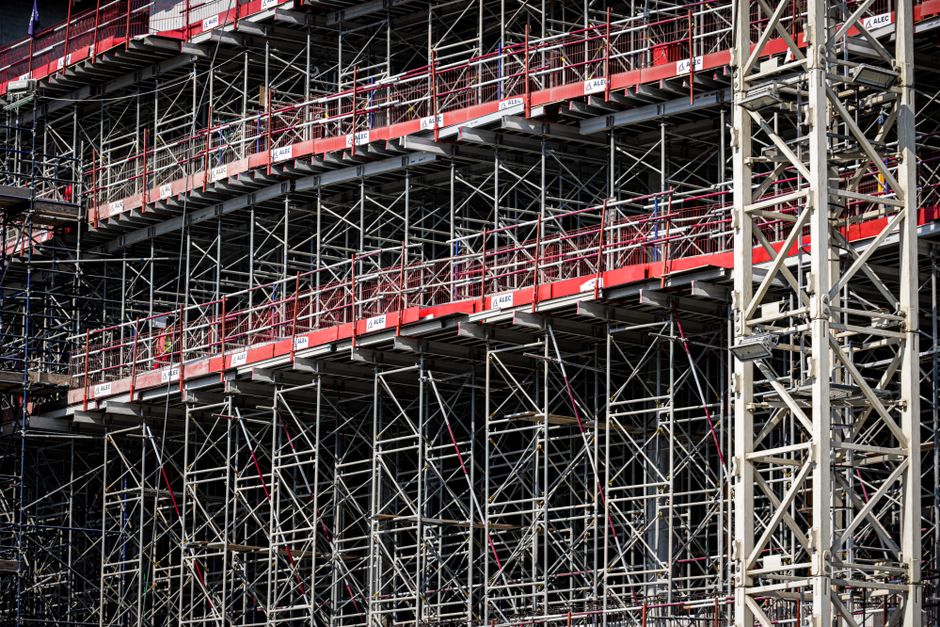
The investigation centred on whether the scaffold had been erected, inspected, and maintained to the required standard. It had not. The specific failures included inadequate inspection records, scaffolding that had not been examined by a competent person at the intervals the law requires, and a system of work that left critical safety checks to chance.
Under Irish law, any scaffold from which a person could fall more than two metres must be inspected by a competent person before first use, after any event that may have affected its strength or stability, and at intervals not exceeding seven days. These are not suggestions. They are Schedule 8 of the 2013 Construction Regulations, and ignoring them is how you end up in the Circuit Criminal Court.
The case also exposed a coordination failure between Glenveagh and KDK. Principal contractors carry a duty to ensure their subcontractors are actually complying with safety requirements on site, not just certifying that they will comply in a pre-contract document. The gap between paperwork and practice is where people get killed.
The Two-Company Problem
One of the underappreciated lessons here is how liability distributes across a principal contractor and subcontractor relationship. The role of project supervisor is clearly defined under Irish construction law, but the assumption that a subcontractor's safety plan insulates the principal contractor is wrong.
Glenveagh was not the company running the formwork. KDK was. But Glenveagh had an obligation to monitor, coordinate, and verify. That obligation carries a fine of up to €500,000 in the Circuit Court, and in this case the court landed on €95,000 for each party. Neither company can describe that as a tap on the wrist.
The split penalty model is now established. If you are a principal contractor and your sub's scaffolding kills someone, you are a co-defendant.
What Your Site Audit Should Cover
This is not a theoretical exercise. If an HSA inspector walked onto your site today, these are the scaffold-specific questions they would ask, and that you should be able to answer without going looking for paperwork.
Inspection records. Every scaffold over two metres must have a written inspection record. The record must include the date, the name of the person who carried it out, their competency basis, and what was found. If your records are handwritten pages in a folder nobody has looked at since March, that is a problem.
Competent person. Who is signing off on scaffold inspections? Competent means they have the training, experience, and knowledge to identify defects. It does not mean the most senior labourer on site that morning. If the name on the inspection sheet cannot be matched to verifiable scaffold inspection training, you have an exposure.
Seven-day intervals. Check the dates on the last three inspection sheets. If the gap between any two is more than seven days, you are already in breach. This catches sites out constantly because the seven-day clock keeps running over weekends and bank holidays.
Post-event checks. Any time there is a storm, an impact from plant or materials, or any modification to the scaffold, a new inspection is required before work resumes. Not the next day. Before resumption. Does your site have a protocol for this? Is it written down? Is anyone responsible for triggering it?
Handover certificates. When a scaffold is erected by a specialist and handed over to trades for use, a handover certificate should be in place. This confirms it was erected in accordance with the design or standard and is safe for the loading it will carry. Missing handover certificates are a recurring finding in HSA inspections.
Loading compliance. Scaffold boards are not a storage solution. Overloaded platforms are a structural failure waiting to happen. Walk the platform. If there are materials stored on it that were not accounted for in the loading plan, that is an immediate issue.
Edge protection. Guardrails at 950mm minimum height, mid-rails, and toe boards. All three. Not two of the three because someone borrowed a toe board last Tuesday.
The Audit You Should Run Before Monday
Print last month's scaffold inspection records. Check the dates, the names, and whether the identified deficiencies were closed out. Then walk the scaffold and see if what the paperwork says matches what you can see with your own eyes.
Scaffold collapses and falling materials share a common thread in investigation reports: the hazard existed for days or weeks before the incident, and nobody with authority had looked at it. Not because they were negligent in a deliberate sense. Because the system did not require them to look.
That is the system you are auditing. Not individual behaviour. The system.
Fines Are the Floor, Not the Ceiling
€190,000 sounds significant. Against the legal costs, the reputational damage, the civil claims from a bereaved family, the management time consumed by a multi-year investigation, and whatever insurance consequences follow, it is the smallest number in the equation.
The HSA has made scaffold safety an enforcement priority. That is not speculation; it is visible in the prosecution pattern over the past three years. Sites that treat scaffold inspection as a paper exercise rather than a physical check are the ones appearing in court. The regulator does not have infinite inspector capacity, but it does have the ability to pursue criminal charges when someone dies and the records show the system was not working.
Your site safety plan says the right things. The question is whether anyone is doing them.
Get on the scaffold. Check the records. Close the gaps. Because the alternative, as Glenveagh and KDK now know, is considerably more expensive.