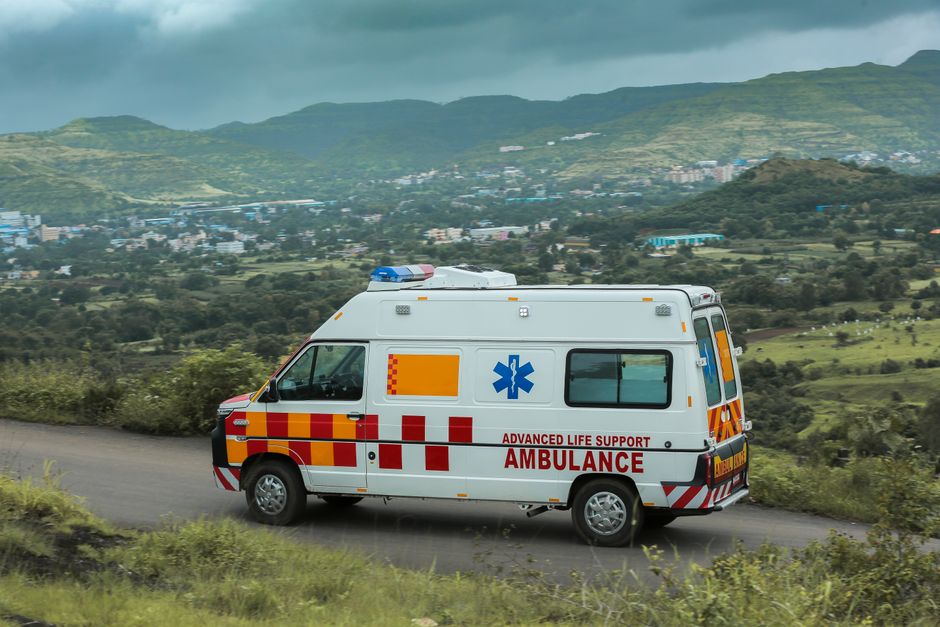
You dial 999 in a farmyard outside Clones. The nearest ambulance is in Enniskillen. Nobody told you that, and your emergency plan certainly didn't account for it.
This is not a hypothetical. The Order of Malta's recent European conference on cross-border emergency services put the issue in plain terms: rural businesses and workplaces operating near the Irish border often have no idea which country's emergency services will reach them first, what clinical protocols that crew will follow, or whether the two services have even spoken to each other in advance. For most businesses, the emergency response plan assumes a single, predictable system. That assumption is wrong in a significant stretch of Irish geography.
The island shares a 499-kilometre land border. Emergency services on both sides have developed cooperation arrangements over the years, and there are genuine examples of good cross-border communication, particularly in counties like Cavan, Monaghan, Leitrim, Donegal and Fermanagh. But good intentions and formal agreements are different things. And for employers with a legal duty to plan for emergencies, the distinction matters.
What the Coordination Gap Looks Like in Practice
Picture a serious crush injury or amputation on a construction site 3 kilometres from the border. The Irish National Ambulance Service responds. So does a Northern Ireland Ambulance Service crew that was 7 minutes closer. They arrive almost simultaneously. One crew operates under HSE (Ireland) clinical guidelines. The other operates under NIAS protocols. The drugs they carry may differ. The handover documentation differs. And nobody in the chain planned for two crews, two sets of paperwork, and two different radio systems.
That scenario is not the nightmare version. The nightmare version is when nobody from the other side shows up at all, because the call was routed to the wrong dispatch centre and no one flagged the location.
The core problem is geography versus bureaucracy. Borders are lines on maps. Response times are a function of distance and road quality. A farm on the Fermanagh edge of Cavan operates in a world where the fastest help might cross a jurisdictional line before anyone has had a conversation about it.
What Irish Employers Are Actually Required to Do
The Safety, Health and Welfare at Work Act 2005 requires employers to have emergency plans. Those plans must identify the procedures for contacting emergency services, the arrangements for first aid, and the responsibilities of designated personnel. The law does not explicitly address cross-border complexity, because the law was not written with a Monaghan mushroom farm in mind.
But a risk assessment that ignores the reality of where help is coming from is not a good risk assessment. If your nearest hospital is Enniskillen rather than Cavan, your plan needs to reflect that. If a seriously injured worker may be stabilised by a NIAS crew operating under different clinical guidelines before being handed over to Irish services, your first aiders need to know that is a possibility.
The HSA expects employers to plan for reasonably foreseeable emergencies. A delayed or confused cross-border response in a border county is not a freak scenario. It is reasonably foreseeable.
The Practical Steps That Actually Help
Find out who is actually closest. Contact your local INAS station and ask directly whether cross-border arrangements exist for your specific address. Some areas have signed memoranda of understanding between NIAS and INAS. Others operate informally. A few operate with almost no formal coordination at all. You need to know which category you are in.
Name your nearest emergency departments on both sides. If you are in south Donegal, Sligo University Hospital and Altnagelvin in Derry are both within range depending on the incident. The choice of destination affects journey time, specialist availability and patient outcomes. That decision should not be made for the first time by a distressed colleague on the phone.
Review your first aid coverage. The further you are from definitive care, the more your on-site first aid capability matters. A well-stocked first aid kit for sites where help takes 30 minutes or more is not the same as the minimum legal requirement for a low-risk office. Rural employers consistently underestimate response times and over-rely on emergency services to compensate for gaps in on-site capability.
Train your designated first aiders for the gap. The Order of Malta's conference highlighted that the critical window between incident and definitive care is where outcomes are determined. That window is longer in rural areas, and longer again when cross-border coordination adds uncertainty. Workplace first aiders in border counties should be trained for serious trauma, not just cuts and sprains.
Record your emergency contacts in both jurisdictions. Your emergency procedures document should list INAS, NIAS, both nearest EDs, and the local Garda and PSNI numbers where relevant. This sounds basic. Most rural business emergency plans do not have it.
Brief your workers on the plan. A first aid plan that only the safety officer has read is not a plan. It is a filing exercise.
The Turn
The cross-border emergency services question does not have a comfortable answer yet. The Order of Malta and similar organisations are pushing for better formal coordination, shared radio protocols and clearer mutual aid agreements. That work is ongoing and genuinely needed. But regulatory change moves slowly, and a serious incident on your site will not wait for a government working group to report back.
The geography is not going to change. The gap in your emergency plan can be.