A crowd of 2,000 people, one first-aid station with a burned-out volunteer and a kit that expired in March. That is not a worst-case scenario. That is what inspectors are finding.
Ireland's outdoor event season runs from June through August. Music festivals, agricultural shows, community fairs, charity fun runs. The HSA treats these as workplaces, which means the Safety, Health and Welfare at Work Act 2005 applies in full. Event organisers who think a St John Ambulance tent and a fire extinguisher cover their obligations are about to learn otherwise, usually on the day the inspector walks in.
The gap between what organisers believe they have in place and what they actually have in place is where people get hurt. A cardiac event with no defibrillator within reach. A crush injury with no trained responder who can manage it. Heat exhaustion in a field where the nearest shade is 400 metres away. These are not edge cases at scale events. They happen every season.
What the Regulations Actually Require
The Safety, Health and Welfare at Work (General Application) Regulations 2007 set the floor. For events, the relevant duties sit with whoever is the employer or person in control of the place of work. At an event, that is the organiser.
The regulations require first-aid provision commensurate with the risk. That phrase does real work. A 500-person low-risk community event and a 5,000-person festival with a licensed bar and a mosh pit carry different risks. The provision has to reflect that.
Specifically, the law requires adequate numbers of trained first-aiders, appropriate first-aid equipment, and that workers and attendees can access first aid without unreasonable delay. There is no single ratio that covers every event. The HSA expects a risk assessment to drive the numbers.
What Inspectors Are Actually Finding
When HSA inspectors arrive at summer events, the recurring failures are not exotic. They are the same problems year after year.
First-aiders without current certification. Qualifications expire. A person who completed an Occupational First Aid course four years ago and has not renewed it is not a qualified first-aider for regulatory purposes. Inspectors ask for the certs. Paper trails matter.
Inadequate numbers for attendance. One first-aider for 3,000 attendees is not adequate provision. The HSA's own guidance points to pre-hospital emergency care (PHTLS) protocols and recommends event medical plans for larger events, with ratios that scale with crowd size and risk profile.
No defibrillator on site or one that nobody is trained to use. An AED in a box is not the same as AED provision. Someone has to know where it is, be able to reach it in under three minutes, and be trained to use it. Cardiac events do not wait for someone to read the instruction leaflet.
First-aid points that are inaccessible. A first-aid tent at the far end of a site, behind a stage, with no clear signage, is operationally useless. Inspectors look at whether attendees can find and reach first aid quickly.
No communication system between first-aiders. Volunteers operating in isolation, with no radios and no way to escalate to a central medical point, is a structural failure. If the person at the gate cannot tell the medical team about an incident at the stage, the response time collapses.
Absence of a written event medical plan. For any event above a few hundred people, inspectors expect to see a document. It should cover: number and location of first-aid posts, staff names and qualifications, communication protocols, escalation routes to 999, hospital locations and routes, and how the plan changes if attendance exceeds projections.
What Your Event Actually Needs
Start with a genuine risk assessment. Not a template downloaded and signed. One that reflects your specific event, site layout, expected attendance, alcohol availability, age profile, physical activity involved, and distance from the nearest emergency department.
From that assessment, build your medical plan. The Irish Pre-Hospital Emergency Care Council (PHECC) publishes guidance on event medical provision that most professional event medics work to. It is not legally mandated, but it represents the standard an inspector will measure you against.
For an event with more than 1,000 attendees, consider whether you need a PHECC-registered medical practitioner or paramedic on site rather than first-aiders alone. Trained first-aiders manage sprains and fainting. A cardiac event at work requires skills beyond standard occupational first aid, and a festival field is not a controlled environment.
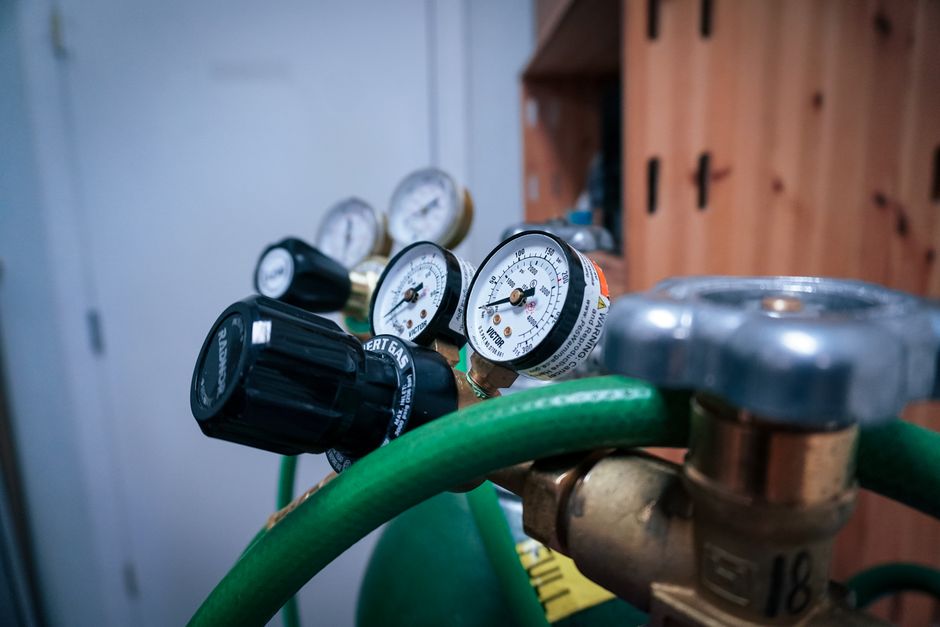
Your kit needs to match your risk profile. Automated external defibrillators. Oxygen if you have trained personnel. Trauma dressings if there is any physical activity or crush injury risk. The standard workplace kit sitting in a cupboard since 2021 is not adequate event provision.
Signage is not optional. Every attendee needs to be able to find first aid within a minute of deciding they need it. Prominent signs, site maps on entry, and stewards who know where the medical points are.
The Documentation Problem
Events get inspected. Events also get sued. The documentation you keep before an event is what determines whether you were negligent or whether you were competent and something went wrong anyway. There is a significant legal difference between those two positions.
Keep your first-aiders' certification records. Keep your risk assessment. Keep your event medical plan. Keep attendance records for the briefing where you walked staff through emergency procedures. If something does go wrong, you want a paper trail that shows an organised, considered response to foreseeable risk, not a folder of intentions.
The HSA also looks for evidence that the plan was actually communicated to staff, not just written and filed. A medical plan that the gate stewards have never seen is the same as no medical plan.
The Real Calculation
Organisers sometimes treat first-aid provision as a cost to minimise. Hire one first-aider to tick the box, buy one kit, hope for the best. That calculation ignores what inadequate provision actually costs when something goes wrong: regulatory enforcement, civil liability, reputational damage, and the knowledge that a preventable outcome was not prevented.
Proper event medical provision is not expensive relative to the event budget. It is one of the few safety investments where the cost of getting it right is trivially small compared to the cost of getting it wrong.
The inspector arriving at your gate is not your problem. The person on the ground who needed help and could not get it is.