Somewhere in Ireland right now, a worker with Type 1 diabetes has their insulin stored in a locker at 24 degrees. Their employer has no policy on it, the first aider doesn't know it's there, and nobody has thought about what happens if something goes wrong on the night shift.
The Invisible Problem in Your First Aid Room
Medication storage in workplaces falls into a strange gap. The Safety, Health and Welfare at Work Act 2005 requires employers to provide adequate first aid, but it says very little about what happens when workers bring their own medications onto site. The Health and Safety Authority focuses on the first aid kit, the trained responder, the response time. Temperature-sensitive medications sitting incorrectly stored are rarely on anyone's checklist.
Insulin requires refrigeration at 2 to 8 degrees Celsius when unopened. Once in use, it can sit at room temperature, but only up to 25 degrees and only for 28 days maximum. A factory floor in winter can hit 28 degrees near the machinery. A warehouse in summer is worse. Medication stored wrong loses potency. A worker doses correctly, the medication underperforms, blood sugar climbs, and suddenly you have a hypoglycaemic incident mid-shift that nobody can explain.
Why Shift Work Makes This Worse
Day workers have context on their side. If something goes wrong, there are colleagues, supervisors, and usually faster access to emergency services. The night shift is different.
A worker coming in at 10pm might store their medication in the same break room fridge that holds lunches. Except that fridge runs warm because someone left it open during the day, the thermostat is broken, and nobody checked it in three months. The medication degrades. The worker doses at 3am and their medication is not doing what they think it is doing.
Shift patterns also affect dosing schedules. Someone rotating between days and nights adjusts meal times and sleep cycles constantly. The Health Service Executive guidelines on insulin management note that shift workers with diabetes need to adjust dosing schedules, but workplaces rarely build that complexity into their emergency response planning. The first aider on shift at 4am may not know the worker is diabetic, let alone that their insulin is stored in a cupboard rather than a fridge because the fridge was full.
The Insurance Angle Nobody Is Discussing
Employer liability insurance covers incidents that happen in a reasonably managed workplace. When a worker suffers a medical event, one of the first questions in any claim is whether the employer took reasonable precautions given what they knew.
If an employer is aware a worker has a condition requiring temperature-sensitive medication and has no storage policy, no checks, no inclusion of that in the risk assessment, that is a gap. It is not hypothetical. If medication degrades because of improper storage and a worker suffers as a result, the employer's argument that they "provided a fridge" collapses quickly when that fridge is proven to have been running at 15 degrees because nobody maintained it.
This is not about becoming a pharmacist. It is about the same logic that covers any other risk. You maintain the AED because you know it needs to work. You check the first aid kit expiry dates. Temperature-controlled medication storage is the same category of obligation, and it is currently running on the honour system in most Irish workplaces.
What the Regulations Actually Say
The Safety, Health and Welfare at Work (General Application) Regulations 2007 require employers to ensure that first aid equipment is maintained and that workers have access to it. The regulations do not create a specific framework for personal medications, but they do not need to. The general duty of care is broad enough to cover it once a risk has been identified.
The issue is identification. Most risk assessments do not include a line for "worker-owned temperature-sensitive medications." They should.
The Medicines Act 1996 and associated regulations cover supply and administration of medicines, not storage in a workplace context. That leaves a regulatory grey area that employers tend to interpret as meaning nothing is required. That interpretation has not been tested extensively in Irish courts, but the trajectory of HSA enforcement suggests the general duty of care will fill any gap if an incident occurs.
What a Reasonable Employer Looks Like
This is not about demanding workers disclose every medical condition. That raises data protection issues under GDPR and is not the point. The point is building a system that can accommodate medication storage needs without requiring disclosure.
A dedicated medication fridge in the first aid room, maintained at 2 to 8 degrees, with a temperature log checked weekly, covers most scenarios. The fridge does not need to know whose insulin is in it. It needs to work correctly.
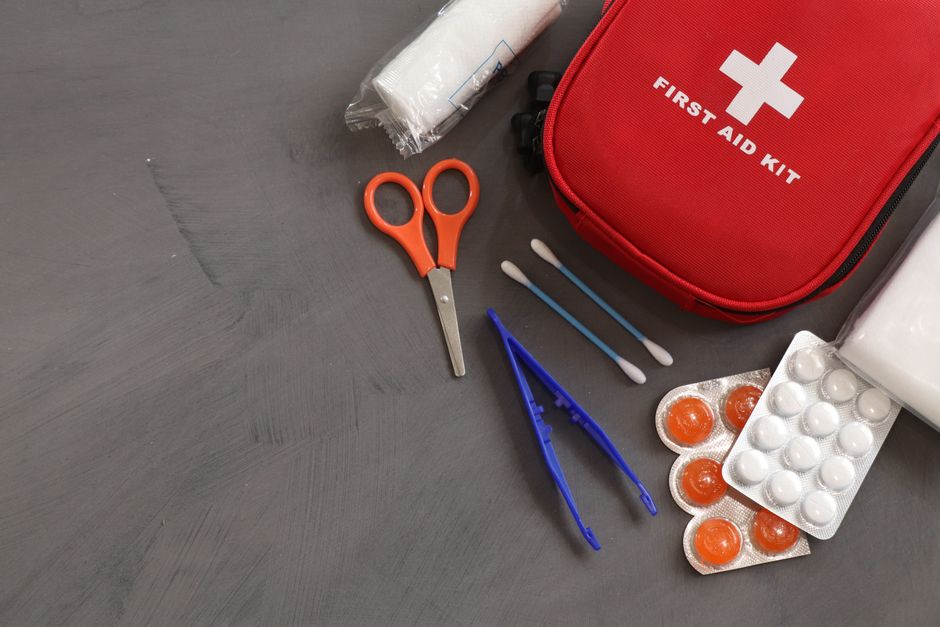
The first aid kit itself should be reviewed alongside this. If you have a first aid kit that hasn't been properly assessed for your workforce, adding medication storage to the review is a natural step, not a separate project.
Shift handover protocols should include a note on any workers with known conditions who have consented to share that information. Not a medical file. A single line that says there is medication in the fridge belonging to a named worker, and that worker has a plan in place. The first aider coming on at 10pm should not be piecing this together from scratch.
The Flu Season Connection
Winter compounds all of this. Flu season brings workers in who are managing symptoms with antihistamines, decongestants, and fever reducers, some of which interact badly with diabetes medication. Workers who are managing an illness while working a shift are more likely to store medication carelessly, dose inconsistently, or not inform anyone they are struggling.
The HSA's winter health guidance focuses on respiratory illness and cold exposure. It does not get into medication management. That is a gap that responsible employers can close without waiting for a regulatory update.
The most common failure here is not malice. It is the assumption that if nobody has flagged it, nothing is wrong. Medication storage does not announce itself. It fails quietly, in a drawer or a broken fridge, until something goes wrong at 3am and the first aider on shift is making decisions with incomplete information.
A fridge, a temperature log, and a single question added to your first aid risk assessment. That is the gap. It is small enough that there is no excuse for it still being open.