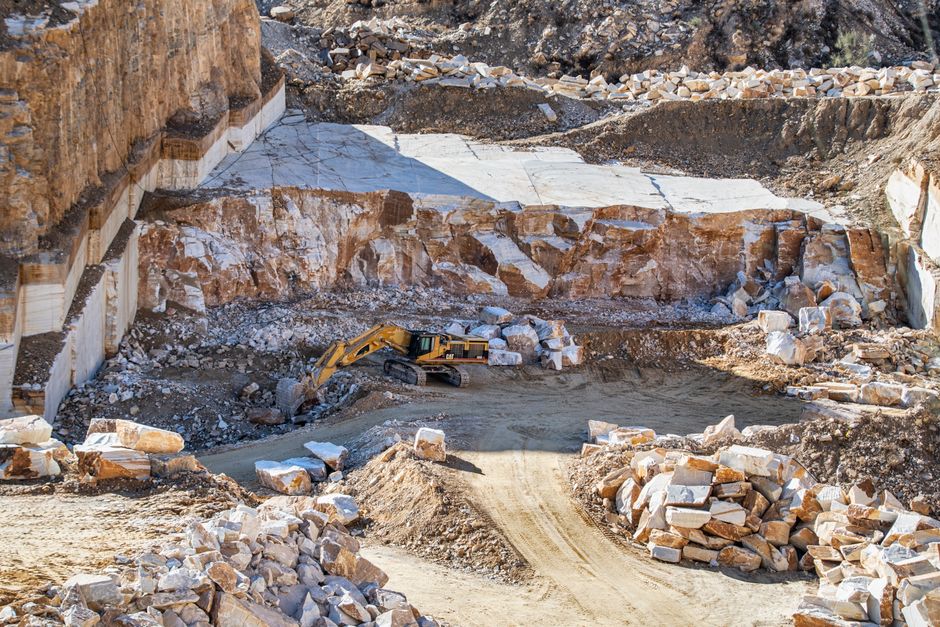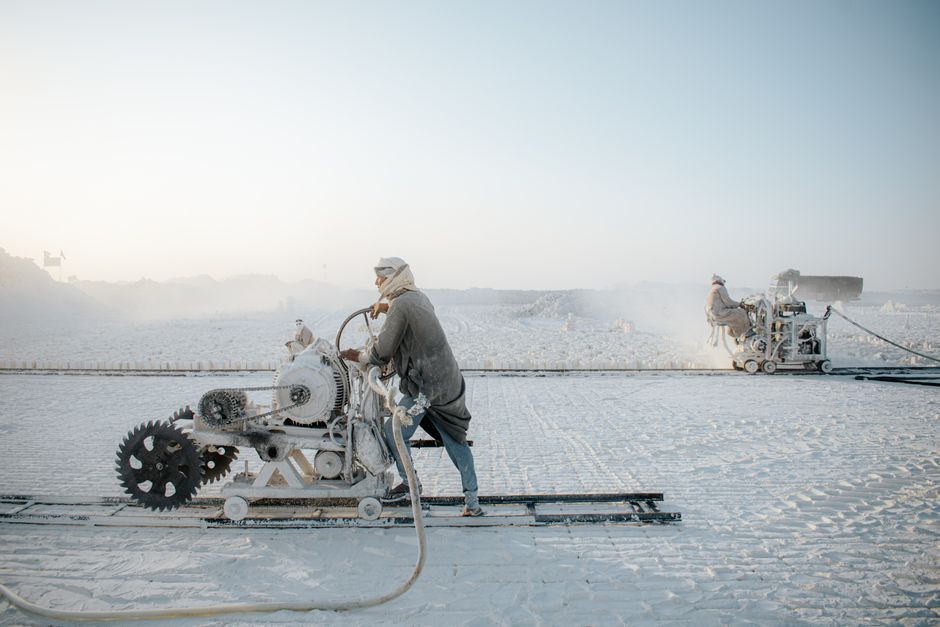
Quarry workers are developing lung disease in 2024 from dust exposure that was understood and preventable in 1990. The HSA's targeted inspection campaign on quarry respiratory hazards is finding exactly what you'd expect when an industry runs on outdated assumptions.
The numbers behind occupational lung disease in quarrying are not theoretical. Silicosis, chronic obstructive pulmonary disease, and occupational asthma are all documented outcomes in workers who spent years breathing respirable crystalline silica and other fine particulates. These conditions develop slowly, over ten to twenty years, which is exactly why they get ignored. Nobody collapses on a Tuesday afternoon. The damage accumulates in lung tissue while the worker clocks in, does the job, and goes home thinking everything is fine.
That delay is the industry's biggest enemy, and its most convenient excuse. When lung disease shows up at age 55, it is genuinely difficult to point at a specific employer, a specific quarry, a specific week of exposure. The disease has been building since the worker was 35. Employers who know this tend to rely on it.
What the HSA Campaign Is Actually Looking For
The Health and Safety Authority's quarry lung disease campaign is not a general audit. Inspectors are arriving with specific focus areas, and the gaps they are finding are consistent across sites.
Dust monitoring is the first failure point. Many quarries have not carried out personal air monitoring for respirable dust in years. Some have never done it systematically. The legal requirement under the Chemical Agents Regulations is clear: you need to assess exposure, and where there is any doubt, you measure it. "We've always done it this way and nobody's complained" is not a risk assessment.
Water suppression systems are present on most sites, but inspectors are finding them poorly maintained, undersized for the actual dust generation rate, or simply switched off because someone decided they were a nuisance. A water cannon that covers 60% of the crushing area is not controlling the other 40%.
Enclosed cabs on mobile plant are another consistent finding. Modern plant should have filtered, pressurised cabs that keep the operator in clean air regardless of what is happening outside. Older machines without this protection are still running on Irish quarry sites. The cab is the single most effective control for plant operators, and it costs nothing compared to the alternative, which is a worker with scarred lungs and a reduced life expectancy.
The Respiratory Protective Equipment Trap
Here is where quarries most consistently fail the hierarchy of controls. RPE, meaning dust masks and respirators, is the last line of defence. It is not the plan. When a quarry's primary dust control is asking workers to wear an FFP3 mask, that quarry has inverted the control hierarchy and called it a solution.
Silica dust exposure at the respirable level requires controls that eliminate or reduce the dust at source. Enclosures around crushers and screens. Local exhaust ventilation at transfer points. Water sprays at every point where rock is broken, dropped, or moved. These are engineering controls. They work whether the worker remembers to put something on their face or not.
RPE absolutely has a role, particularly during maintenance tasks, cleaning, and any work where engineering controls cannot fully contain the dust. But the mask needs to be the right type (FFP3 minimum for silica), properly fit-tested to the individual wearer, worn correctly for the entire duration of the task, and replaced when it is spent. Inspectors are finding masks stored in toolboxes, worn around necks, used long past their service life, and never fit-tested. A mask hanging off a chin protects nobody.
Health Surveillance: The Part Everyone Skips
Health surveillance for dust-exposed workers in quarrying is a legal requirement, not optional add-on. It means periodic lung function testing (spirometry), reviewed by an occupational health professional, with results tracked over time.
The point of health surveillance is early detection. If a worker's lung function is declining faster than normal ageing would explain, that is a signal. It might allow intervention. It might allow the worker to be moved to lower-exposure work before the damage becomes irreparable. It also creates a documented record that protects both the worker and, frankly, the employer.
What inspectors are finding instead: sites where no health surveillance programme exists, sites where workers were tested once when they started and never again, and sites where results were collected but never reviewed or acted on. Collecting data and ignoring it is not health surveillance. It is paperwork.
Modern Dust Control: What It Actually Looks Like
A quarry running modern dust controls in 2024 looks different from one running 1990s standards.
Primary crushers have enclosures with local exhaust ventilation, not just a water spray pointed roughly in the right direction. Transfer points between conveyors have enclosed hoods and dust extraction. The screening plant has wet suppression running continuously, not just when someone remembers. Mobile plant operates with filtered pressurised cabs, and the filter maintenance is logged. Dust monitoring is carried out regularly, with results recorded and reviewed against occupational exposure limits. The OEL for respirable crystalline silica is 0.1mg per cubic metre as an eight-hour time-weighted average. That number matters and it needs to be measured against, not guessed at.
Workers who need to enter high-dust areas for maintenance tasks have task-specific risk assessments, appropriate RPE that has been fit-tested, and defined time limits on exposure. The site has an occupational health provider with actual quarry experience, not just a generic provider ticking boxes.
None of this is radical. The technology has existed for decades. The regulations have existed for years. The gap is implementation, and the implementation gap is what the HSA campaign is designed to close.
Why This Is Getting Personal
Silicosis in younger workers is accelerating the urgency. A disease that used to appear in workers after thirty years of exposure is now appearing in workers in their thirties, partly because of high-silica materials like engineered stone but also because of cumulative undercontrol in traditional dusty industries. Quarrying is one of them.
The HSA is not running this campaign to generate improvement notices for the statistics. The expectation is that sites found with inadequate dust controls will be required to fix them, that health surveillance gaps will be closed, and that employers who cannot demonstrate a functioning system of control face enforcement action.
The turn is this: the industry has had decades of knowing dust kills and choosing to treat it as a background cost of doing business. That calculation is changing.
If your quarry's dust control plan was written more than five years ago and has not been reviewed against actual monitoring data, it is out of date. If your workers have not had lung function testing in the past two years, you are not meeting your legal obligations. Start there.