The Mixed Message Problem
The RSA's campaign slogan is "Never Ever Drink and Drive." Clear enough. Except the law says you can have some alcohol and still legally drive. The limit in the Republic of Ireland is 50mg of alcohol per 100ml of blood. That's roughly one to two pints, depending on who you are.
So which is it? Never? Or a little bit?
This contradiction isn't an accident. The law sets a prosecutable threshold. The RSA gives health advice. They're doing different jobs. But the result is a public that's permanently unsure whether that single pint with dinner means they're a criminal or just sensible.
What the Numbers Actually Mean
Ireland's legal limit is 50mg per 100ml of blood for experienced drivers. For new drivers (anyone who's held their full licence for less than two years), it drops to 20mg per 100ml. That's essentially nothing. Half a pint would put most people over it.
For comparison: Northern Ireland, England, and Wales still use the old 80mg limit. Scotland dropped to 50mg. Most of continental Europe sits at 50mg. Hungary, the Czech Republic, and Romania have zero tolerance. Russia too.
Ireland is somewhere in the middle. Not the strictest, not the most relaxed.
The problem is translating milligrams into pints. Everyone wants a simple answer: "How many drinks can I have?" There isn't one. An 80mg limit works out to roughly two to three pints for an average-sized man. At 50mg, you're looking at one, maybe two. But "average-sized man" is doing a lot of heavy lifting in that sentence. Your weight, your metabolism, what you've eaten, even hormonal fluctuations can shift the number up or down. Two pints might leave one person under the limit and another well over it.
The Kerry Exception
Ireland being Ireland, there's a story worth telling here. In 2013, Kerry County Council voted to allow local Gardai to issue permits raising the drink driving limit for people in isolated rural areas, from 50mg to 70mg per 100ml. The reasoning: older people living alone on remote farms were afraid to go to the pub because they'd have to drive home. They were becoming isolated. The social cost of a strict limit, in places where there are no taxis and no buses, was real.
It made international headlines. "Ireland legalises drink driving" was not the nuance anyone intended. The permits were never actually issued in any meaningful way. But the debate exposed a genuine tension between road safety policy designed for Dublin and the reality of rural Ireland, where the nearest pub might be a 20-minute drive and the nearest taxi might not exist at all.
Why the Law Exists
One in ten motorists in Ireland has been caught drink driving at some point. That's not a guess. That figure comes from research published by the Irish Independent.
The law exists because people are bad at judging their own impairment. Studies consistently show that even small amounts of alcohol, amounts that leave you feeling completely normal, reduce reaction times by altering how the brain processes visual information. You don't feel slower. You are slower. The gap between those two facts is where accidents happen.
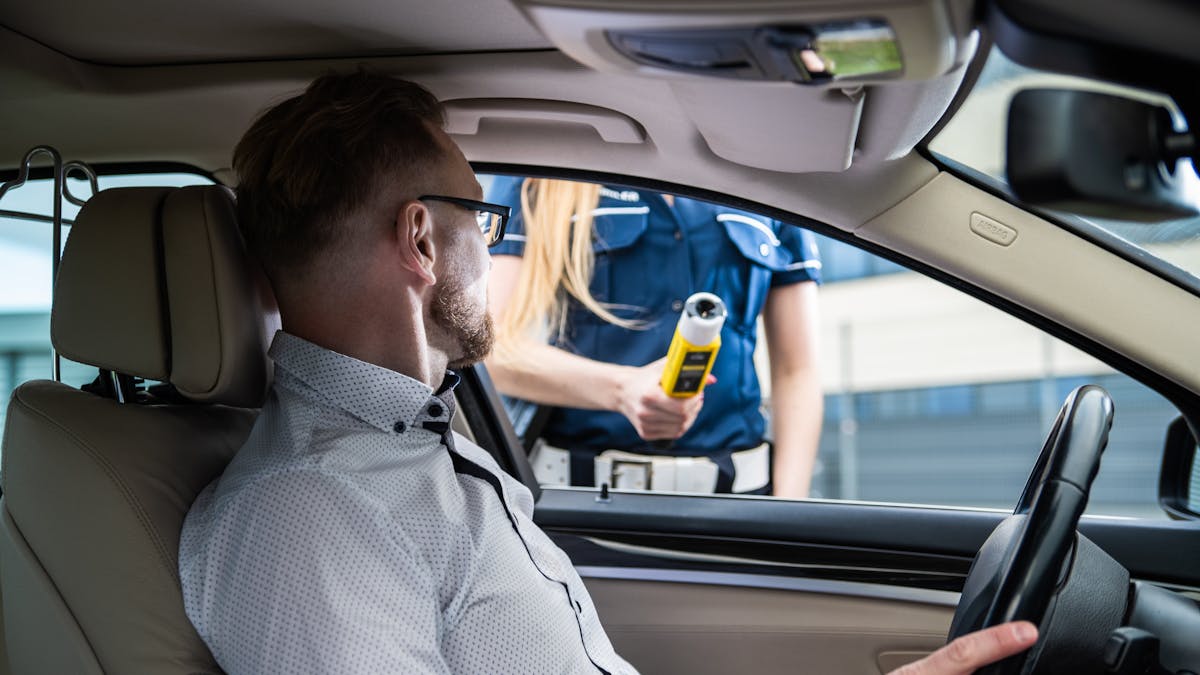
Mandatory alcohol testing has been legal in Ireland since the Road Traffic Act 2006. The Garda can breathalyse you at a checkpoint without needing a specific reason. They can also test you outside of a checkpoint if they have reasonable suspicion you've been drinking. This isn't optional. Refusing a test is an offence in itself.
The Risk Curve
Here's where the numbers get uncomfortable. According to research by the National Institute for Health and Care Excellence, drivers with a blood alcohol level between 20mg and 50mg per 100ml (that is, under Ireland's legal limit) are already three times more likely to die in a road accident than sober drivers.
Between 50mg and 80mg, the risk climbs further. Above 80mg, it's six to eleven times higher.
The legal limit isn't a safety threshold. It's a line drawn for enforcement purposes. Being under it doesn't mean you're safe. It means you can't be prosecuted for being over it. Those are very different things.
What Happens If You're Caught
The penalties depend on how far over the limit you are and how long you've been driving.
Experienced drivers caught over the limit face a fine of up to 400 euro and a six-month driving disqualification. New drivers face up to 200 euro and a three-month ban. Repeat offenders can receive a full driving ban.
But here's the part most people miss: you don't have to be over the limit to be penalised. If the Garda considers your driving to be dangerous or erratic due to alcohol, you can still be fined 200 euro and receive three penalty points on your licence, even if you blow under 50mg. The law gives Gardai discretion. "Under the limit" is not a get-out-of-jail card.
Does Tightening the Law Actually Work?
The obvious question: why not just set the limit to zero and be done with it?
The evidence is mixed. The EU Road Safety Vademecum shows that some countries with the lowest drink driving death rates (the Netherlands, Sweden, Denmark) have limits ranging from 20mg to 80mg. Meanwhile, some zero-tolerance countries don't perform any better. The limit matters, but it's not the whole picture.
What does seem to work is a combination: a reasonable limit, visible enforcement (checkpoints, mandatory testing), and sustained public education. Ireland's 2012 decision to drop from 80mg to 50mg saw drink driving arrests fall by roughly 50 percent in the following years, according to Garda analysis.
The law changed behaviour. Not because the new limit was magical, but because the conversation around the change made people think twice. Sometimes that's all it takes.
The Only Number That Matters
Ireland's drink driving limit is 50mg per 100ml. The safe limit, if you're driving, is zero. The law allows a margin. Physics and biology don't. If you're counting pints to figure out whether you're legal, you've already answered the question.