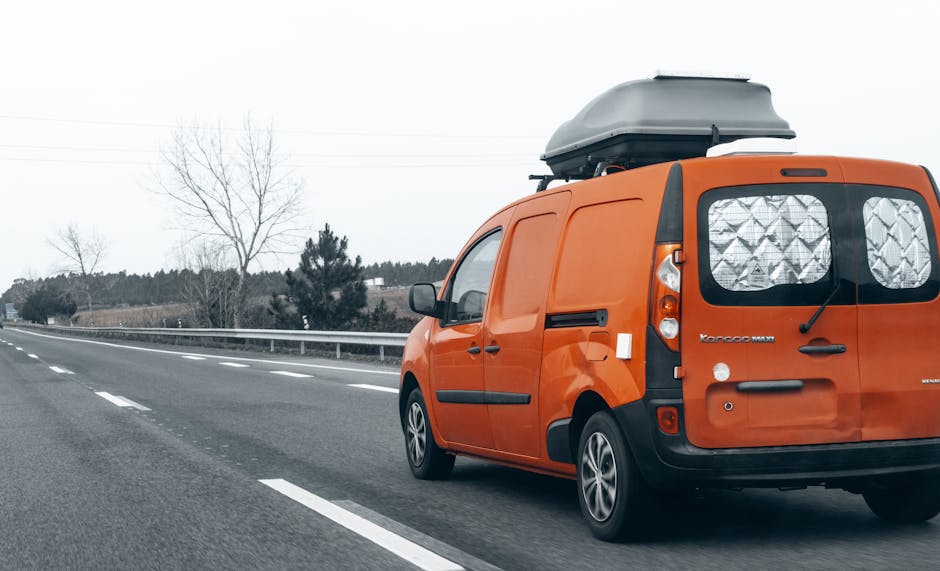
A worker gets injured loading equipment into a van at a client site. The vehicle is taxed and insured. The driver has a full licence. The employer assumes everything is fine. The civil claim lands anyway, and the commercial motor policy covers almost none of it.
This is not a edge case. It happens regularly across Irish construction, utilities, facilities management, and any trade where your workforce moves between sites. The gap between what employers think their insurance covers and what it actually covers is wide enough to drive a Transit through.
What Commercial Motor Insurance Actually Covers
Commercial motor insurance covers the vehicle in a road traffic incident. It protects against third-party claims from other road users, covers the vehicle itself if you have comprehensive cover, and handles windscreen replacement and the rest of it.
It does not automatically cover an employee who is injured while travelling for work. It does not cover injuries that happen loading or unloading the van. It does not replace employer liability insurance, and it does not function as a personal accident policy for your workforce.
Employers conflate these things constantly. The confusion is understandable. You see the word "commercial" on the policy schedule and assume it covers everything work-related. It does not. It covers the vehicle as a vehicle.
The Employer's Duty of Care on the Road
Under the Safety, Health and Welfare at Work Act 2005, the employer's duty of care does not stop at the office door or the depot gate. Work-related driving is a workplace activity. The road is a workplace when your employee is on it in the course of employment.
That means your safety statement should address driving. Your risk assessments should cover journey planning, vehicle condition, load security, fatigue, and weather. If a worker is injured because the van was overloaded, the tyres were worn, or the driver was pushed to make an unrealistic schedule, the Health and Safety Authority can and will investigate that as a workplace incident.
The cargo loading deaths and system failures behind recent statistics show this clearly. Load security is not a transport logistics problem. It is a safety management problem, and liability follows accordingly.
Where the Cover Gaps Appear
Passenger employees. If you have two workers in the van and the driver causes an accident, the passenger's injury claim may exceed what a standard motor policy will pay. Employer liability insurance is supposed to fill that gap, but only if the policy is structured correctly and the work activity is declared accurately.
Loading and unloading. The worker who strains their back unloading angle grinder blades from the van at a job site is not injured in a road traffic incident. They are injured at work. Motor insurance will not touch that claim. Employer liability should, but if your insurer was told your workers are primarily office-based or on fixed sites, you may have a coverage problem.
Commuting versus travelling for work. Irish law distinguishes between ordinary commuting and travel that is integral to the job. A sales rep driving from client to client is at work. A plumber driving from home to a job site in a company van can be a grey area depending on the contract and the circumstances. Get this wrong and an injury claim falls into a coverage void.
Equipment in transit. If tools or machinery shift and injure a worker during transit, that is a product or equipment management issue, not a motor incident. Your tools-in-transit cover, your employer liability policy, and your motor policy all need to work together. Most employers have never checked whether they do.
What You Should Actually Have in Place
First, review your employer liability policy and tell your broker explicitly what your workers do. "Multi-site mobile workforce, travelling between locations daily, loading and unloading equipment, occasional lone working." Vague declarations create vague coverage.
Second, write a driving for work policy. It does not need to be long. It needs to cover vehicle checks, maximum shift lengths before driving, load limits, phone use, and what to do after an incident. The distracted driving problem on Irish roads is as relevant to your fleet as it is to any other driver, and your policy needs to acknowledge that explicitly.
Third, document vehicle checks. A pre-use checklist completed and signed weekly creates a paper trail that shows the employer took the duty seriously. Its absence creates the opposite impression.
Fourth, look at your load security. Unsecured equipment in a van is a hazard to the workers in that van, to other road users, and to anyone at the unloading end. Racking systems, tie-down straps, and clear load limits per vehicle are not optional extras.
Fifth, talk to an insurance broker who specialises in mobile workforces. A standard commercial motor policy from a comparison site is not built for a company with six tradespeople covering three counties. The premium difference between adequate cover and inadequate cover is smaller than one successful claim.
The Inspection Problem Nobody Mentions
The HSA can inspect work-related road safety. They have done it. If your organisation has a notifiable incident involving a work vehicle and your safety statement has nothing to say about driving, you are in a poor position. "We assumed the motor insurance covered it" is not a defence under the 2005 Act.
The financial exposure from a single serious injury on the road, combining an employer liability claim, an HSA investigation, and potential criminal negligence proceedings, runs well into six figures. The machinery incident cases that become criminal negligence prosecutions follow the same pattern. An employer assumed a system was safe, nobody documented the risks, someone got hurt, and the investigation found a gap that was obvious in retrospect.
Road incidents work the same way. The van is not an island separate from your safety management system. It is part of the workplace, and the same obligations apply.
Check the policies. Write the risk assessment. Brief the drivers. The alternative is finding out what you missed in the worst possible way.