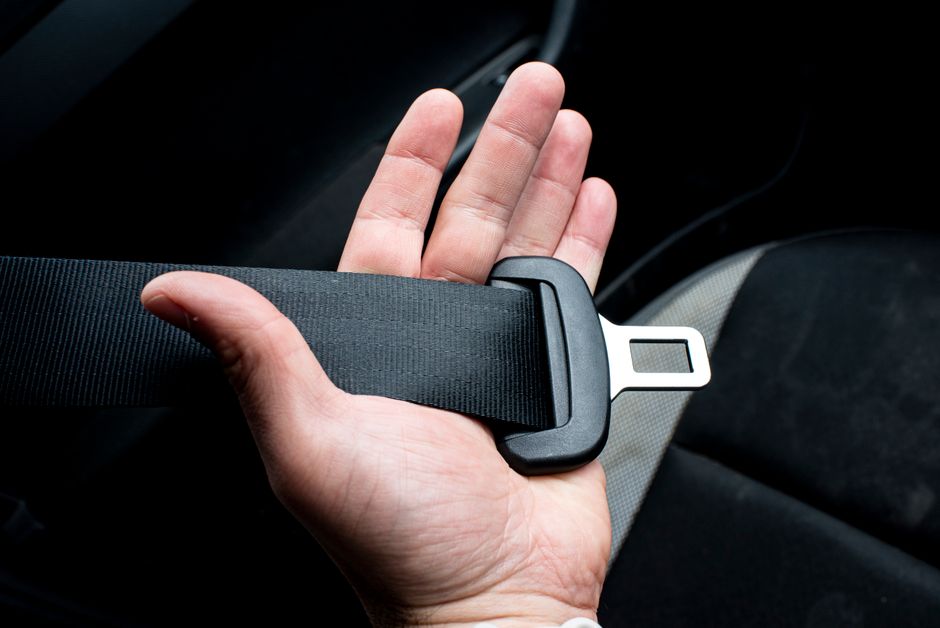
A driver leaves your yard without a seatbelt. He gets away with it every day. Then one morning he does not.
The Fine Is the Small Problem
Gardaí can issue a fixed charge notice of €120 for a seatbelt offence. That number feels manageable. It is also irrelevant to the conversation you will be having with the Health and Safety Authority if your unbelted driver ends up in a ditch on a work journey.
Under the Safety, Health and Welfare at Work Act 2005, employers have a duty to manage the safety of employees while they are at work. Driving a vehicle for work purposes counts as work. The road is your workplace. The HSA has been clear on this for years, and prosecutions are proving they mean it. Fines under the Act reach €3 million for companies. Individual directors face up to €500,000 and imprisonment. Those are the numbers that matter.
The critical point: you cannot discharge your duty by simply telling drivers to wear a seatbelt and leaving it at that. Verbal instruction with no verification, no policy, no record and no consequence is not a system of work. It is a hope.
What the Law Actually Requires
Your obligations under Irish law for driving for work are not vague. Section 8 of the 2005 Act requires employers to provide safe systems of work. For a mobile workforce, that means written policy, documented risk assessment, driver induction, and a mechanism to check compliance.
On seatbelts specifically, you need to be able to demonstrate:
- A written vehicle safety policy that names seatbelt use as mandatory
- Evidence that drivers have been told, in writing, what is required
- A process for monitoring compliance, whether through fleet telematics, supervisor spot checks or signed declarations
- Records of any disciplinary action where the policy was breached
None of this is bureaucracy for its own sake. It is what separates "employer who had a policy" from "employer who had nothing" when the HSA comes asking.
Director Liability Is Personal
Here is where managers sometimes switch off, wrongly. The liability exposure under the 2005 Act is not only corporate. Section 80 allows the HSA to prosecute directors, managers and officers personally where an offence by the company is shown to have been committed with their consent, connivance or through their neglect.
That word neglect is doing a lot of work. If a director knows drivers are not wearing seatbelts and does nothing, that is neglect on the record. If a fleet manager signs off on a safety policy that nobody enforces, that can become neglect too. The corporate veil does not protect individuals who failed to act.
Recent prosecutions in Ireland and the UK have targeted individuals, not just companies. The trend is not changing direction.
Telematics and Oversight
Modern fleet telematics can detect whether a seatbelt is fastened before the vehicle moves. This is not surveillance for its own sake. It is evidence. If a driver is involved in a serious collision and the data shows the belt was not connected, the employer's monitoring system either flagged it or it did not. That distinction matters enormously in a prosecution.
Employers who can show a telematics alert was generated, reviewed and acted upon are in a demonstrably different position to those who had the technology and ignored the alerts. Install the system, read the reports, act on the data, keep the records.
The seatbelt culture problem in vehicles used on site is separate but related. Workers who habitually skip belts in site vehicles often carry that habit onto the public road. If your organisation tolerates it in one context, it will show up in the other.
What Enforcement Actually Looks Like
The HSA investigates fatal road traffic collisions involving workers. They request company records, interview managers, examine fleet maintenance logs and look at training documentation. If a driver dies in a collision without a seatbelt, investigators will ask the following questions in some form:
- Did the company have a policy on seatbelt use?
- How was that policy communicated?
- What steps were taken to ensure compliance?
- Were there prior incidents or warnings?
- What action was taken after those warnings?
A company with nothing to show on any of those points is in serious difficulty. A company with records, a disciplinary history for belt refusal, and telematics data showing it actively monitored compliance is in a different position entirely, even in the event of a tragedy.
Building a Policy That Holds
A seatbelt enforcement policy does not need to be complicated. It needs to be real.
Start with a written rule: seatbelts are mandatory in all company vehicles at all times, on public roads and on private land. State the rule clearly and make sure drivers sign to confirm they have read it.
Then create a consequence. Not wearing a belt is a disciplinary matter, not a conversation. Document every instance. If someone refuses repeatedly, that record matters.
Add a monitoring mechanism. Telematics is the cleanest option. Supervisor spot checks work for smaller fleets. Whatever the method, record it.
Review the policy annually and after any incident involving vehicles. Date the reviews and keep them.
The Turn
The seatbelt is a thirty-year-old technology that still saves lives every week. The legal framework around it is clear. The enforcement trend is toward personal accountability for managers who knew there was a problem and chose not to act. Saying "I told them to wear it" is not a system of work. It is a starting point, at best.
Document the policy, enforce the policy, record the enforcement. That is the actual shield.