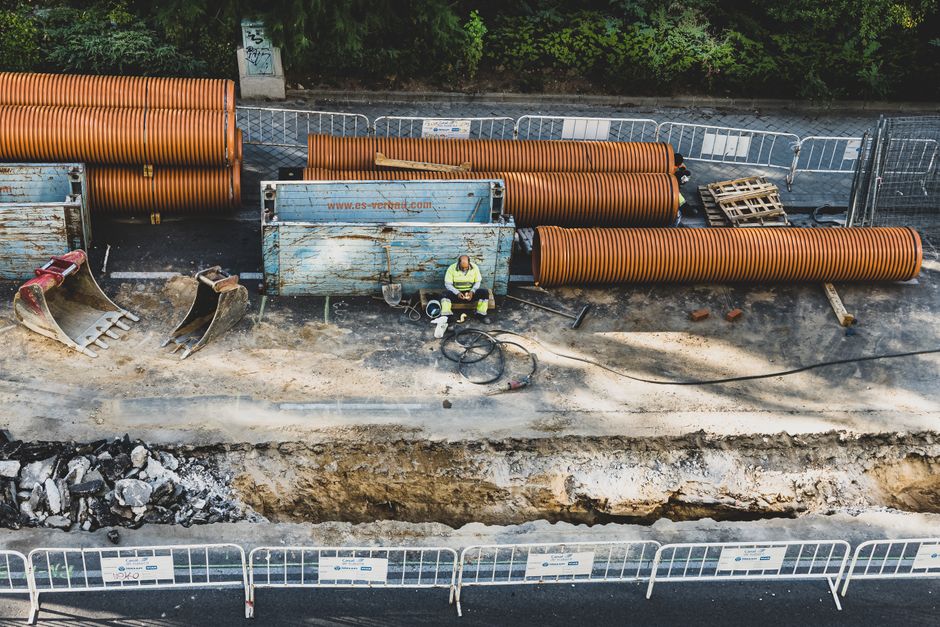
Three people died. One company paid €1.2 million. And the failures that made it happen were not exotic or unforeseeable. They were the same gaps that exist on dozens of active roadworks sites in Ireland today.
That number is not the story. The story is what the investigation found underneath it: a traffic management plan that looked complete on paper, a supervision structure that existed in name only, and a separation between plant and people that nobody actually enforced on the ground. Three gaps. Three deaths. The connection is not complicated.
If you run roadworks, manage a traffic management contractor, or sign off on method statements, this is worth your full attention. Not because the fine is frightening, though it should be, but because the gaps are identifiable in advance. You can find them before an investigator does.
Gap One: The Traffic Management Plan Nobody Followed
Every roadworks project above a certain scale needs a traffic management plan. Ireland's requirements under the Safety, Health and Welfare at Work (Construction) Regulations 2013 are clear on this. The plan must identify how vehicles, plant, and pedestrians are separated. It must be site-specific. And it must be implemented.
That last word is where projects die.
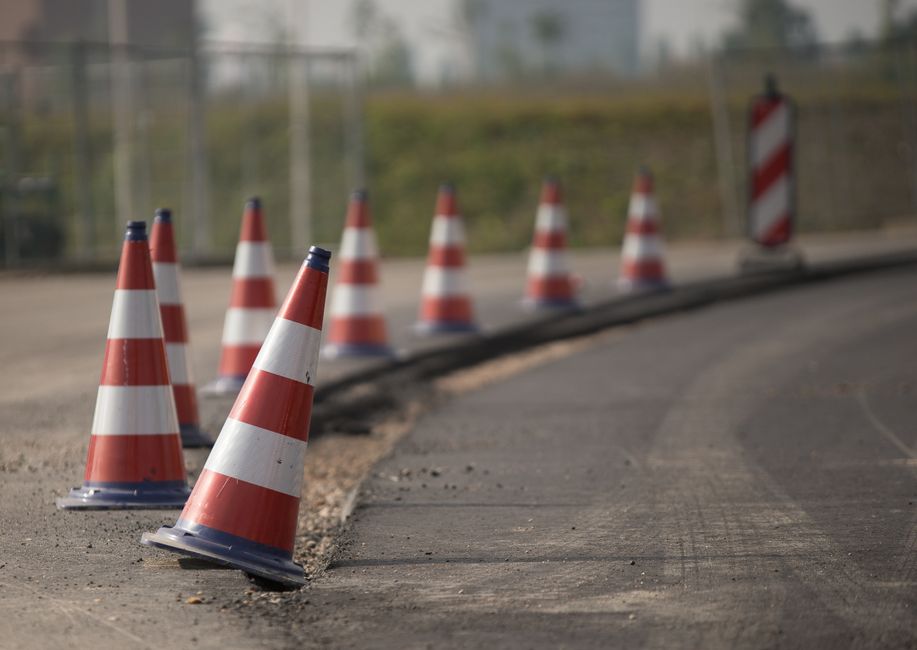
Investigations into roadworks fatalities consistently find a version of the same problem: the plan was written, signed, reviewed, filed, and then ignored the moment plant started moving. Cones went in the wrong positions. Advance warning signs were not deployed at the correct distances. Signing distances shrank as the site evolved and nobody updated the plan to match.
The Traffic Signs Manual Chapter 8, which governs temporary traffic management in Ireland, specifies precise distances for advance warning signs based on road speed. On a 100 km/h road, your first warning sign needs to be 200 metres before the taper. Not 150. Not wherever the van happened to stop. 200 metres. When those distances collapse, drivers get less than one second of decision time at the hazard. That is not a margin. That is a trap.
Check your traffic management plan against what is actually on the ground today. Not what was installed on day one. What is there now, after the site has shifted, after kit has been moved, after a few "temporary" adjustments that became permanent.
Gap Two: Supervision That Existed on the Org Chart Only
The second gap is supervision. Specifically, the absence of a competent person on site who has both the authority and the presence to enforce separation between plant and people.
The €1.2 million fine that shocked the industry exposed a supervision structure that was real in documentation and fictional in practice. A traffic management supervisor was named. That person was not consistently present when plant was operating. Nobody was watching the interface between moving machinery and the workers on foot beside it.
This is not unique. It is the norm on sites where supervision is treated as a paperwork exercise rather than a physical presence requirement.
A traffic management supervisor on a live roadworks site has one primary job: keep plant and pedestrians apart. That means watching the exclusion zone when the excavator swings. It means stopping the roller when a worker cuts across its path. It means being there when the lorry reverses. You cannot do that job from the welfare cabin.
The 2013 Construction Regulations require a project supervisor for the construction stage. That role carries real duties. So does the traffic management supervisor named in your plan. If they are not physically present at the interface between plant and people during operations, you have a supervision gap. That gap is prosecutable.
Gap Three: The Separation Principle Treated as Advisory
The most fundamental principle in roadworks safety is also the most consistently violated: keep plant and people in genuinely separate zones. Not notionally separate. Not separated when convenient. Separated by physical barriers, enforced exclusion zones, and real-time oversight.
Roadworks environments compress everything. Space is tight. Timelines are pressured. The exclusion zone shrinks because the machine operator needs to get closer to finish the joint. The banksman steps away for five minutes. A worker takes a shortcut across the plant operating area because it saves three minutes of walking around. None of these decisions look catastrophic in isolation. In combination, they are.
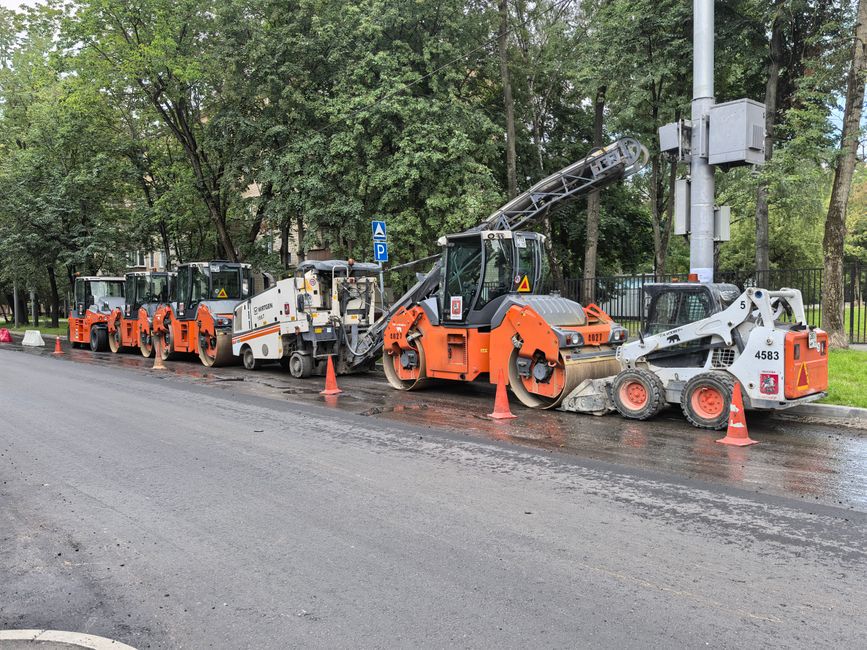
The exclusion zone around a compactor, paver, or excavator on a public road is not optional clearance. It is the gap between a worker going home and a worker going to hospital. On a site running milling equipment, the hidden risks around road machinery deserve specific attention. These are not slow, visible hazards. They are fast, heavy, and surrounded by noise that masks approach warnings.
Physical separation means barriers, not just cones. It means banksmen with authority to stop work, not just wave. It means exclusion zones marked on the traffic management plan and enforced in the same location on the ground. When those three things are present and functioning, the interface between plant and people is manageable. When any one fails, the margin disappears fast.
What Investigators Actually Look For
Post-incident investigations in roadworks fatalities follow a predictable sequence. They look at the traffic management plan and compare it to site photographs taken immediately after the incident. They look at supervision records: who was named, who was present, what their training records show. They look at the exclusion zone: was it marked, was it enforced, was there a banksman.
They then look at whether any of this was audited during the project. Not at tender. During the work.
That audit trail is what separates a prosecution for corporate failure from a tragic accident with no further consequences. If you cannot show that someone checked the traffic management implementation on site last Tuesday, and the Tuesday before, you cannot show the system was functioning.
Conduct documented site audits of traffic management implementation at least weekly on live roadworks. Photograph the actual signing layout against the plan. Record who supervised the plant interface that day. These records exist to demonstrate a functioning system. They also force someone to actually check.
Fix the Gap Before the Inspector Finds It
Three deaths and €1.2 million are the scoreboard from one project. The failures that produced that outcome are not industry outliers. They are sitting on sites where traffic management plans were last checked at the pre-start meeting, where the supervision structure exists in a folder, and where plant and people share space because it is just how the job runs.
Find your gaps now. The alternative is finding them later, under considerably worse circumstances.