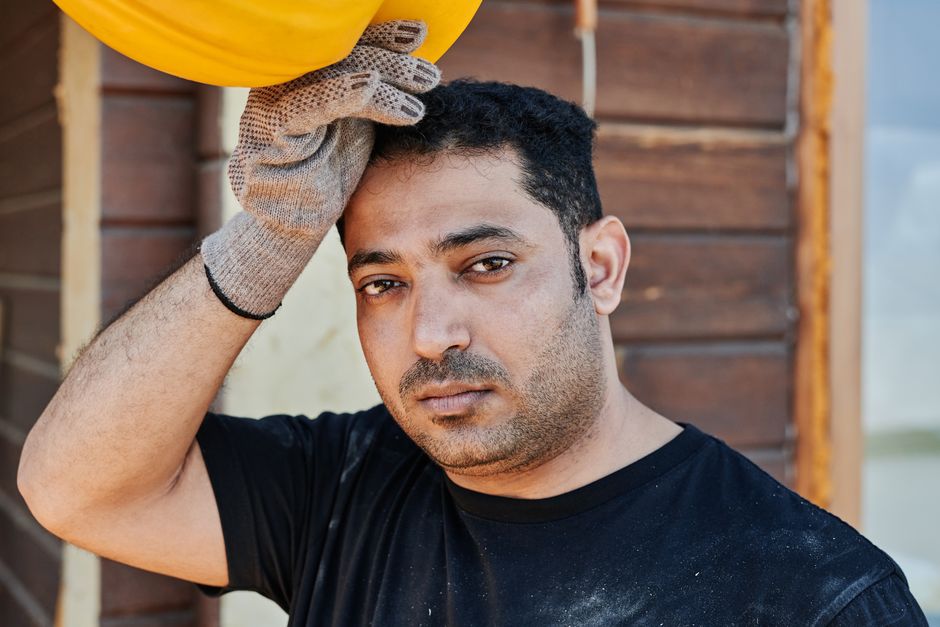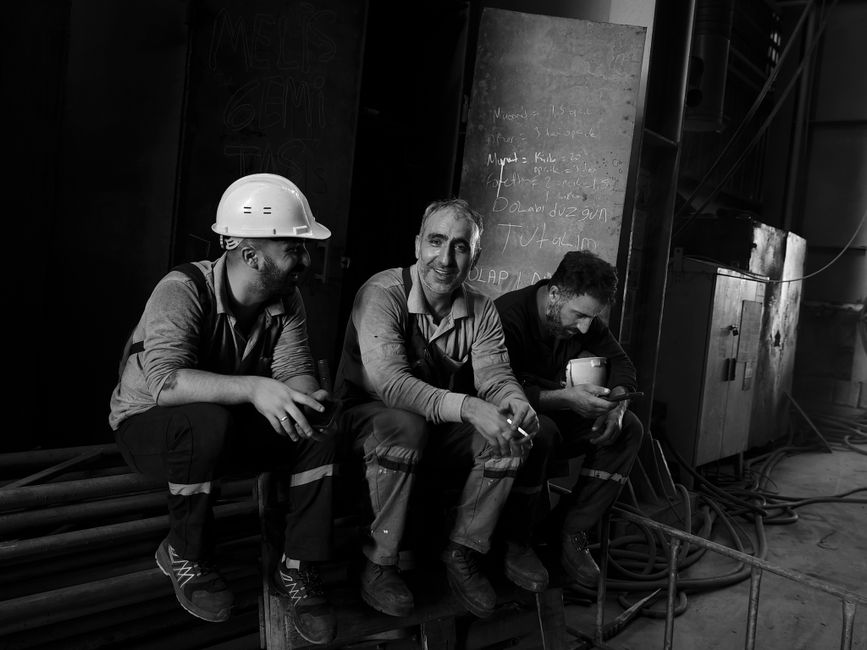
Construction workers are three times more likely to die by suicide than in a fall from height. The industry has spent decades engineering the fall out of the job. It has done almost nothing about what is happening inside the heads of the people doing it.
That gap is not just a welfare failure. It is a safety failure. And incident reports are starting to show it.
The Link Nobody Wants to Write Down
Psychological distress and fatigue do not appear on most site risk assessments. They are invisible until something goes wrong, and even then, the investigation rarely names them. A worker operating a telehandler after three nights of broken sleep does not show up in the near-miss report as a fatigue incident. It shows up as operator error. A worker running a concrete saw while managing a mental health crisis does not trigger a welfare review. It triggers a disciplinary process. The root cause disappears into the paperwork.
Fatigue impairs reaction time, decision-making, and spatial awareness at a level comparable to alcohol intoxication. The Health and Safety Authority recognises this. The research is not disputed. But on a lot of Irish sites, the foreman asking "are you grand?" before someone climbs into a cab is still the entire fatigue management system.
Mental health distress compounds this. Anxiety narrows focus. Depression flattens alertness. Stress floods the body with cortisol that makes measured, careful movement harder to sustain. None of these are moral failings. All of them are risk factors when the job involves moving plant, unguarded edges, or working at height.
Why Construction Is Uniquely Exposed
Construction carries a specific psychological burden that most industries do not. The work is physically punishing, often seasonal, and financially precarious. Workers move between sites and employers. Relationships with colleagues reset constantly. The culture rewards stoicism and punishes visible weakness. Men make up the vast majority of the workforce, and men in Ireland are still far less likely to seek help for mental health than women.
Add irregular hours, long commutes, and the post-pandemic surge in housing demand that has kept Irish sites running at a relentless pace. Workers are tired. Many are financially stretched. Some are carrying grief, addiction, or relationship breakdown that has no visible outlet at work.
None of this makes an accident inevitable. But it raises the baseline risk for everyone on site, every day.
What Fatigue Actually Does to Site Behaviour
Sleep-deprived workers make more errors on repetitive tasks, misjudge distances more often, and respond more slowly to sudden hazards. These are exactly the conditions that machinery and plant accidents exploit. A reversing dumper truck does not wait for someone to be fully alert. A fragile roof surface does not forgive a moment of inattention.
The problem is that fatigue is self-concealing. People who are severely sleep-deprived consistently underestimate how impaired they are. They feel like they are functioning normally. They are not. This means asking workers to self-report is not enough. It means the site needs systems, not conversations.
Practical controls include:
- Maximum consecutive shift limits written into site rules, not just aspirationally into the safety statement
- A genuine no-blame way for workers to report feeling unfit for task before they climb into a cab or go up a ladder
- Supervisors trained to recognise fatigue signals, not just illness
- Scheduling that accounts for travel time, not just hours on site
What Psychological Distress Looks Like on Site
It does not always look like distress. It looks like a usually careful worker becoming irritable and rushing. It looks like someone who normally asks questions going quiet and guessing. It looks like a competent person making uncharacteristic errors. It looks like someone showing up but not really being there.
The hidden mental health cost of workplace incidents is well documented after the fact. What the industry is slower to recognise is the mental health cost that precedes incidents. Distress does not follow injury in a straight line. Often it arrives first.
Foremen and site managers do not need to become therapists. They need to know three things: what changed, who to tell, and how to make it easy for someone to step back without it costing them money or reputation. The last part is the hardest because the industry's payment structures often punish absence.
What the Site Needs to Do
Talk about it. Not in a laminated poster way. In a toolbox talk, by name, with specific language. Say fatigue. Say stress. Say it affects safety. Make it as normal a topic as manual handling or PPE.
Train supervisors to notice changes in behaviour. Not to diagnose. To notice and ask. One direct question, asked without judgment, changes what a worker believes is possible on that site.
Create a genuine mechanism for stepping back. If a worker cannot tell a supervisor they are not fit for task without risking their day rate or their standing, the mechanism does not exist. It needs to be free of cost and free of stigma, or it will not be used.
Connect workers to support before crisis. Pieta House, Text About It (text HELLO to 50808), and the Construction Industry Federation's own resources all exist. Workers need to know about them before they need them, not after.
Review scheduling with fatigue in mind. Long commutes plus early starts plus overtime is a common construction combination. It is also a reliable way to put impaired people in charge of heavy plant.
The Turn
The industry has made real progress on physical safety. Falls from height are better controlled than they were twenty years ago. The scaffold systems are better. The PPE is better. What has not kept pace is the understanding that the human operating all of that equipment brings the full weight of their mental state to work with them every morning. Ignoring that is not being hard. It is being negligent.
Safe sites talk about the whole person. Start the conversation before the incident forces it.