Three people died. One company paid £1.2 million. And the failures that caused each death were findable by anyone with a clipboard and twenty minutes.
The Whitemountain Quarries prosecution, brought by the Health and Safety Executive for Northern Ireland, is the kind of case that gets cited in safety courses for a decade. It should. Three separate fatalities at the same operation is not bad luck. It is a system that was not working, and a management culture that did not notice, or did not act.
The fine is significant. What matters more is understanding the specific failures behind it, because most of them are common, unglamorous, and entirely fixable.
What Actually Happened
Whitemountain Quarries pleaded guilty to breaches of the Health and Safety at Work (Northern Ireland) Order 1978. The prosecution covered three fatal incidents involving mobile plant and heavy machinery on quarry and road surfacing operations. The detail that should stop you cold is that each incident involved a different type of failure. Not one systemic problem repeated three times. Three distinct gaps in safety management, each one fatal on its own.
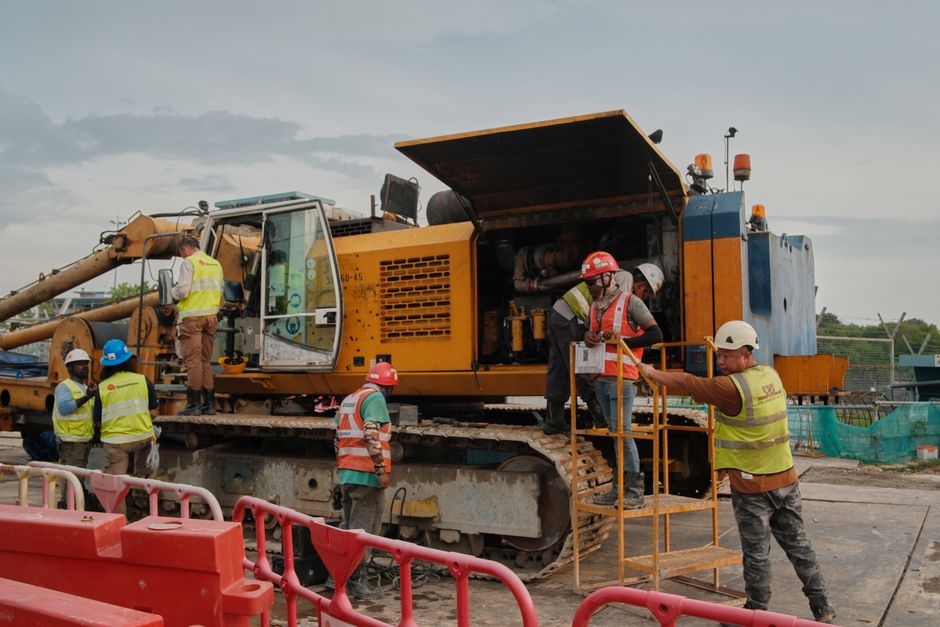
The incidents involved workers being struck by or caught in moving plant. Quarries and construction sites run the same equipment, the same exposure, and the same risks. The geography is different. The machinery is not.
The Specific Failures
Segregation of people and plant. In each incident, workers were operating in zones where mobile plant was also moving. No physical separation, no defined exclusion zones enforced in practice. A traffic management plan that exists on paper but is ignored on the ground is worthless. Inspectors found that pedestrian and vehicle routes overlapped in operational areas. That is not a resource problem. It is a planning and enforcement problem.
Operator visibility and blind spots. Heavy plant operators in quarry environments deal with significant dead ground around their machines. Blind spots on reversing and turning plant kill people at a reliable rate, yet banks persons were either absent or not in position during critical movements. A banksman standing in the wrong place, or not standing there at all, removes the only human check on what the operator cannot see.
Competence verification for plant operators. Training records for operators were incomplete or absent for specific tasks and machine types. This is not about whether someone had done the job for years. It is about whether their competence had been formally assessed, documented, and matched to the specific plant they were operating that day. Familiarity is not competence. Familiarity gets people killed when conditions change and the operator has no structured knowledge to fall back on.
Pre-use inspection regime. Plant inspections were inconsistent. Records showed gaps. Some machines had not been formally inspected before use on the days incidents occurred. A pre-use check catches defects before the machine moves. If the check does not happen, or happens but is not recorded, you have no evidence of due diligence and no way to identify a developing fault.
Risk assessment quality. The risk assessments in place were generic. They identified hazards at a category level but did not address site-specific conditions, task-specific risks, or the interaction between plant movements and pedestrian workers in confined operational areas. A generic risk assessment is a document. A site-specific one is a tool.
The Checks That Would Have Changed the Outcome
None of the following require capital investment or a safety management overhaul. They require discipline and ownership.
Daily pre-use inspection, signed and dated. Every piece of mobile plant, every shift. The operator signs it. The site manager countersigns it weekly. If the machine fails the check, it does not move. This is not new guidance. It is PUWER and the Quarries Regulations restated in plain terms.
Defined exclusion zones, physically marked. Not on a drawing in the site office. On the ground, with barriers or cones, enforced during all plant movements. Any worker found inside an exclusion zone during plant operation gets stopped, not shouted at once and ignored.
Banksman present during all reversing and slewing operations. Positioned where they can see both the machine and the hazard zone. In contact with the operator, either by signal or radio. Not standing nearby doing something else.
Competency records matched to plant type. If an operator is not certificated for a specific machine or attachment, they do not use it. The site manager holds a matrix showing who is competent for what. It is reviewed when new plant arrives or tasks change. Plant operator training that does not produce verifiable records is training that cannot protect you in court.
Task-specific risk assessment reviewed before work starts. Not filed and forgotten. Reviewed at the toolbox talk, signed by the workers doing the task. If conditions change during the shift, the assessment is revisited.
The Turn
The £1.2 million fine will be the number people remember. The number that should concentrate minds is three, because that is how many times the system failed before enforcement stepped in. Regulators do not cause these incidents. They document what was already broken.
Every site manager reading this has a plant operator on site today whose pre-use inspection record has a gap in it. Go and find it.