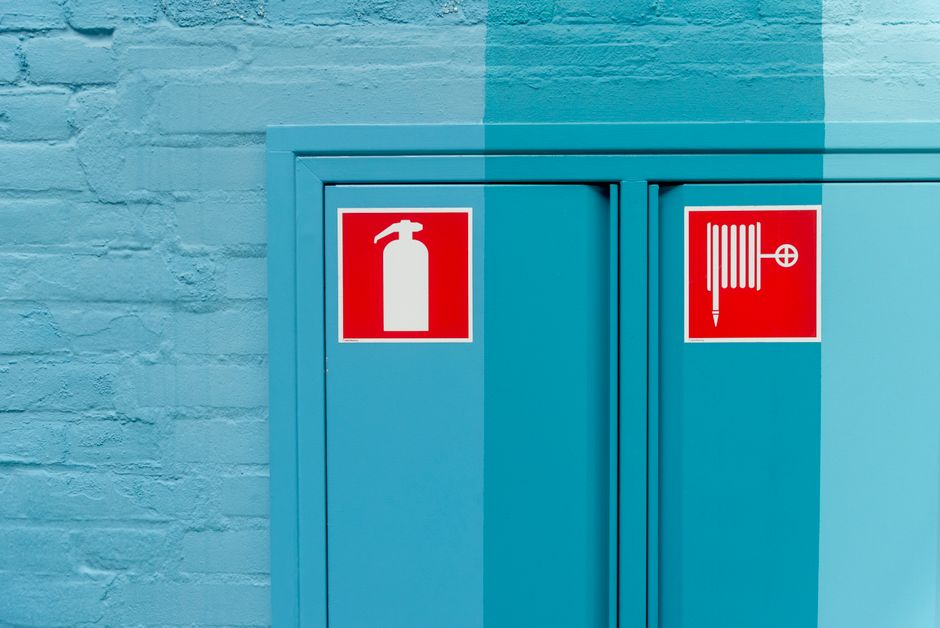
A fire extinguisher is the most visible safety device in your building. It is also, if neglected long enough, a pressure vessel waiting to fail catastrophically.
In 2014, Craig Pearson died in the UK when an old, corroded dry powder extinguisher exploded during routine handling. The canister had not been properly inspected or serviced for years. The shell failed under internal pressure. Craig was 23 years old. This was not a fringe industrial incident. This happened in a commercial setting with a piece of equipment most businesses own, most employees walk past daily, and almost nobody treats as a potential pressure vessel risk.
That gap between what fire extinguishers are and what people think they are is where people die.
What a Fire Extinguisher Actually Is
Strip away the red paint and the safety label. What you have is a sealed steel cylinder pressurised to between 9 and 15 bar, depending on type. Some CO2 extinguishers run at 50 to 60 bar. That is not domestic boiler territory. That is industrial pressure vessel territory.
The steel shell ages. It corrodes from the inside if moisture gets in, and from the outside if it is stored somewhere damp, knocked over regularly, or just left in a corner of a car park for five winters. A corroded shell loses wall integrity. The pressure inside does not care. At the point of failure, that cylinder does not leak. It ruptures.
The UK Health and Safety Executive documented the Pearson case in detail. The extinguisher involved was significantly past its service life. The corrosion was not visible on a casual walk-past. The company's inspection records were either absent or inadequate. Every one of those failures was a decision someone made, or failed to make.
How This Slips Through Safety Audits
Fire safety for Irish businesses is a legal requirement under the Fire Services Acts and the Safety, Health and Welfare at Work Act 2005. Fire extinguishers get checked during fire safety audits. The auditor notes they are present, the pressure gauge reads green, and that box gets ticked.
The problem is that a green gauge tells you the internal pressure is within range. It tells you nothing about the condition of the cylinder shell. You need a hands-on, trained inspection for that. And in most workplaces, the person doing the walk-round audit has not been trained to identify corrosion patterns, pitting, denting, or the specific failure modes of pressurised steel.
There is also a documentation problem. Maintenance records for fire extinguishers in many Irish businesses exist as a sticker on the device. That sticker was applied by whoever serviced it last. Nobody checks whether that service was done properly, whether the technician was competent, or whether the interval between services was actually compliant. It is a self-certifying system that only works when everyone in the chain does their job.
The Maintenance Requirements That Get Missed
Under Irish and UK guidance, portable fire extinguishers require:
Annual inspection by a competent person. This means someone with the training to assess the physical condition of the cylinder, not just confirm the gauge is green. The Irish Standard I.S. 291 sets out requirements for the installation, inspection, and maintenance of portable fire extinguishers. Annual inspection is not optional.
Extended service intervals. CO2 extinguishers require a hydraulic pressure test every 10 years. Dry powder and water extinguishers have their own overhaul schedules. These extended tests are where corroded cylinders get caught, if the tests are actually done.
Discharge and refill cycles. Many businesses run the same extinguisher for 20 years without ever discharging it. Powder settles and compacts. Seals degrade. The internal condition deteriorates in ways no external inspection can catch.
Decommissioning. Old cylinders need to be properly decommissioned and disposed of, not quietly retired to a storage room where someone might move them, drop them, or put them back into service.
The Pearson case turned specifically on the failure to conduct and document proper extended service inspection. The extinguisher should have been identified as beyond serviceable life. It was not. That is a maintenance management failure before it is anything else.
What Your Safety Audit Is Probably Missing
Most workplace inspection checklists treat fire extinguishers as passive safety infrastructure. Check present. Check accessible. Check gauge. Move on.
That approach does not capture pressure vessel risk. Add these to your process.
Age of the cylinder. The manufacturing date is stamped on the cylinder body, not just the label. If you cannot find it, that is already a problem. Any extinguisher over 20 years old should be decommissioned unless there is documented evidence of proper extended testing.
Physical condition of the shell. Look for rust, pitting, dents, and damage to the base. The base is particularly vulnerable because moisture pools there. Any visible corrosion on the exterior is a reason to pull it from service immediately.
Service records. Not the sticker. The actual documented records showing who serviced it, when, what was checked, and whether the competent person holds relevant certification. If those records do not exist, you are flying blind.
Storage conditions. Extinguishers stored outside, in damp plant rooms, in car parks, or anywhere with temperature extremes deteriorate faster. Location matters.
CO2 cylinders specifically. These carry significantly higher pressure than water or powder units and require particular attention. They should be weighed annually to check for gas loss, not just gauge-checked.
Who Is Responsible
Under Irish law, the employer is responsible for maintaining equipment in a safe condition. That duty does not transfer to a maintenance contractor simply by booking an annual service. The employer must ensure the contractor is competent, the service is actually carried out, and the records are kept.
If a contractor signs off equipment as safe and it subsequently fails, the contractor carries liability. But so does the employer who failed to verify the contractor's competence or check whether the service was adequate. Both the Craig Pearson inquest and subsequent UK HSE enforcement action made clear that responsibility is distributed, and ignoring it costs more than the inspection ever would.
In Ireland, the Health and Safety Authority has enforcement powers under the 2005 Act that extend to equipment maintenance failures. An extinguisher that explodes and injures someone is not just a tragic accident. It is evidence of a system that failed at multiple points, and the courts treat it that way.
Fix the Gap Before It Finds You
Pull your fire extinguisher records today. Not next audit cycle. Today. Find the manufacturing dates. Check whether extended service tests have been completed and documented. Identify anything over 10 years old that does not have hydraulic test records, and anything over 20 years old full stop.
The device on your wall is there to save lives in an emergency. The bare minimum it should not be doing is creating one.