The fine arrives after the ambulance. That sequence tells you everything about how workplace safety enforcement works in Ireland, and why treating penalties as the story misses the actual problem entirely.
The Health and Safety Authority prosecuted 49 cases in 2023, with fines ranging from a few thousand euro to well above €100,000. Read those cases carefully and a pattern emerges that has nothing to do with rogue employers and everything to do with ordinary management failures repeating themselves, site after site, sector after sector.
The fine is the last chapter. The story starts years earlier.
What the Prosecution Record Actually Shows
HSA enforcement data does not reveal a population of employers who decided safety was worthless. It reveals employers who thought their existing arrangements were sufficient, right up until they were not. The most common thread across serious prosecutions is not malice. It is a system of work that nobody examined critically until someone was lying on the ground.
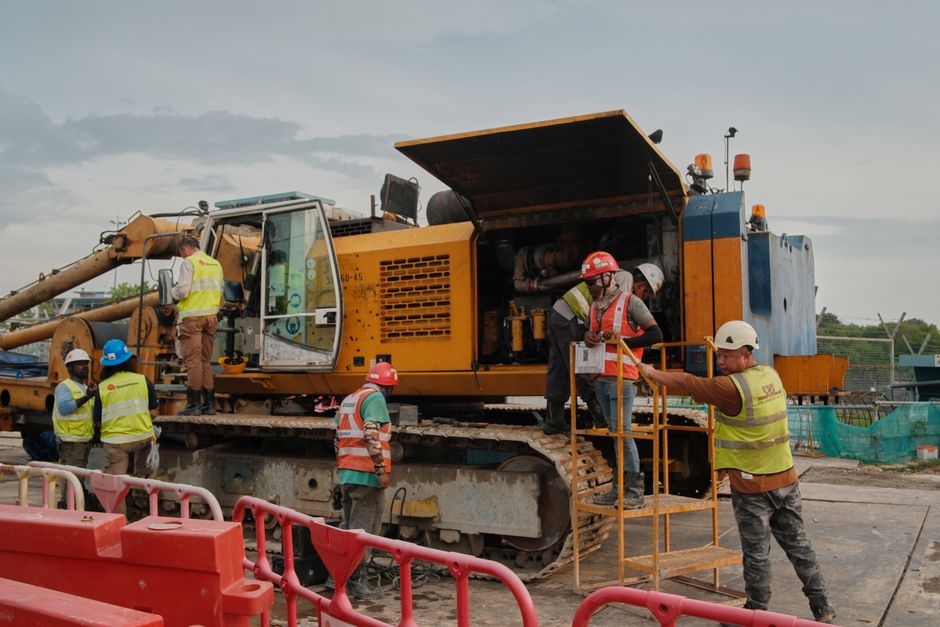
Machinery incidents dominate the record. Unguarded equipment, bypassed interlocks, inadequate segregation of pedestrians from vehicles. These are not novel hazards. Every one of them appears in the Safety, Health and Welfare at Work Act 2005 and the associated regulations. Yet machinery incidents continue becoming criminal negligence cases at a rate that suggests the regs alone are not changing behaviour.
Falls from height are the second constant. Scaffolding not inspected. Edge protection removed and not replaced. Workers making decisions about risk that should have been made at the planning stage.
The third pattern is the one nobody likes talking about: the employer had a safety statement. They had training records. They had, on paper, a functioning safety management system. And someone still got seriously hurt.
The Gap Between Paper and Practice
A safety statement that lives in a filing cabinet is not a safety management system. It is a document. The distinction matters enormously when the HSA inspector arrives, and it matters even more before they do.
Real safety management is observable. You can walk a site and see whether the permit-to-work system is actually being used, whether the pre-task briefing happened, whether the supervisor flagged the hazard identified in the risk assessment or glossed over it because the job needed to be done before noon. The paperwork does not tell you any of that. The site tells you.
What precedes most prosecuted incidents is a failure of oversight, not a failure of documentation. Supervisors who inherited a way of doing things and never questioned it. Managers who signed off on risk assessments they did not read. Directors who asked about output every morning and never once asked about near-misses.
Near-miss reporting is the canary. When workers stop reporting near-misses, it means one of two things: either nothing is going wrong, which is unlikely, or nobody believes reporting makes any difference. The second explanation fits the evidence in most enforcement cases. Workers saw the hazard. Workers adapted around it. Nobody in authority ever knew, because nobody in authority ever asked.
The Management Failures Worth Naming
Competency gaps at supervisory level. The foreman who runs a good job is not automatically the right person to manage safety on that job. Knowing how to pour concrete and knowing how to run a toolbox talk are different skills. Irish employers routinely promote on the basis of technical competence and assume safety leadership follows automatically. It does not.
No real authority to stop work. Employers write into their safety statements that any worker can stop work if they identify a serious risk. Then they create a culture where stopping work means explaining yourself to a manager under time pressure. Workers are not stupid. They read the actual incentive structure, not the policy document.
Contractor management done on the cheap. Hiring a contractor and assuming their safety arrangements are your contractor's problem is a €100,000 misunderstanding of Irish law. The principal contractor carries significant responsibility for what happens on site. When contractors cut corners, the principal does not get to stand at the back of the courtroom looking surprised.
Incident investigation that produces no change. A minor injury occurs. A form gets filled in. The form goes somewhere. Six months later the same task, the same equipment, the same working method, and a more serious outcome. The investigation existed to close the file, not to understand the system.
Maintenance deferred until failure. Equipment condition degrades gradually. Guards get bent and nobody straightens them. Sensors get bypassed temporarily and the temporary fix becomes permanent. This is not dramatic negligence. It is drift, and drift is harder to prosecute because there is no single decision point where someone chose danger. There is just a long sequence of small acceptances that nobody reversed.
The Turn
Here is the uncomfortable read on HSA enforcement: the fines are probably not high enough to change the calculation for an employer who is genuinely indifferent to safety, and they are completely irrelevant to the employer who actually wants to prevent incidents. The employers who need deterring are not reading enforcement notices. The employers who are reading them are already trying.
What changes behaviour at scale is not the penalty level. It is the certainty of inspection, the quality of the improvement notice, and the follow-through that shows a business whether their corrective actions actually worked. The HSA has limited inspector capacity relative to the size of the Irish workforce. That is a structural problem no fine level fixes.
What Actually Prevents the Fine
Audit your systems, not your documents. Walk the job and ask workers what they would change. Count near-miss reports and treat a drop in numbers as a warning sign, not a success. Make sure your supervisors can actually run a safety briefing rather than just attend one. Confirm that your contractor vetting process involves something other than asking for an insurance cert.
The €100,000 fine is recoverable. The worker who does not come home is not. Every prosecution in the HSA record started with a system that had warning signs, and ended with an injury that made those signs visible in retrospect. The goal is to see them in advance, which requires looking, which requires deciding that looking is your job.
That decision gets made before the inspector ever calls.