Thirty-eight people died in tractor-related incidents on Irish farms in a single decade. Most of them had been operating tractors for years. That fact should stop you cold.
The instinct after a fatal accident is to look for what was different that day. The slope was steeper. The ground was soft. The driver was tired. And yes, those things matter. But the harder question is why experienced operators, people who had done the same job hundreds of times, ran out of road. The answer has less to do with individual failure and more to do with how farms accumulate unresolved risk until one day the numbers catch up.
Near misses are the evidence farms are sitting on. Every time a tractor tilts and recovers, every time someone jumps clear, every time a load shifts and nothing happens, the farm logs a data point. The problem is nobody writes it down. It goes into the mental ledger marked "grand, sorted," and the underlying condition stays exactly as it was.
The Experience Trap
Competence creates complacency. That is not an insult. It is a documented pattern across every high-risk industry from aviation to offshore drilling. When you have performed a task a thousand times without injury, your brain stops treating it as dangerous. Shortcuts get normalised. Guards get removed because they slow things down. Slopes get crossed at angles that would make a new operator nervous.
Experienced tractor operators die at disproportionate rates precisely because experience reduces perceived risk without reducing actual risk. The tractor does not know you have 30 years on it. The slope gradient does not adjust for your history. Rollover physics are the same every time.
This is why near misses matter more than most farms acknowledge. A tractor that slides two feet before stopping on a wet slope is not a lucky escape. It is a measurement. The ground was this wet, the load was this heavy, the outcome was this close. That is usable information, if anyone captures it.
What Rollover Data Actually Tells Us
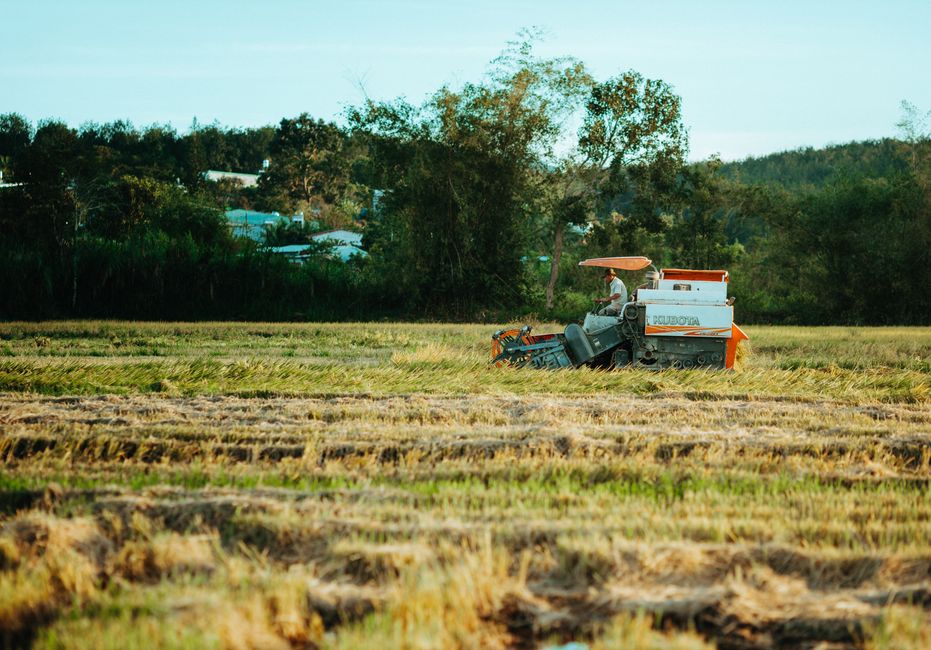
Overturns are the single biggest cause of tractor fatalities in Ireland. The HSA's own figures put it consistently at the top of the list. Side overturns on slopes account for the majority, but rear overturns on level ground during loader or linkage work kill people every year too.
ROPS, rollover protection structures, have been mandatory on tractors for decades. They work. A properly fitted cab or frame with a seatbelt worn correctly will keep the operator alive in the majority of rollover events. Yet people still die in overturns where ROPS was present because the seatbelt was not worn. One piece of equipment. Five seconds to click in. The gap between those two things is where fatalities live.
Older tractors without ROPS are still working on Irish farms. They are legal on some classifications of older machine, but they are not safe. If a tractor on your yard has no rollover protection, that is not a quirk of its vintage. It is a live hazard.
The Near Miss You Are Not Reporting
When safety plans fail and nobody investigates the warning signs, the next serious incident usually looks identical to the last near miss, just without the luck.
Near miss reporting on farms is almost nonexistent compared to other industries. Construction sites, manufacturing facilities, even food processing plants have formal systems for capturing precursor events. Farms mostly do not. And when a family member is the one who nearly came off a machine, there is a social dynamic that pushes toward "he's grand, say nothing" rather than stopping work and asking why it happened.
The fix is not complicated. A notebook on the kitchen table would do it. Date, what happened, what could have caused a worse outcome, what needs to change. That is it. No software required. No HSA template needed. The act of writing it down forces the question: what are we going to do about this?
Slopes, Loads, and the Conditions That Kill
Three conditions appear repeatedly in fatal tractor incidents. Slopes over 15 degrees, particularly when the ground is wet or the tractor is working across the slope rather than up and down it. Heavy rear or front-mounted implements that shift the centre of gravity outside the wheelbase. And reversing or manoeuvring in confined yards with restricted visibility.
The slope hazard is well understood in theory and routinely ignored in practice. Farmers assess slopes by eye and experience, both of which are unreliable. A clinometer costs less than 20 euros. Knowing the actual gradient of the fields you work removes the guesswork. If a slope exceeds the manufacturer's rated limit for your machine, working it is not a judgment call. It is a known risk being accepted without control.
Loader work deserves specific attention. Carrying a loaded bucket high while travelling increases rollover risk dramatically. The rule is simple: travel with the load low, raise it only when you are stationary and level. Plenty of operators know this rule. Fewer follow it on every single journey.
What Actually Changes the Numbers
Farm fatalities in Ireland follow patterns that repeat across years, which means they are not random. Patterns can be interrupted.
ROPS retrofitting programmes work when they are funded and accessible. Seatbelt wearing rates go up when there is social normalisation, when it is the default behaviour on a farm rather than the exception. Slope assessment becomes routine when it is built into the pre-work check rather than left to in-the-moment judgment.
Training refreshers matter, but only if they are honest about the experience trap rather than treating every operator like a beginner who just needs to be told the basics again. An operator with 20 years on tractors does not need to be told what ROPS is. They need to have a direct conversation about the moments when they override their own safety judgment because time is against them, because the job will only take a minute, because they have done this a hundred times.
The near miss that happened last Tuesday on your farm is a better training tool than any generic course. Use it.
The Close Distance Between a Near Miss and a Fatality
The physics of a tractor rollover do not change depending on how it ends. The machine that tips and rolls on a wet October morning kills someone or does not based on factors that are often millimetres and seconds apart. Experienced operators are not immune to those physics. They are just more likely to believe they are.
Write down the near misses. Fix the conditions they reveal. The alternative is waiting to see which one turns into a statistic.