A wrench dropped from six storeys hits the ground with roughly the same energy as a bullet. Most sites treat it like a housekeeping issue.
Falling objects kill and maim across every sector that works at height or handles materials in bulk. Construction gets the headlines, but the same physics applies on farms, in warehouses, and on city streets where glazing work happens above pedestrian heads. The pattern behind every incident is almost identical: no exclusion zone, no netting, no toeboards, and someone who assumed nothing would fall today.
Why the Numbers Are Worse Than You Think
The HSA does not publish a dedicated falling-object fatality count separate from its broader struck-by statistics. That is itself part of the problem. When deaths get categorised broadly, the specific hazard gets diffuse attention and diffuse spending. What the data does show is that struck-by incidents, including falling and swinging objects, consistently account for a significant share of construction fatalities each year in Ireland. UK HSE figures are more granular and paint a grim picture: falling objects send thousands of workers to hospital annually, with head injuries dominating.
The non-fatal injuries are where the real cost hides. A block falling two metres onto an unprotected foot crushes bones. A spanner dropped from scaffolding at five metres can fracture a skull even through a hard hat. Helmets are not rated for every impact scenario, and workers know this even if they do not say it out loud. The confidence people place in PPE without understanding its limits is one of the quieter safety failures on Irish sites.
The City Centre Problem
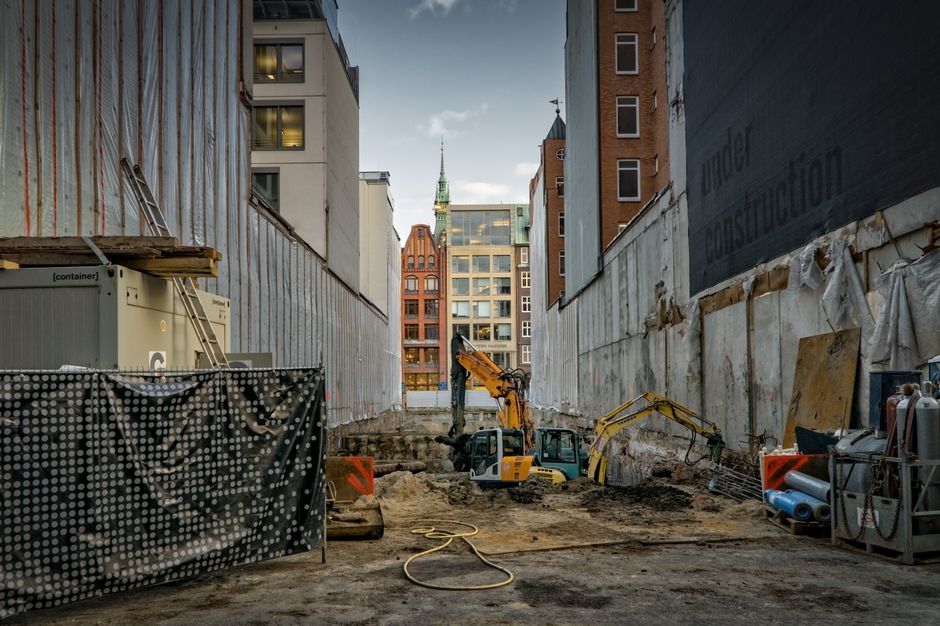
High-rise refurbishment and glazing work in urban environments creates a particular challenge. Public footpaths run directly below active work zones. The 2019 incident in Dublin where a window unit fell during installation work was not an isolated event; it was a predictable consequence of inadequate exclusion and no secondary retention. Glass weighs roughly 25 kilograms per square metre for standard double-glazed units. A 1.2 by 2.4 metre panel weighs about 72 kilograms. At height, that is a fatality waiting for a moment of inattention.
The regulatory requirement under the Safety, Health and Welfare at Work (Construction) Regulations is clear: materials must be stored, handled, and moved in ways that prevent uncontrolled falls. In practice, enforcement visits to city centre sites too often find materials stacked near unprotected edges, no debris netting beyond the immediate scaffold bay, and exclusion zones that exist on paper but evaporate when delivery vehicles need access.
Scaffold collapses and falling glass incidents follow a recognisable pattern: the risk was visible before the incident, someone decided the controls were good enough, and good enough turned out not to be.
The Farm Dimension
Falling objects on farms rarely involve scaffolding. They involve bales. A standard round silage bale weighs between 500 and 900 kilograms. Bales stacked three or four high on a slope, in a shed with uneven ground, represent stored kinetic energy that can kill instantly if the stack becomes unstable. The HSA's farm inspection data repeatedly flags improper bale storage as a recurring hazard, and yet it remains one of the most normalised risks in Irish agriculture.
The physics is not complicated. A bale rolling down a 15-degree slope accelerates fast enough to be lethal within a few metres. Children are particularly at risk because they are drawn to stored bales and cannot get clear in time. Adults working near stacks who do not anticipate movement are equally vulnerable.
The controls are not expensive. Stable ground. Correct stacking angles. Barriers. A no-go zone for anyone not directly involved in moving bales. None of this requires specialist knowledge. It requires the decision to treat a bale stack with the same seriousness as scaffolding at height.
What Actually Works
The hierarchy of control applies here as much as anywhere else. The goal is to prevent objects from becoming projectiles in the first place, then to limit the consequences when prevention fails.
Toeboards and edge protection. Every working platform needs a toeboard at least 150mm high at its outer edge. This is not optional under Irish construction regulations. It stops tools and materials rolling off. It is also the first thing removed when it becomes inconvenient and the last thing replaced before an inspector arrives.
Debris netting and fans. Netting below scaffold bays catches materials that get past toeboards. Debris fans, the angled wooden or metal structures that project out from the scaffold, deflect falling objects away from pedestrians below. Neither is complicated to install. Both get skipped when programme pressure mounts.
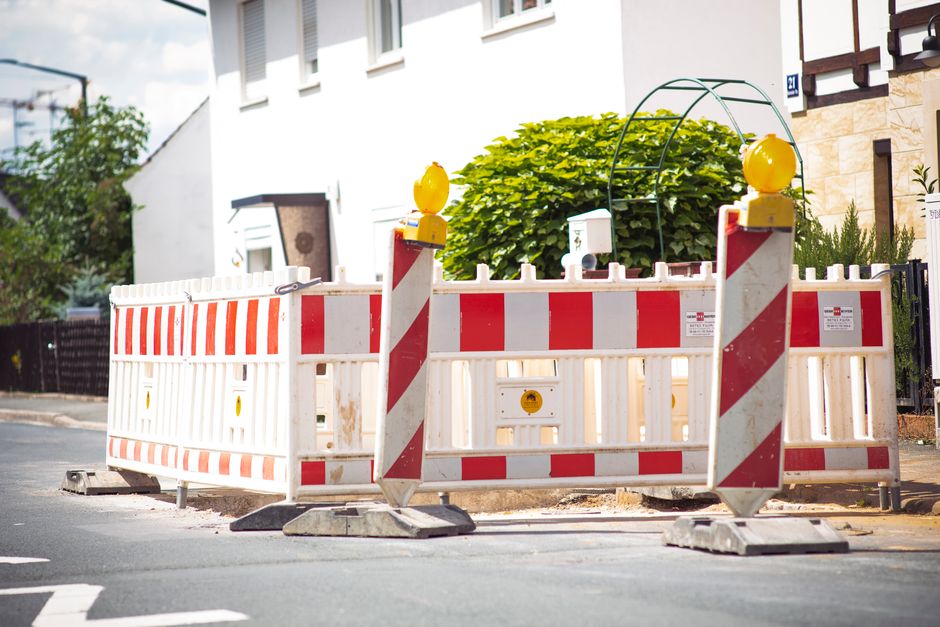
Exclusion zones with physical barriers. A cone and tape line is not an exclusion zone for overhead work. Falling materials do not respect tape. Physical barriers, hoarding, or hard barriers actually stop people walking under active work. Pedestrian diversions around city sites exist precisely because tape lines fail.
Tool lanyards. A lanyarded tool cannot fall. Simple. They cost between five and twenty euros each. The hand tool most likely to kill someone when dropped from height is not a large power tool; it is the small items, spanners, chisels, measuring tapes, that workers carry without thinking and set down on ledges without thinking.
Bale storage standards. On farms, the HSA guidance is specific: stacks no more than three bales high on flat ground, with the slope and ground condition factored in. Stacks against walls for lateral support where possible. No children in storage areas. These are not bureaucratic recommendations; they reflect what happens when stacks go wrong.
The Supervision Gap
Most falling-object incidents happen when the controls that were planned are not being applied during actual work. The risk assessment said toeboards. The method statement said netting. Neither was in place when the incident happened. This is the supervision gap, and it is where the role of the project supervisor on Irish sites becomes critical.
A supervisor who does a morning walk and checks these controls before work starts will catch 80 percent of the failures that lead to incidents. One who trusts that yesterday's setup is still good today will not. The incentive structure on most sites rewards speed. Changing that requires a client and main contractor who treat delays for safety reinstatement as less expensive than incidents, because they are.
The Turn
Falling objects are not a niche hazard. They are a consistent, predictable mechanism for killing and injuring workers and members of the public. The controls are well understood, cost-effective, and legally required. The gap is not knowledge or technology. It is the daily decision on site to apply the controls even when nobody is watching and the programme is behind.
Every serious incident investigation into a falling-object death finds the same thing: the controls were known and not applied. That is not bad luck. That is a choice.