Someone told them not to bother. That is the detail that should stop you mid-coffee.
Recent HSA prosecutions have revealed a pattern that goes beyond carelessness. Workers on Irish construction sites are being actively instructed to leave seatbelts off on dumper trucks and site vehicles. Not forgetting. Not choosing. Being told.
The Instruction That Kills
The reasoning behind the instruction varies by site. Some foremen argue the belt slows the operator down. Others claim it is harder to jump clear of a rolling machine if you are buckled in. A few just never questioned the habit because it is what was done before them.
All three arguments are wrong, and the third one is the most dangerous because it is the most honest. It reveals that this is not a risk calculation. It is a tradition.
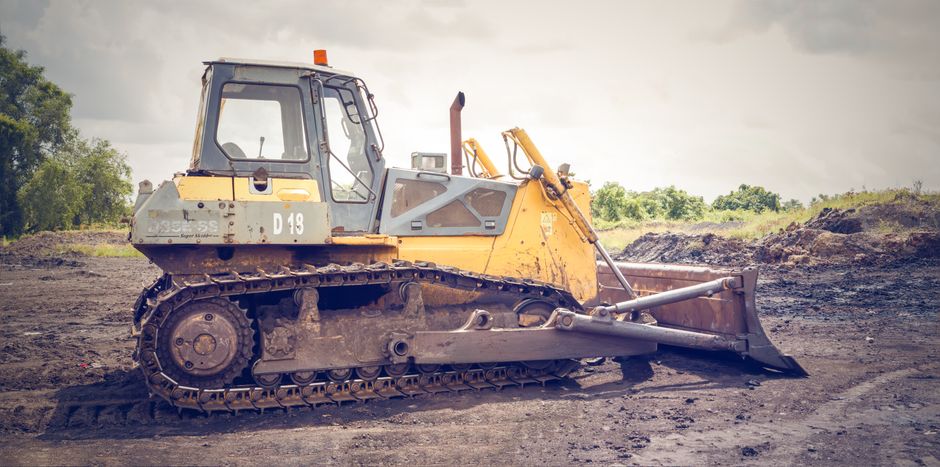
A dumper truck rollover without a seatbelt gives you almost no chance. The cab rolls, you move with it, and the outcome is determined by physics before anyone can intervene. With a seatbelt, you stay in the operator zone. Without one, you become a loose object inside or alongside a machine that weighs several tonnes.
The "jump clear" logic deserves a specific burial. In a rollover, you do not have time to assess which way the machine is going, release a belt, open a door, and leap to safety. That sequence takes seconds you will not have. What you do have, if belted in, is a fighting chance of surviving inside a roll-over protective structure that was engineered to keep you alive.
Why the Culture Persists
Construction moves fast. Dumper operators complete dozens of short runs per shift. The perceived friction of buckling up multiplies across those runs, and somewhere along the line a supervisor decided the seconds added up to a productivity problem.
They are not wrong that it takes time. They are catastrophically wrong about what that time buys.
The other driver is normalcy. When nobody on a site wears a belt, wearing one makes you the odd one out. Site culture is powerful precisely because it operates without anyone announcing it. New workers absorb it within a week. They see what the experienced hands do and they copy it. Challenging it means challenging the hierarchy, and that is a lot to ask of someone who started Monday.
This is how dangerous norms survive. Not through active malice but through social inertia dressed up as experience.
What the Prosecutions Tell Us
The HSA does not take these cases lightly, and the courts are not treating them as minor procedural failures. Employers are being convicted not just for the absence of a seatbelt policy but for actively cultivating a culture where the policy was meaningless or inverted. That distinction matters enormously when you are looking at fines and the prospect of criminal liability.
The question being asked in court is not only "did the worker have a seatbelt." It is "did the employer create conditions where using it was reasonable and expected." If the answer to that second question is no, the employer owns the outcome. Recent HSA prosecutions show exactly how quickly machinery incidents become criminal negligence cases once the evidence points to systemic failure rather than individual lapse.
What Actually Works
Posters do not fix this. A toolbox talk on a Tuesday will not fix this either, not by itself.
What fixes it is making the seatbelt the default, observable, enforced behaviour at every level of the site hierarchy. That means the site manager wears one when operating any vehicle. It means the first time a new operator is seen without one, the conversation happens immediately and is recorded. It means the instruction to skip the belt, if it comes from anyone, is treated as a disciplinary matter rather than a site tradition.
Specific steps that work:
Pre-start checks include the belt. Build seatbelt confirmation into the operator pre-use check the same way you would check hydraulics or tyres. If it is on the checklist, it gets done.
ROPS and FOPS alone are not enough. Roll-over protective structures and falling object protective structures are built into modern dumpers for good reason. They work when the operator is held inside them by a seatbelt. Without the belt, the cab structure protects an empty space.
Short-haul logic is backwards. The argument that seatbelts are only necessary for longer journeys ignores where most dumper incidents happen. They happen on uneven ground, at low speed, on sites the operator knows well. Familiarity breeds inattention, not safety.
Visibility changes behaviour faster than training. Drone surveillance on construction sites is already changing how supervisors monitor ground-level compliance. Workers who know they might be observed behave differently. That is not surveillance culture, it is accountability culture, and on a site where someone is dying every few weeks nationally, accountability is not optional.
The instruction to skip the belt is a dismissal offence. State this explicitly in your safety statement and in induction. Not as a threat but as a boundary. Any instruction that creates risk for another worker is not a management decision, it is a legal liability.
The Turn
The real issue here is not a seatbelt. It is authority. Someone on your site has enough credibility to tell a worker to ignore a safety control, and the worker listens. That authority is either working for you or against you. Right now, on the sites showing up in prosecution files, it is working against everyone.
Reclaim it. Your most experienced operators are either your biggest asset or your biggest liability depending on what they model. Make that choice deliberate.
A two-second buckle is not a burden. It is the difference between a near-miss story someone tells at the end of a long career and a file the HSA opens on a Monday morning.