A worker can spend twenty years on site, feel fine every morning, and be told at fifty-three that his lungs are scarred beyond repair. No dramatic incident. No obvious moment it went wrong. Just dust, accumulated quietly, doing its work.
This is how occupational lung disease operates. It does not announce itself. By the time it does, the damage is already done.
The Disease You Do Not Feel Until It Is Too Late
Silicosis develops from breathing in respirable crystalline silica, the fine particles released when you cut, grind, drill, or blast materials like granite, sandstone, concrete, and quarried rock. The particles are small enough to reach deep into the lungs. The body cannot clear them. The tissue responds by scarring. That scarring is permanent, progressive, and in acute cases, fatal within years of heavy exposure.
The cruel mechanics of it: the early stages produce no symptoms most workers would flag. Mild breathlessness on exertion feels like being out of shape. A persistent cough gets blamed on a winter chest infection that never quite cleared. Workers tolerate both for years without connecting them to the site they work on daily. By the time breathlessness becomes severe, the lung function loss is already significant and irreversible.
Chronic silicosis, the most common form, develops after ten or more years of moderate exposure. Accelerated silicosis can appear within five to ten years of higher exposure. Acute silicosis, from very heavy short-term exposure, can kill within months. The engineered stone ban introduced in recent years came directly from watching young kitchen fitters develop accelerated silicosis in their thirties from cutting worktops without adequate controls. The construction and quarry sectors face the same risk from the same particle, from different materials, across longer careers.
What Symptoms Actually Look Like
The problem with waiting for symptoms is that the first ones are easy to dismiss. Know what you are looking for.
Early stage:
- Breathlessness during physical effort that was not there six months ago
- A dry cough that persists beyond three to four weeks with no clear cause
- Unusual fatigue after activity that previously caused no issue
- Mild chest tightness, particularly after dusty work
Later stage:
- Breathlessness at rest or with minimal exertion
- Severe persistent cough, sometimes with sputum
- Reduced exercise tolerance that limits daily life
- Bluish tinge to lips or fingertips in severe cases (a sign of very low oxygen)
- Weight loss without explanation
Silicosis also dramatically increases the risk of tuberculosis. A worker with silicosis is three times more likely to develop TB. Any combination of lung symptoms, night sweats, and weight loss in a construction or quarry worker deserves urgent medical attention, not a wait-and-see approach.
Silicosis is also linked to increased rates of lung cancer and autoimmune conditions including rheumatoid arthritis and scleroderma. The damage reaches further than the lungs alone.
Who Is Most at Risk on Site
Not every construction worker faces equal exposure. The highest-risk tasks involve:
- Dry cutting, grinding, or drilling into concrete, sandstone, or granite
- Jackhammering or scabbling concrete surfaces
- Sand or grit blasting
- Crushing and processing quarried rock
- Working in enclosed spaces with any of the above
Quarry workers face sustained, repeated exposure across careers that span decades. So do groundworkers, demolition crews, and anyone regularly operating angle grinders or disc cutters on stone or concrete without water suppression or local exhaust ventilation.
The occupational exposure limit for respirable crystalline silica in Ireland is 0.1 mg/m³ as an eight-hour time-weighted average. That number means little without air monitoring. Visible dust is not the benchmark. If the dust is not visible, the site is not necessarily safe. The particles that cause silicosis are too fine to see.
When to Demand Health Screening
Under the Safety, Health and Welfare at Work (Chemical Agents) Regulations, employers are legally required to provide health surveillance for workers exposed to silica above the action level. In practice, this is inconsistently applied across Irish construction and quarry sites.
If you work in any of the high-risk tasks listed above, you are entitled to ask for health surveillance. Do not wait to be offered it.
Health screening for silica exposure should include:
- A baseline lung function test (spirometry) before or shortly after starting exposure work
- Repeat spirometry every one to three years, depending on exposure level
- A chest X-ray at baseline, with repeat intervals based on risk assessment
- Occupational health review that includes a full work and exposure history
If your employer has no occupational health provider, the HSA can advise on requirements. If you are self-employed, arrange screening through your GP with a clear account of your work history and the materials you regularly work with. A GP who does not know you work with silica-containing materials will not think to screen for it.
Any worker who has spent five or more years in high-dust construction or quarry work and has never had a lung function test should request one now.
What the Medical Conversation Needs to Include
Workers often attend a GP with vague respiratory symptoms and leave with a hay fever or asthma diagnosis. These are real conditions, but they are also sometimes misattributed diagnoses in workers who have an occupational exposure history that was never properly documented.
When you see a doctor, state clearly:
- What you do for work and have done across your career
- Which materials you regularly cut, grind, or work with
- Whether dust controls were used and how consistently
- How many years you have been doing this work
This information changes the clinical picture. Occupational asthma, silicosis, and chronic obstructive pulmonary disease linked to dust exposure all require different management to garden-variety respiratory conditions. Misdiagnosis delays appropriate care and delays compensation claims if they become necessary.
If your GP does not feel equipped to assess occupational lung disease, ask for a referral to a respiratory specialist or an occupational physician. This is a reasonable request for any worker with a significant exposure history.
What Employers Must Have in Place
This is not optional and it is not a grey area. If your workers are exposed to silica, the law requires:
- A written COSHH-style risk assessment covering silica exposure specifically
- Elimination or reduction of exposure through engineering controls first (wet cutting, on-tool extraction, LEV)
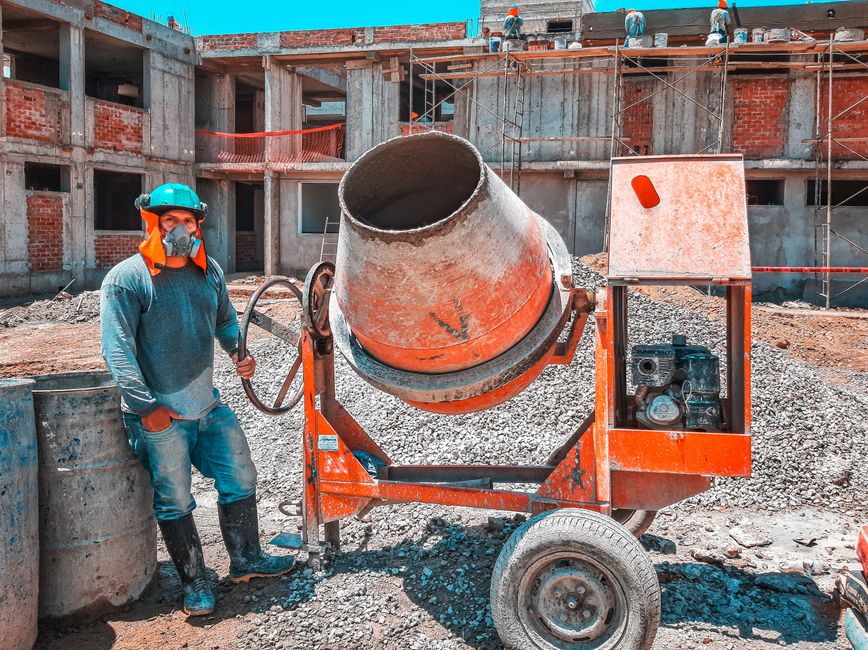
- Respiratory protective equipment as a final layer, not a substitute for controls
- Health surveillance with records retained for forty years
- Training that tells workers what silica is, what it does, and how controls protect them
The forty-year records requirement exists because silicosis can emerge decades after exposure. Workers who leave the industry, retire, or move between employers still have rights to historical health records if they later develop disease.
The Turn
The system relies on workers not knowing what they are entitled to ask for. Most do not know the occupational exposure limit for silica. Most do not know health surveillance is a legal right. Most have never had a lung function test linked to their work history. That gap between what the law requires and what actually happens on the ground is where the disease lives. Employers know the rules. They are counting on workers not knowing them too.
If you have spent years in dusty construction or quarry work and your lungs have never been formally assessed, that conversation with your GP or occupational health provider is overdue. The damage that has already occurred cannot be undone. The damage that has not yet occurred still can be.