A worker ends up in A&E with second-degree burns from a steam line. The company pays a €150,000 fine. Eighteen months later, a different worker at a different site, same company, same injury. The fine is bigger this time. Nobody saw it coming, apparently.
Except everybody saw it coming.
Scalding in food manufacturing is one of those hazards that sits in plain sight. Hot water at pressure, steam at 120 degrees, CIP (clean-in-place) systems flushing caustic fluid through pipes that workers open before the cycle finishes. The physics never change. The injury pattern never changes. What changes is whether the company in question treats the hazard seriously before or after someone gets hurt.
The courts increasingly have no patience for the "after" option. Food sector prosecutions involving scalding and steam injuries have produced fines well into six figures across Ireland and the UK, and enforcement bodies are not treating these as freak accidents. They are treating them as foreseeable events that management chose not to prevent.
The Hazard Is Not Hidden
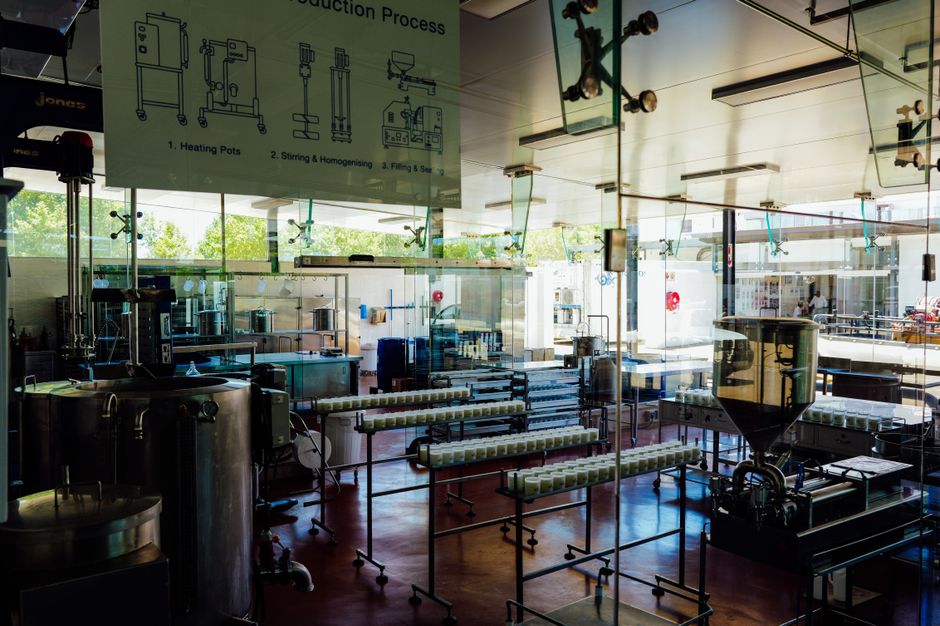
Walk through any large food production facility and the thermal hazards announce themselves. Retort vessels for canning. Blanching equipment in vegetable processing. Pasteurisation lines in dairy. Steam jackets on cooking vessels. CIP systems running at high temperature and pressure. Every one of these requires workers to be in close proximity to superheated water or steam at some point in the production cycle.
The injury mechanism is simple. Skin exposed to water at 60 degrees Celsius suffers a full-thickness burn in around five seconds. At 70 degrees, it takes less than one second. Steam at atmospheric pressure is 100 degrees. Pressurised steam is hotter still. There is no margin for error and no such thing as a minor contact with these temperatures.
What makes scalding incidents systemic rather than random is that they almost always happen during one of three activities: cleaning operations, blockage clearing, or maintenance on live systems. These are not unusual tasks. They happen on every shift. They are also the tasks most likely to be done under time pressure, with shortcuts, and without the right PPE in place.
Where the System Actually Breaks Down
The fine-worthy failures in scalding cases rarely involve a missing guard or a broken alarm. They involve something more corrosive: normalisation. The site has been running the same CIP procedure for three years. Workers have been opening that valve before the pressure drops because waiting adds twelve minutes to the turnaround. Nothing bad has happened yet. The supervisor knows about it. Management knows about it. It is just how it gets done.
This is what investigators find when they dig into the incident reports. Not a single catastrophic failure, but a long chain of tolerated deviations from the safe system of work. The written procedure says wait for the pressure gauge to read zero. The actual practice is to crack the valve when you think it sounds quiet. One day, the sounds are wrong. Someone loses skin off both forearms.
Repetitive injuries in food manufacturing follow exactly this pattern. Second and third fines at the same company are almost always explained by the same gap: the written safe system exists, but the actual system of work that runs on the floor has drifted away from it. Nobody challenged the drift. Nobody measured it. The audit ticked the box because the procedure document was up to date.
What a Functioning Scalding Prevention System Looks Like
Fixing this is not complicated. It is, however, deliberate.
Thermal risk mapping. Every piece of equipment that operates above 50 degrees Celsius gets identified. Every task that brings a worker into contact with that equipment gets mapped. Not just the obvious ones. Include pre-production checks, fault-clearing, cleaning, and maintenance. If a worker touches it during the shift, it goes on the map.
Permit-to-work for high-risk thermal tasks. Isolation procedures for pressurised steam and hot water systems need to be treated the same way as electrical isolation. Lock out the energy source, verify the isolation, then proceed. This is not bureaucracy. It is the difference between an incident and an injury.
PPE that actually works. Standard food-grade gloves do not protect against scalding. Heat-resistant gloves rated for the specific temperature range in use are a different product. So are face shields rated for steam splash. If the PPE store has the wrong category of glove and workers know it, the permit-to-work is fiction.
Visible timing controls on CIP systems. Workers should not have to guess when a system is safe to open. Interlocked controls that prevent access until temperature and pressure are within safe parameters remove the human judgement call entirely. This is engineering control, and it sits above PPE in the hierarchy of controls for a reason.
Monitoring the actual practice, not the written procedure. Supervisors need to physically observe high-risk tasks regularly, not to police workers but to spot the gap between the procedure and reality. If the gap exists, the procedure is wrong or the training is wrong or the time allocation is wrong. Find out which.
The First Aid Window
When scalding happens, the first sixty seconds matter more than anything that follows. Cool running water on the burn for twenty minutes. Not ice. Not butter. Not a wet cloth changed every thirty seconds. Running water, continuously, for twenty minutes. This is not optional and it is not a preference. It is the evidence-based standard and it significantly affects outcomes, including depth of injury and time to recovery.
Chemical burns at work follow a similar immediate-response protocol, and the principle is the same: dilution and cooling with water buys time and reduces damage. Food manufacturing sites need clearly marked emergency shower or cooling stations within seconds of any high-temperature equipment. If the nearest water source is forty metres away, the first aid protocol is already failing before it starts.
The Regulatory Picture
Ireland's Safety, Health and Welfare at Work Act 2005 requires employers to identify and manage foreseeable risks. Steam burns are foreseeable. Hot water burns are foreseeable. The HSA does not accept "we didn't think it would happen" as mitigation when a thermal risk map of the facility would have identified the hazard in an afternoon.
The General Application Regulations 2007 require appropriate personal protective equipment to be provided, maintained, and actually used. Providing the wrong PPE, or the right PPE in the wrong size, or PPE that lives in a cabinet nobody opens, does not meet the standard. Enforcement inspectors check the maintenance records. They check the training records. They check whether workers can describe the procedure from memory, not just whether the laminated card is on the wall.
Fines for scalding incidents in food manufacturing have landed between €50,000 and €200,000 at prosecution stage, before civil claims are factored in. The civil exposure is typically larger. A worker with permanent scarring to hands, arms, or face has a serious personal injury claim, and the courts are not sympathetic to employers who had documented evidence of a hazard and did nothing material about it.
The Turn
The pattern that nobody is talking about is not actually hidden. It shows up in every prosecution, every inspection report, every incident investigation. The hazard was known. The gap between the safe system and the actual system was known, at least informally. The incident was therefore predictable. What was missing was someone with the authority and the inclination to close that gap before the injury rather than after the fine.
That is a culture problem more than a procedure problem. Procedures are cheap to write. Culture is harder to build. But it is the only thing that actually changes outcomes.
The next scalding incident in your facility is either being prevented right now or it is not. There is no middle position.