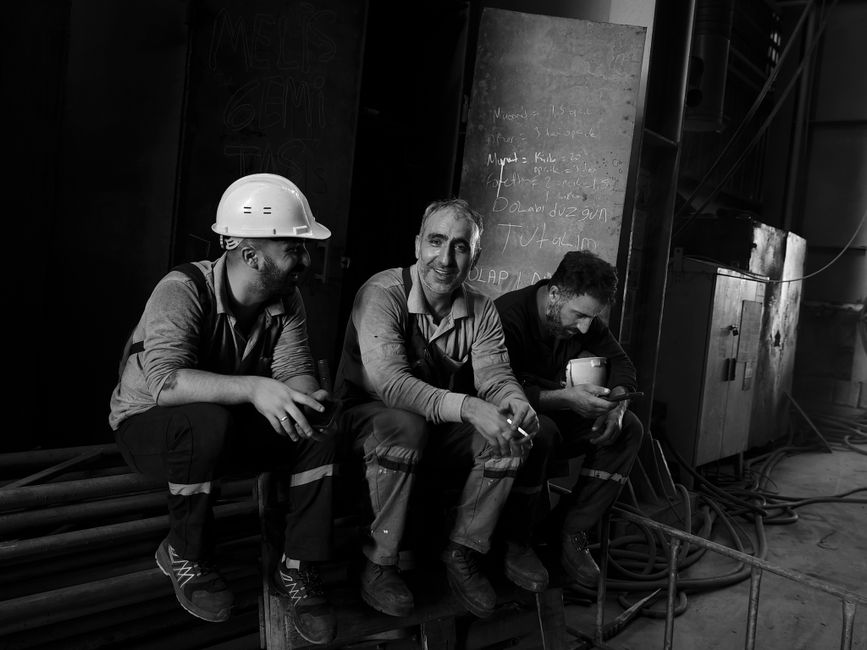
People who seem fine are not always fine. And in Irish workplaces, that gap between appearance and reality is killing people.
The conversation about physical safety has matured enormously over the past two decades. Incident protocols, risk assessments, PPE audits. All necessary. None of it addresses the worker who is quietly drowning and showing up every day anyway, because saying so feels impossible.
The Problem Isn't Awareness. It's Admission.
Every major employer in Ireland now has some version of a mental health policy. Most have an Employee Assistance Programme number printed somewhere. A few have posters in the canteen. And yet the HSE's own data consistently shows that depression and stress are among the most common causes of long-term workplace absence, and that men in manual and construction trades remain least likely to seek help. The gap is not between knowing help exists and knowing where to find it. The gap is between struggling and feeling safe enough to say so out loud.
Stigma is the technical word for it. What it actually means is this: a worker on a site or a factory floor, or behind a desk, calculates the cost of admitting difficulty. He factors in what his foreman will think, whether it will affect his shifts, whether his colleagues will treat him differently. He does that calculation in about two seconds and decides to say nothing. He does it again the next day. And the next. Until either he gets help from somewhere else, or he doesn't.
The construction and agriculture sectors carry the heaviest burden here. Farm mental health sits in a category of its own, where isolation, financial pressure, and a deep cultural reluctance to show weakness combine into something genuinely dangerous. The statistics on farmer suicide are not ambiguous. Neither are the numbers for construction workers. Physical safety culture in those sectors has improved. Psychological safety culture has barely started.
What Psychological Safety Actually Means
It is not a workshop. It is not a lunchtime talk from a wellness consultant. Psychological safety, as defined by organisational researcher Amy Edmondson at Harvard, is the shared belief that the team is safe for interpersonal risk-taking. In plain terms: can I say something difficult here without it being used against me?
That belief, or its absence, shapes everything. It shapes whether a worker admits to a near-miss before it becomes a fatality. It shapes whether someone tells their supervisor they are not fit for a task that day. It shapes whether a person going through depression says anything at all, or quietly deteriorates until a crisis point that surprises everyone and surprises no one.
Psychological safety is not softness. It is a structural feature of functional workplaces. And it does not happen by accident.
What Actually Builds It
Leadership has to go first. This is non-negotiable. If a manager has never once mentioned their own stress, their own bad week, their own moment of struggling, then no worker below them will believe the environment is safe for honesty. Not because people are naive, but because they are rational. They watch what happens to people who are honest. They watch what the manager does with vulnerability, and they take notes.
One practical move: brief, regular one-to-ones that are not about task completion. Five minutes where the question is genuinely "how are you getting on?" and the listener actually waits for the answer. Not moving on after "grand."
Normalise the conversation before the crisis arrives. Waiting until someone is visibly struggling to introduce mental health language is too late and too loaded. Workplaces that do this well weave it in earlier. Health and safety toolbox talks that include a slide on stress and sleep. Team meetings that acknowledge pressure when deadlines stack up. Language that names mental load as a legitimate operational variable, not a personal failing.
Train people to notice, not diagnose. Mental Health First Aid training is available in Ireland and gives workers a framework for recognising signs of distress in colleagues and knowing what to do next. That is not about turning every worker into a counsellor. It is about giving people permission to say "you don't seem yourself, are you alright?" and meaning it.
Make the pathway to help obvious and frictionless. An EAP number on a laminated card is not a pathway. A pathway is: here is who you can speak to, here is how, here is what happens when you do, and here is confirmation, repeated often, that using it carries zero professional consequences. If workers cannot say those four things back to you, the pathway does not exist in any meaningful sense.
Take the physical safety culture and apply the same logic. In a workplace with strong safety culture, near-misses get reported because people believe the system will use that information constructively rather than punish the person who flagged it. The same logic applies to mental health. People will only flag struggles if they genuinely believe the response will be support, not performance management.
The Turn
None of this requires a budget line with six figures. It requires consistent, deliberate behaviour from the people at the top of each team. It requires the manager who says "I was having a rough week last month and I talked to someone" without it being a big theatrical moment. It requires HR policies that say what they mean about confidentiality and then actually honour them. It requires treating the admission of struggle as useful information rather than inconvenient weakness.
The organisations that get this right do not have fewer stressed workers. They have workers who say so, which means they can actually do something about it before the situation compounds into a crisis that harms the individual and costs the business far more than any intervention would have.
The door being open is not enough. People need to believe, based on evidence, that walking through it is safe. That belief is built one conversation at a time, and it starts with whoever is in charge going first.