Every roof fall conviction tells the same story. Not a story about bad luck. A story about a decision someone made, usually under time pressure, usually not for the first time, that finally caught up with them.
Falls from height remain the single biggest killer in Irish construction. The HSA's own figures put falls consistently at or near the top of fatal incident categories year after year. And a significant portion of those falls involve fragile roofs: fibre cement sheets, corrugated plastic rooflights, aging box profile that looks solid but has been degrading quietly for fifteen years. The science of why they fail is not complicated. The science of why workers keep walking on them anyway is where it gets interesting.
The conviction pattern nobody wants to look at
Recent prosecutions in Ireland and the UK show a pattern that should make any site manager uncomfortable. In case after case, the roof in question was not a surprise hazard. It was known. Workers had been on it before. Sometimes multiple times. The employer had, in many cases, identified fragile sections during a pre-work survey and then failed to translate that knowledge into physical controls.
That gap between knowing and doing is where people die.
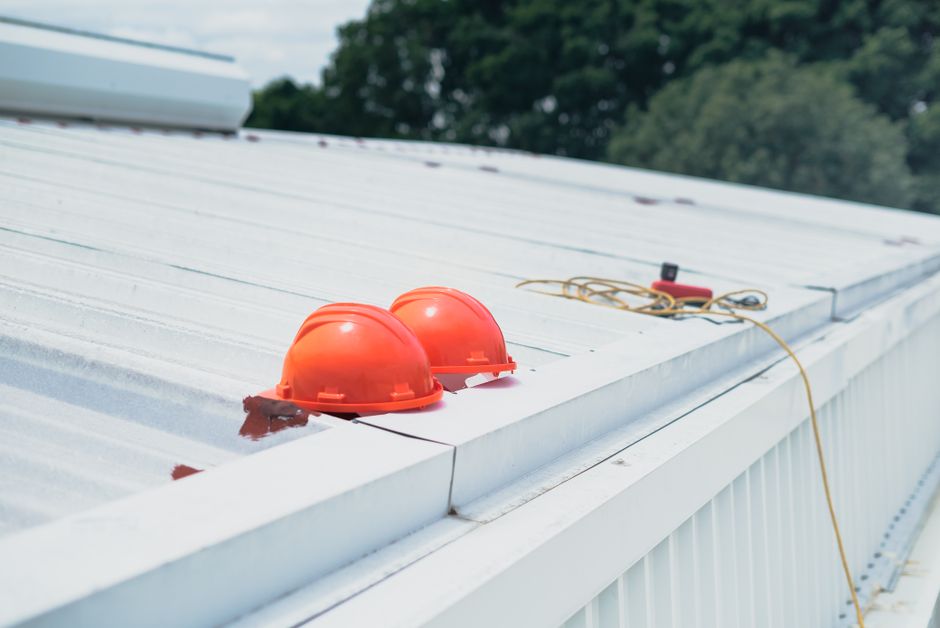
One case that drew significant attention involved a worker falling through a rooflight on an agricultural building during a maintenance job. The rooflight was not marked. There was no edge protection, no crawling boards, no safety net below. The contractor had been hired for what the client considered a straightforward job. The worker survived, just. The contractor faced prosecution. The fine ran to six figures. The paperwork trail showed that a risk assessment existed. It mentioned fragile materials. Nobody had acted on it.
That is not an isolated failure. It is the template.
What risk normalisation actually looks like on a roof
Risk normalisation is not a dramatic process. It does not happen at a meeting where someone decides safety does not matter. It happens in increments.
Worker A walks across a fragile roof without falling. Worker B watches and does the same. By the fifth time, nobody is thinking about the risk at all. The absence of an incident becomes the evidence of safety. This is the logic that James Reason, who spent decades studying human error in high-risk industries, called the "normalization of deviance." Each safe crossing adds one more data point to an invisible internal graph that reads: this is fine.
The problem is that fragile roof materials do not degrade on a predictable schedule. A fibre cement sheet that holds 90 kilograms on Monday can fail at 60 kilograms on Friday if there has been frost, UV fatigue, or a forklift vibration nearby. The worker who walked it twenty times safely has no way of knowing that the twenty-first time is different.
The seven signs your site has a complacency problem
You do not need a fatality to diagnose this. The signs show up earlier, if you know what to look for.
Workers self-assessing fragile materials by eye. If you hear "that looks grand" as the basis for accessing a roof, the system has already broken down. Visual inspection of a fragile roof surface is not a competent assessment.
No physical barriers, only warnings. Signs that say "fragile roof" and nothing else are not controls. They are documentation that you knew. Crawling boards, netting, or working platforms are controls. The distinction matters enormously in a prosecution.
Short-duration jobs treated differently. "It's only five minutes" is the most dangerous sentence on any site. A two-minute crossing of an unmarked rooflight kills you just as effectively as a two-hour job.
Subcontractors arriving without a briefing. Main contractors who hand a subcontractor the keys and walk away have not discharged their duty. Under the Safety, Health and Welfare at Work (Construction) Regulations 2013, coordination of safety information is a legal requirement, not a courtesy.
No pre-work roof survey documented. If you cannot produce a survey identifying fragile materials before work starts, you are not managing the risk. You are hoping.
Incidents treated as near misses and filed away. A worker who puts a foot through a rooflight and catches themselves on a purlin did not have a lucky escape. They survived an incident that should trigger an immediate review. Why construction falls keep happening is rarely a mystery: it is usually a near miss that nobody acted on.
Supervisors who have stopped asking questions. When a supervisor has been on so many jobs that fragile roof access feels routine, their familiarity is a liability. Complacency travels up the management chain just as fast as it travels down.
What the law actually requires
The Safety, Health and Welfare at Work Act 2005 requires employers to manage foreseeable risks. Fragile roofs are not unforeseeable. They are listed specifically in HSA guidance. The Construction Regulations require method statements and risk assessments for work at height. Neither document satisfies the law if the controls they specify are not implemented.
The Work at Height Regulations that apply in the UK, and which Irish courts have referenced in case analysis, are explicit: work must be properly planned, supervised, and carried out by competent people. Competent means trained and experienced in the specific task, not just generally capable.
Fines following roof fall prosecutions in Ireland have reached €190,000 for a single incident. That figure does not include civil liability, which runs separately and higher. The €190k question for most contractors is not whether they can afford the fine. It is whether the shortcut that led to it was ever genuinely necessary.
Breaking the cycle before the investigation starts
The practical controls for fragile roof work are not expensive or complicated. They are just consistently skipped.
A competent pre-work survey identifies all fragile materials, marks them physically, and feeds directly into the method statement. Crawling boards or roof ladders distribute weight across structural members rather than concentrating it on the fragile sheet. Edge protection or collective fall arrest netting is installed before anyone steps onto the roof. A permit-to-work system means no access happens without a documented check. Supervisors physically confirm controls are in place, not sign a form and assume.
The method statement should be specific to the job, not a generic document with the site name inserted. Inspectors and prosecutors can tell the difference. More importantly, the people on the roof can tell the difference between a method statement that was written for their actual job and one that was printed off from a template at 8am while they were already climbing.
The turn
The workers who have fallen through fragile roofs were not reckless people. Most of them were experienced tradespeople doing jobs they had done before. The system around them had quietly communicated, through every job where nothing went wrong, that the risk was manageable without the controls. That is the real failure.
Every employer who has managed fragile roof work safely has done one thing consistently: they treated the controls as non-negotiable regardless of job duration, regardless of how many times the crew had done it before, and regardless of whether anyone was watching. That consistency is not a personality trait. It is a decision, made in advance, that the alternative is not acceptable.
The roof does not know you've crossed it safely before. Act accordingly.