Somewhere on a site in Ireland right now, a worker is cutting concrete without water suppression, without a mask, without a second thought. He has done it a thousand times. Nothing has happened yet.
That is the problem.
The Disease That Takes Its Time
Silicosis does not announce itself. There is no injury, no blood, no ambulance. A worker breathes in respirable crystalline silica, particles so fine they settle deep in lung tissue and trigger scarring that never reverses. The process takes years, sometimes decades. By the time the breathlessness starts, the damage is done.
This is not a new discovery. The link between silica dust and fatal lung disease has been known since the 1930s. Ireland has had regulations targeting it for years. The HSA runs campaigns. The industry gets briefed. And workers keep dying.
What is not talked about enough is the gap between awareness and behaviour. Campaigns land. Posters go up. Then the grinder comes out and the mask stays in the van because it fogs up and the job is nearly done and nobody is watching.
Why Workers Ignore It
Talk to workers who have skipped dust controls and most of them will tell you the same thing: it felt fine. No cough, no irritation, no immediate consequence. Silica dust at dangerous concentrations is invisible to the naked eye. The air looks clear. That is enough reassurance for most people on a deadline.
There is also the perception problem. A cut hand is real. A broken ankle is real. Lung scarring that will not show up on a scan for fifteen years does not feel real at 28 years old on a cold Tuesday morning in Naas.
One safety manager at a mid-sized groundworks contractor described it plainly. He said his crew knew the rules, had the equipment, and still found reasons not to use it. Not out of defiance, he said. Out of the same logic that makes people drive without a seatbelt on a short trip. Nothing bad had happened before. Nothing bad felt likely to happen now.
The engineered stone ban that came into effect for certain countertop materials tells part of this story. That ban did not arrive because the risks were newly discovered. It arrived because compliance with existing controls was so consistently poor that regulators removed the material from use entirely. Engineered stone can contain up to 95% silica content. Workers cutting it dry were absorbing lethal doses. Regulations were not protecting them, so the product was pulled.
The Compliance Gap Managers Cannot Close Alone
Safety managers on Irish sites face a specific frustration. They can write the method statement, provide the wet cutting equipment, specify the RPE, and run the toolbox talk. What they cannot do is stand next to every worker every minute of every day.
The compliance gap on silica dust is not primarily about ignorance. It is about enforcement culture at the immediate supervisory level. When a foreman sees a worker grinding dry and says nothing, that silence becomes the site standard. The written procedure becomes fiction.
Several safety professionals in the construction sector have pointed to subcontracting as a compounding factor. The principal contractor sets the rules. But the worker cutting block is employed by a sub, who is hired by another sub, and the direct supervision chain has so many links that accountability dissolves. Nobody thinks the problem is their specific job to solve.
The HSA has powers to issue improvement notices and prosecution follows serious breaches, but routine inspection cannot substitute for day-to-day site culture. Inspectors are not on every site every day. Supervisors are.
What Actually Works
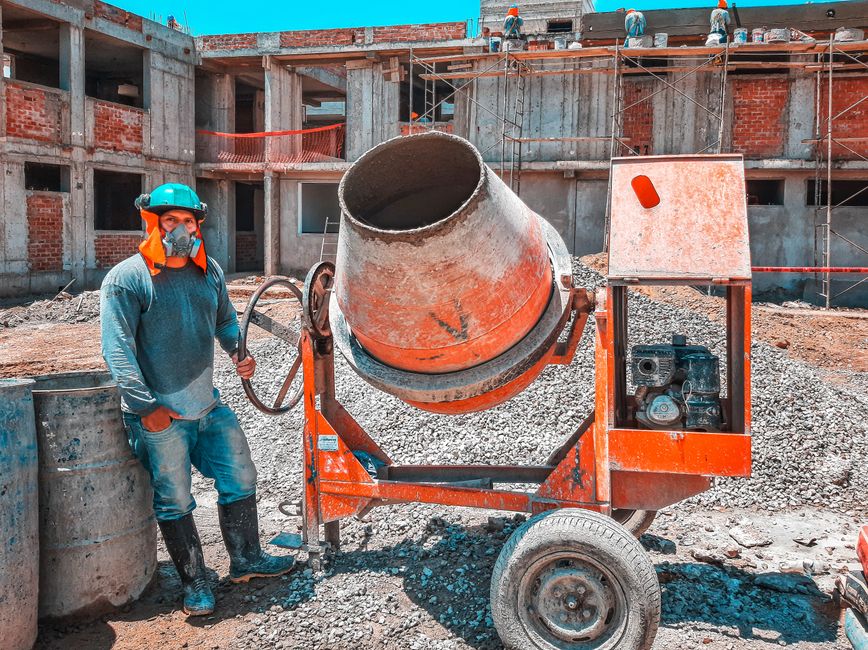
The hierarchy of controls is not complicated. Water suppression on cutting tools. Local exhaust ventilation for indoor work. Respiratory protective equipment as the last line, not the first. Pre-wetting block and concrete before cutting. Keeping workers upwind of dust clouds. None of this is expensive relative to the cost of a silicosis claim or a fatality investigation.
The problem is the word "last line." Too many sites treat RPE as the whole solution. Hand a worker an FFP3 mask and consider the risk managed. But masks fail. They need to fit correctly, be worn consistently, and be replaced on schedule. A mask worn under the chin during cutting provides exactly zero protection. If you are relying entirely on RPE, you need to understand why that approach fails.
The sites that genuinely reduce silica exposure treat dust control as an engineering problem, not a behaviour problem. Wet cutting becomes the default because the kit is set up and ready. Dry cutting requires extra steps to make happen. That reversal of friction makes a measurable difference.
The Long Tail of a Short Decision
A worker who cuts concrete dry every day for ten years is not making one decision. He is making the same decision thousands of times. Each individual decision feels low stakes. Collectively, they are a sentence.
Silicosis in 2026 is killing young workers who started in the trade in their late teens and got a diagnosis in their thirties. That gap between exposure and consequence is the exact reason the warnings do not land. The human brain is not built to treat a risk seriously when the consequence is twenty years away and the short-term payoff is finishing the job faster.
This is not a character flaw. It is how most people work. Which means the system has to be designed so that the safe choice is also the easy choice, rather than requiring workers to choose between getting the job done and protecting lungs they cannot feel getting damaged.
Who Owns This Problem
The honest answer is everyone. Workers who skip controls. Supervisors who ignore them. Contractors who treat method statements as paperwork rather than instructions. Clients who set timelines that make proper dust suppression feel like a luxury. Regulators who inspect too infrequently to catch the daily drift.
The campaign awareness has done its job. Almost everyone in Irish construction knows silica dust is dangerous. That knowledge has not translated into consistent control. Until sites treat dust suppression as non-negotiable in the same way they treat working at height, the gap between knowing and doing will keep filling with hospital beds.
The dust is invisible. The consequences are not.