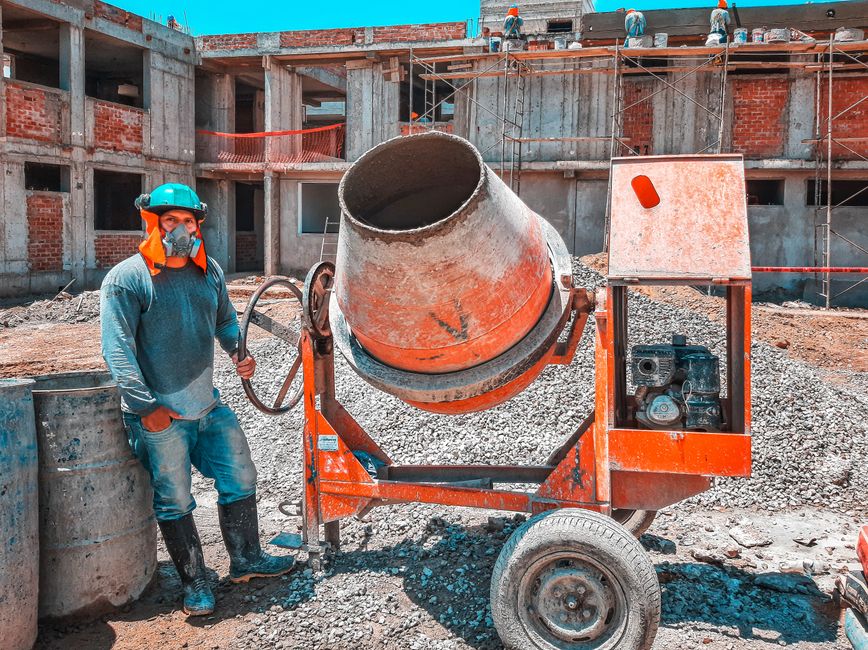
The posters are up. The toolbox talk happened. The FFP3 masks are in the stores. And the angle grinder is running dry, two metres from an open bag of sand, while the operative works maskless into the wind.
This is the silica problem in Ireland right now. Not ignorance. Not defiance. Something more complicated and more fixable than either.
The Gap Between Knowing and Doing
Ask most construction workers if silica dust is dangerous and they will tell you yes. The HSA campaigns have landed. The word silicosis exists in the vocabulary now in a way it did not ten years ago. So the gap is not informational. It is behavioural, and behaviour is driven by things campaign messaging cannot touch.
The first thing is time horizon. Silica does not hurt today. It does not hurt next month. It will not show up on a scan for years, possibly decades. The human brain is spectacularly bad at trading present discomfort for distant benefit. Wearing a close-fitting FFP3 respirator in July, doing physical work, is genuinely uncomfortable. The mask fogs your safety glasses. It pulls on your ears. After an hour you can feel your own breath bouncing back at you. The lung damage, meanwhile, is invisible and painless. Every day a worker goes home feeling fine after working without a mask is a day their brain files as evidence that the mask was not necessary.
The second thing is social proof. If one person on a six-man crew is wearing respiratory protection and five are not, the pressure does not land on the five. It lands on the one. Construction culture rewards toughness and punishes what reads as fussiness. A safety manager who has not stood on a working site recently may underestimate how powerful that pressure is. It overrides training certificates every time.
What Managers Actually Get Wrong
The standard response to low compliance is more compliance activity. More training, more signage, more inspection. None of it addresses the real mechanism.
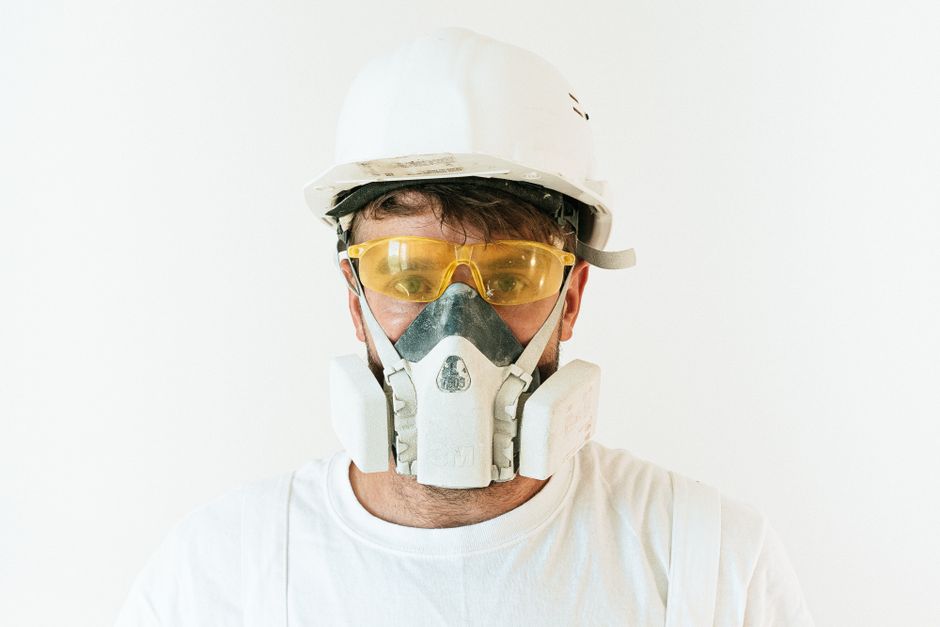
Mask fit is the first practical failure. An FFP3 that does not seal is not respiratory protection. It is theatre. Facial hair, glasses frames, the shape of someone's jaw: all of these can break the seal and turn a CE-marked respirator into a very expensive dust collector around the edges of someone's face. Fit testing is a legal requirement under Irish chemical agents legislation, not a nice-to-have. On many sites it is not happening, and workers wearing ill-fitting masks are not being protected and do not know it.
Mask storage and availability is the second failure. If an operative needs to walk to the site cabin, sign out a respirator, and find the right size, the friction is high enough that people skip it for short tasks. Those short tasks are where a significant portion of exposure accumulates. The dust you cannot see fails you in exactly this way: the exposure events that feel trivial are often the ones that add up.
The third failure is the hierarchy of controls being applied in reverse. Respiratory protection is the last line of defence, not the first. Water suppression, on-tool extraction, and process substitution come before the mask. Sites that skip straight to PPE and wonder why compliance is low are treating the symptom. Dusty tasks that could be wet-cut or extracted are still being done dry because it is faster, because the water hookup is awkward, because nobody checked.
What Actually Works
Start with the hierarchy and mean it. An angle grinder with integrated water suppression cuts silica exposure dramatically before anyone reaches for a mask. On-tool extraction units with H-class vacuums are not exotic technology. They are available, they are not expensive relative to prosecution costs, and they work during the task without requiring any ongoing decision from the operative. Engineer the dust out before you ask anyone to wear anything.
For tasks where respiratory protection is still needed, which is most groundwork, block cutting, and drilling into concrete, the mask has to be the right mask, fitted correctly, stored accessibly. Keep a supply at the point of work. If a worker needs to make a separate trip to get protection, you have already lost. Disposable FFP3s cost roughly two euro each. The cost of a silicosis claim does not bear comparison.
Fit testing needs to happen at induction and then annually or when a worker's face changes significantly. It takes twenty minutes. It gives you documented evidence that the protection is actually working. Without it, the mask is a liability shield for paperwork purposes only.
The social dynamic is the hardest part, and it is also the most important. Compliance rises when it becomes the group norm rather than the exception. That means crew leads and foremen wearing respiratory protection during dusty tasks, visibly and without complaint. Workers take cues from the people immediately above them in the pecking order, not from the safety manager who appears twice a week. If the senior carpenter dry-cuts block without a mask, the apprentice will do the same for the next five years.
Silicosis in 2026 is killing young workers from exposures that accumulated years earlier. That is the timescale safety managers are working against. The worker who skips the mask today may be the one seeking compensation in fifteen years, and the employer who failed to enforce controls may be the one in court explaining why.
The Conversation Nobody Is Having on Site
Silica compliance is not a training problem. It is an ergonomics problem, a culture problem, and a systems problem. The worker who knows the risk and still does not wear the mask is not stupid. They are responding rationally to a set of immediate conditions: discomfort, peer pressure, time pressure, and the fact that nothing bad has happened yet.
Change those conditions and behaviour follows. Make the mask comfortable and accessible. Make it the default rather than the exception. Make the controls upstream of the mask so it is a backup rather than the only line of defence. Make the crew lead the visible example rather than the person who looks the other way.
The HSA campaigns are not wrong. They are just insufficient on their own. What happens on site every morning is not decided by what is on a poster. It is decided by what the crew lead does before 8am.
Get that right, and the compliance problem mostly solves itself.