Most Irish drivers have slowed to 50km/h through a cone-lined stretch of the N11 and had no real idea why the signs were laid out the way they were. You follow the arrows, you watch for the flagman, and you hope the lorry ahead knows something you do not. That is not good enough when the margins are this tight.
Roadworks are among the most dangerous environments on Irish roads, for the workers and for you. Understanding the signage is not a test of your road knowledge. It is the difference between a close call and a collision with someone standing 30cm from live traffic. The people designing these layouts spend serious time on roadworks safety precisely because the consequences of getting it wrong are catastrophic.
The Layout Before You Ever See a Cone
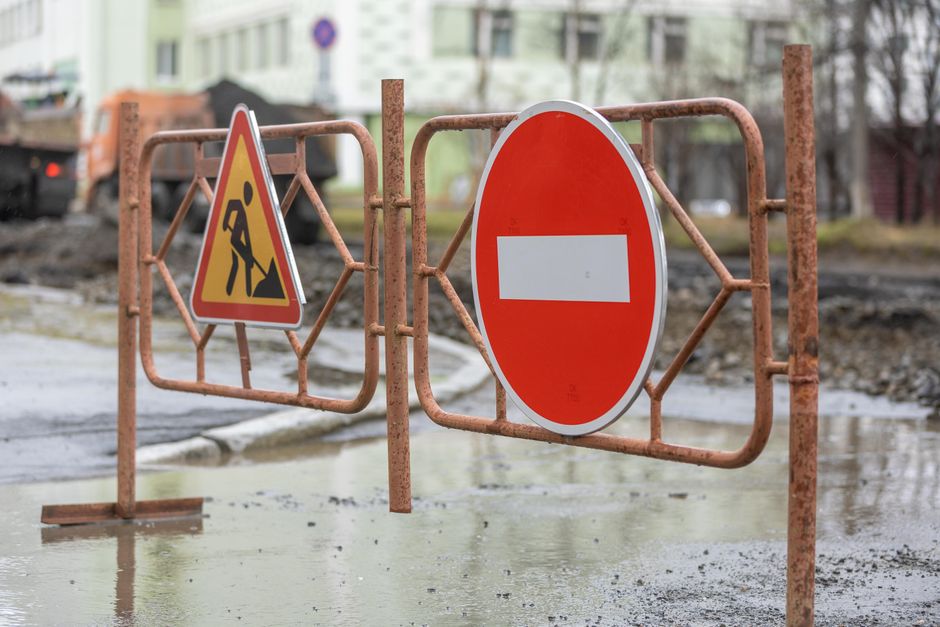
Every properly managed roadworks scheme starts with an advance warning zone. These signs appear well before the works begin, sometimes 300 to 500 metres ahead on a national road. The diamond-shaped yellow warning signs tell you something is changing. A sign reading "Road Works Ahead" is not suggesting you might encounter something mildly inconvenient. It is the system asking you to start adjusting your speed and attention right now, not at the cone line.
The information signs that follow tell you the length of the works, the speed limit in force, and whether lanes are merging. Read them in sequence. Each one builds on the last.
What the Cones Are Actually Saying
Cones do not just mark danger. They communicate geometry. A single row of cones running parallel to traffic is separating you from a work area. Two rows of cones with a gap between them is a contraflow, meaning oncoming traffic is now in the space you might instinctively expect to be yours. This matters enormously at night or in poor visibility.
Taper cones are the ones positioned diagonally across a lane. They are closing that lane, and they are doing it gradually so drivers have space and time to merge. The rule here is merge at the end of the taper, not 400 metres before it. Early merging causes the lane to empty, which encourages late merging at speed, which causes the collisions. Zip merging at the point where lanes actually close is faster and safer for everyone.
Signs You Need to Know by Shape and Colour
Red and white striped boards mark the edge of the carriageway or the boundary of the works area. They are not decorative. Cross one and you are in the works area.
Yellow and black chevron boards point you in the direction of travel around an obstacle. Follow the chevron. It is not a suggestion.
Speed limit signs on white rectangular boards inside a roadworks zone are mandatory, not advisory. A circular red-bordered sign showing 50 or 60 is a legal speed limit. A sign on a white rectangle without the red border is a recommendation. Know the difference. Most temporary speed limits in Irish roadworks schemes are the circular mandatory type, and they are enforceable by Gardaí and speed cameras, including mobile units.
"End of Roadworks" signs do not give you permission to accelerate immediately. Road surfaces at transition points are frequently uneven, and workers may still be operating equipment at the boundary.
The Flagman and Stop/Go Boards
Where a road is reduced to single-lane working, a flagman or a Stop/Go board controls passage. A red Stop/Go board showing red means stop, fully, behind the line or behind the last cone. It does not mean inch forward. It does not mean stop when you feel like it. Workers are in that single lane on the other side, and the system only works if both ends respect the signal.
If you arrive to find a flagman and cannot see their signal clearly, stop and wait. Do not creep forward to get a better view. The flagman will come to you or signal from wherever they are positioned.
Why the Speed Limits Are Lower and Why They Are Enforced
A 60km/h limit in a roadworks zone is not the council being cautious. At 60km/h, a driver who reacts in one second travels 16.7 metres before braking begins. At 80km/h, that becomes 22.2 metres. The stopping distance difference between those two speeds is significant when a worker on foot is standing 1.5 metres from your wing mirror.
GoSafe vans operate in roadworks zones. Fixed camera systems are permitted. The penalty for speeding through an active roadworks zone is the same as any other speeding offence, but the likelihood of being caught is considerably higher because enforcement is specifically targeted at these locations.
The speed limit applies for the full length of the works, including sections where no active work is visible. Night shifts mean equipment and workers may be present even when the site looks quiet.
What to Do When the Layout Confuses You
Temporary signage is sometimes damaged, blown over, or obscured after bad weather. If a cone layout stops making sense, reduce your speed and treat it as a hazard until it resolves. Do not speed up to see what is ahead.
If you see a sign that appears to be contradicted by the road layout in front of you, trust the physical layout over the sign. Cones and barriers in place are more reliable than signage that may have shifted.
And if you are genuinely stopped in a queue inside a works zone and you are unsure whether to stay or exit, stay in your lane with your hazard lights on and wait. Getting out of a vehicle on a live carriageway near roadworks is significantly more dangerous than sitting in traffic.
The signs at a roadworks scheme are a conversation between the site designers and every driver passing through. Most drivers ignore most of it. The ones who read it properly are the ones who get through without incident, and more importantly, without becoming part of someone else's worst day.