The HSA has started showing up at summer events across Ireland. Not next month. Now.
If you are organising a festival, outdoor concert, community fair, or any public gathering with temporary infrastructure, the inspection window is open and the criteria are specific. Here is what they are actually checking, and where organisers consistently come unstuck.
Why Summer Events Are Under the Microscope
The HSA runs targeted inspection campaigns throughout the year. Summer events sit alongside construction and agriculture in terms of enforcement focus, and for good reason. A temporary structure built in two days, carrying 400 people, managed by a crew that assembled for the first time last Tuesday, is a serious risk profile. Inspectors know this. The enforcement action that follows a structural incident at a public event tends to be swift and expensive.
The relevant legislation is the Safety, Health and Welfare at Work Act 2005 and the associated regulations. Organisers are employers for the purposes of that Act. That means risk assessments, method statements, competent persons, and a duty of care to everyone on site, including volunteers, contractors, and the public.
The 5 Control Gaps That Trigger Enforcement
1. No Documented Risk Assessment for the Event
A risk assessment that lives in someone's head is not a risk assessment. Inspectors ask to see it. It needs to cover crowd management, emergency evacuation, temporary structures, electrical systems, manual handling, working at height, and any specific hazards for your site. Generic templates with your event name typed in are spotted immediately. The assessment needs to reflect the actual ground conditions, the actual infrastructure, and the actual activities taking place.
2. Temporary Structures Without Certification
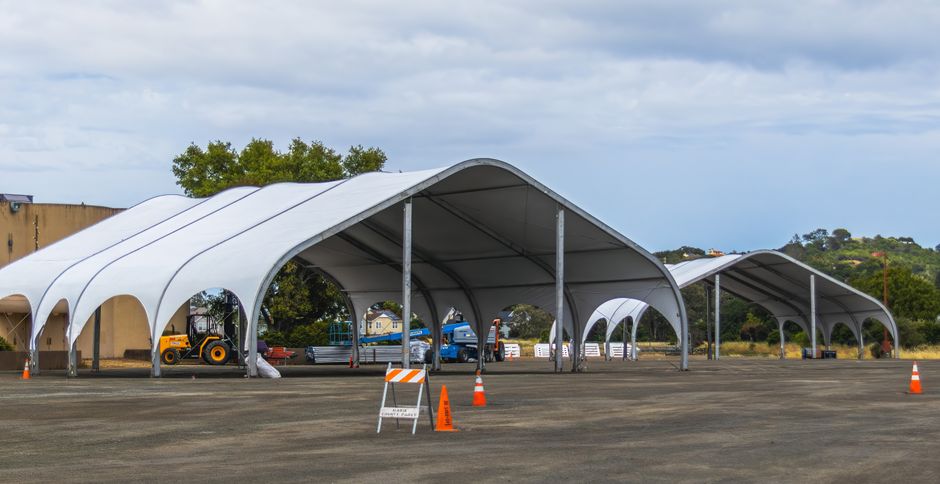
This is the single most common enforcement trigger. Stages, grandstands, marquees over a certain size, and temporary demountable structures all require structural certification from a competent engineer. That means a signed-off structural design, a load calculation, and a completion certificate after erection. Not a brochure from the hire company. Not a verbal confirmation from the rigger. A signed document from a qualified engineer confirming the structure is safe for its intended load and use.
Temporary structure failures follow predictable patterns, and most of them involve documentation that was never completed, not structures that were poorly designed in the first place.
3. Electrical Systems With No Competent Sign-Off
Outdoor events run on temporary power. Generator-fed distribution boards, cables across public walkways, lighting rigs powered by hired-in equipment, catering units with their own feeds. Every element of that system needs to be installed and certified by a competent electrician. The distribution boards need RCD protection. Cable runs across pedestrian areas need to be protected from damage and trip hazards. Inspectors check whether a qualified electrician has signed off the full installation, not just the individual components.
4. Inadequate Emergency and Evacuation Planning
An emergency plan that says "call 999" is not a plan. Inspectors look for documented evacuation procedures, designated assembly points marked on a site map, identified first aid provision with competent first aiders on site, communication protocols between stewards and event management, and liaison records showing the plan has been shared with An Garda Síochána, the local fire service, and the ambulance service. For events over a certain attendance threshold, a pre-event meeting with the emergency services is expected. If you cannot show evidence of that liaison, you are exposed.
5. No Competent Safety Officer or Safety Management Structure
Someone needs to own safety at the event in real time. Not the site manager wearing a second hat. A designated safety officer with defined authority, present throughout the event, with direct communication lines to the event director. Inspectors ask who that person is, what their qualifications are, and what their actual role is on the day. If the answer is vague, that is a problem. For larger events, a formal safety management structure with trained stewards, designated roles, and a communication system is required.
What Inspectors Actually Do on Site
They arrive, show their credentials, and ask to see your documentation. Risk assessment, structural certs, electrical sign-off, emergency plan, method statements for high-risk activities, records of any pre-event safety briefings. They will walk the site. They will look at cable management, crowd barriers, entry and exit points, first aid provision, and the condition of temporary structures.
If they find critical gaps, they have the power to issue an Improvement Direction on the spot, require specific actions before the event opens, or issue a Prohibition Notice stopping the event entirely. A Prohibition Notice at 2pm on the day of a 5,000-person event is not a theoretical risk. It has happened.
What to Have Ready Before the Inspector Arrives
Pull these together now, not on the morning of the event:
- Full event risk assessment, site-specific and signed off
- Structural engineer's certificate for every temporary structure above the threshold size
- Electrical installation sign-off from a qualified electrician
- Written emergency and evacuation plan, including emergency services liaison records
- Crowd management plan with steward training records
- First aid plan showing the number of trained first aiders relative to expected attendance
- Safety briefing records for all staff, stewards, and contractors
- Named safety officer with contact details and qualifications
The Reality of Event Safety Compliance
The events industry has a habit of treating safety documentation as paperwork rather than planning. The HSA's inspection campaign is a correction to that habit. Summer events going wrong is a documented pattern, and the enforcement that follows incidents is more severe than the work required to prevent them.
The organisations that get through inspections without issue are not doing anything exotic. They have their documentation in order, their structure certs on file, and a named person who knows what they are responsible for. That is the entire ask.
Get your paperwork done before the gates open. An inspector finding a gap is embarrassing and expensive. An incident finding a gap is something else entirely.