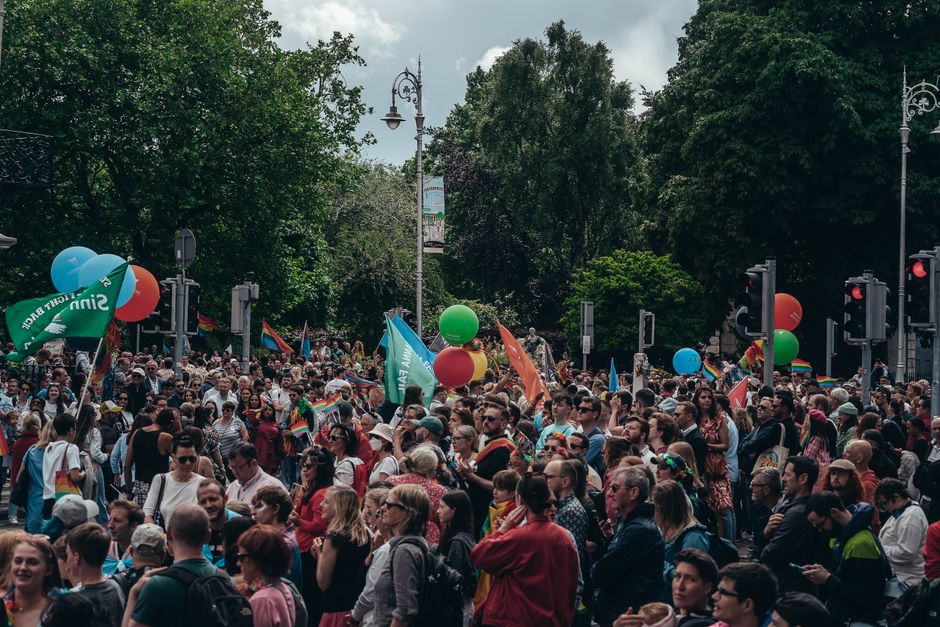
Every summer, Irish event organisers make the same mistake. They spend months planning the stage, the catering, the toilets, and the parking. Then 8,000 people turn up and nobody has thought seriously about what happens when they all try to leave at once.
The HSA's summer events inspection campaign has been running long enough to show a clear pattern. The paperwork is usually fine. The physical setup is where it falls apart. Inspectors find inadequate barriers, missing stewards, entry points that become bottlenecks, and pedestrian routes that feed directly into moving vehicle traffic. These are not exotic failures. They are predictable ones.
The legal framework is not ambiguous. Under the Safety, Health and Welfare at Work Act 2005, the organiser is the employer and the duty holder. Members of the public on your site are covered by your duty of care. A crowd crush is not an act of God. It is the foreseeable consequence of inadequate planning, and the HSA treats it that way.
The Entry and Exit Bottleneck
This is where the majority of crowd safety incidents begin. Organisers calculate how many people can be on site. Almost none of them calculate the flow rate through entry and exit points during peak demand.
A single 900mm gate can process roughly 40 people per minute under controlled conditions. At a festival with 5,000 attendees, a simultaneous exit takes well over two hours through one gate. Most events have two or three entry points that double as exits. Do the maths before the event, not after the crush.
The fix is straightforward. Design entry and exit points separately where the site allows it. Brief stewards on crowd flow monitoring, not just ticket checking. Set a trigger threshold: if queue depth at any point exceeds a certain distance, activate a secondary exit or hold capacity at the gate.
Pedestrian and Vehicle Conflict Zones
This is the blind spot that costs lives most directly. At outdoor events, vehicles do not stop operating just because thousands of people are walking around. Supplier deliveries, waste collection, emergency access routes, staff vehicles: all of them move through space that pedestrians treat as their own.
Pedestrian management on event sites requires the same logic as any industrial site. Segregation is not optional. A painted line on grass is not segregation. Physical barriers, clear signage, and timed vehicle movement windows are the standard that actually prevents collisions.
The HSA's inspectors consistently flag events where the emergency vehicle access route is also the main pedestrian walkway. When something goes wrong and an ambulance needs to reach the stage, those two uses are incompatible. Plan for them separately from the start.
Steward Numbers and Positioning
Event organisers frequently calculate steward ratios based on total attendees. They then position those stewards at the perimeter and the stage front, which is where the cameras are, and leave the internal pedestrian routes unmanned.
Crowd safety guidance from the Purple Guide, the UK's leading reference for event safety, recommends stewards at every significant decision point in the crowd flow. A decision point is anywhere people choose a direction. Junctions, toilet blocks, bar queues, emergency exits. Every one of those points needs eyes on it during peak periods.
In Ireland, there is no single mandatory steward ratio for outdoor events. That absence of a specific number does not mean anything goes. The Safety Statement must demonstrate that steward deployment is proportionate to the risk, and a single steward covering 500 people across an acre of ground will not survive HSA scrutiny after an incident.
The Risk Assessment That Misses Dynamic Risk
Most event safety risk assessments are written weeks before the event. They assess the site as planned, at expected capacity, in good weather. They do not assess what happens when:
- Attendance exceeds the estimate by 20 percent
- A support act finishes and 3,000 people move simultaneously toward the bar
- It rains and pedestrian surfaces become slippery
- An incident near one exit causes people to divert to a secondary route that was not designed for that load
Dynamic risk assessment means having someone with authority on site, in real time, who can observe crowd behaviour and make decisions. This is not the stage manager. It is not the bar manager. It is a designated crowd safety officer with a clear brief and a radio.
First aid at summer events is one layer of response. Preventing the incident that requires first aid is a different discipline, and it starts with someone watching the crowd, not the stage.
Temporary Structures and Crowd Loading
Barriers fail. Stages fail. Viewing platforms fail. The common factor in each case is that the structure was designed for a static load and experienced a dynamic one.
Crowd loading on a barrier is not the weight of one person leaning against it. It is the cumulative pressure of 200 people pressing forward, amplified by the physics of crowd compression. A standard crowd barrier rated for a static load will be inadequate in a dense crowd scenario.
For any temporary structure that the public can access or press against, get a structural engineer's sign-off based on the actual expected crowd density. Do not use the manufacturer's rated load figure without checking whether it accounts for dynamic crowd behaviour.
What the HSA Inspection Actually Looks For
The HSA does not arrive looking to catch you out on paperwork. They look at whether the physical reality of your site matches the risk assessment you filed. Specifically, they check:
- Whether pedestrian routes are actually segregated from vehicle routes, not just described as segregated
- Whether emergency access routes are kept clear throughout the event
- Whether stewards are deployed where the risk assessment says they will be
- Whether the Safety Statement names a responsible person for crowd management and whether that person is on site
A Safety Statement that describes a crowd safety protocol which nobody is actually implementing is evidence of a system that failed, not evidence of a system that tried. Inspectors know the difference.
The summer events season is short. The HSA's inspection campaign is active throughout it. Getting this right is not complicated, it just requires treating crowd management as an engineering problem rather than a logistics afterthought. Count the people, map the flows, deploy the stewards, segregate the vehicles, and put someone in charge of watching it all in real time. None of that is new thinking. It is just what the evidence says works.